Baku (AsiaNews) – From the Persian Gulf to the Caspian Sea, a new battle for trade routes is looming: the Iraqi Prime Minister’s proposal to unify the energy, transport and communications networks of the region’s states has implications that extend far beyond the Middle East.
Baghdad would like to turn its advantageous geographical position into a source of economic and political influence, whilst for Azerbaijan it represents a further reason to assess the prospects for cooperation with Iraq within the context of the changing architecture of Eurasian transport corridors.
The key question is whether the new infrastructure initiatives will be able to link the Persian Gulf with the Caspian Sea region and the South Caucasus, or whether competition for trade flows will become an obstacle to broader cooperation.
Iraqi Prime Minister Ali al-Zaidi is calling for the development of regional energy networks, transport infrastructure, digital payments and trade platforms, emphasising the need to ensure free trade and the uninterrupted flow of goods along international routes.
The initiative is driven by a desire to reduce economic costs, increase the stability of supplies and strengthen links between states. The implementation of these plans, however, depends not only on the availability of financial resources and infrastructure, but also on the willingness of the parties to align their national interests.
The issue is particularly urgent for Iraq: the country aims to expand its economic opportunities beyond the oil sector, strengthen ties with neighbouring countries and transform its territory into a transit hub between the Persian Gulf, Turkey and European markets.
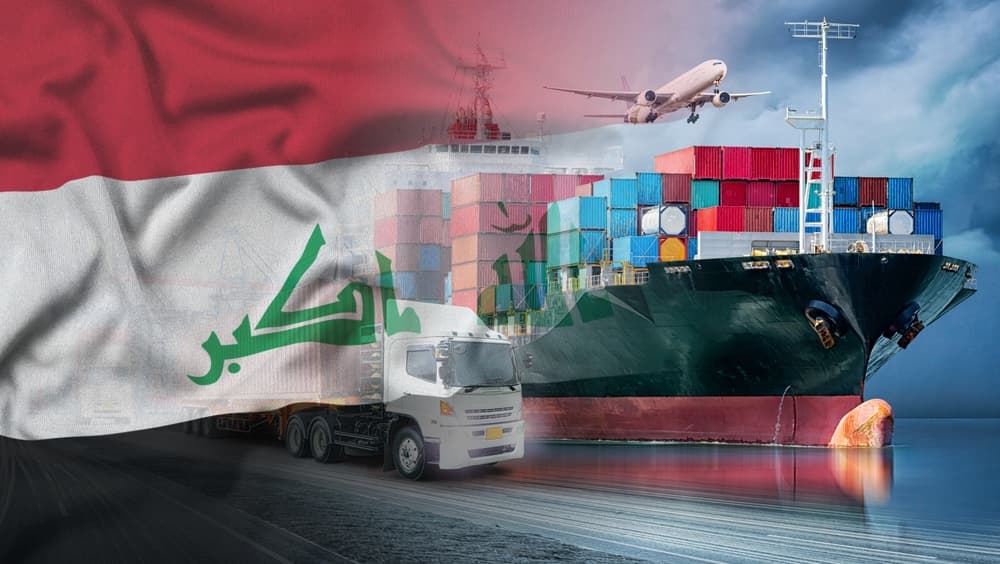
A key element of this strategy is the ‘Development Road’ project, which aims to link the port of Al Faw to the Turkish border via rail and road infrastructure. If fully realised, the project could transform Iraq’s logistical capabilities and strengthen its role in regional trade.
The development of this route affects the interests of other states already involved in developing transport links between Asia and Europe: Turkey is seeking to strengthen its position as a transit hub, the Persian Gulf states are investing in ports and logistics, and Iran is keen to maintain access to regional markets.
Consequently, infrastructure projects become not only economic tools but also a means of redistributing influence, and it is in this context that Azerbaijan’s importance becomes particularly significant.
The country already possesses a well-developed transport infrastructure, the Caspian Sea port of Baku, rail links with Georgia and Turkey, and experience in international energy projects. Key routes linking the Caspian Sea region with the Black Sea and European markets pass through the South Caucasus, and the development of the Middle Corridor further strengthens Azerbaijan’s position as a key transit player in Eurasian trade.
The expansion of Iraq’s transport capacity should therefore be seen not only as the emergence of a potential competitor, but also as an opportunity for Azerbaijan to strengthen its economic ties with the Middle East.
If new routes were to be coordinated, Iraqi infrastructure could broaden access for goods to the Persian Gulf markets, whilst Azerbaijan could offer additional transport options via the Caspian Sea and the South Caucasus. This model would make it possible to link various transport routes into a broader network, without restricting trade to a single route.
It is important, however, to understand that such a link remains, for the time being, a prospect rather than the result of existing agreements.
The Iraqi initiative does not, in itself, guarantee Azerbaijan’s inclusion in the ‘Road to Development’ project or the creation of a direct transport corridor between the two countries. Specific agreements, economic assessments, agreed procedures and transport security guarantees would be required, and bilateral relations already provide the basis for discussing such possibilities.