Moscow (AsiaNews) – At a critical juncture for the Russian economy due to the war with Ukraine, which drags on with no end in sight, the Orthodox Church is also reflecting on economic issues. In an interview with the TASS news agency, also published on the Moscow Patriarchate’s website,
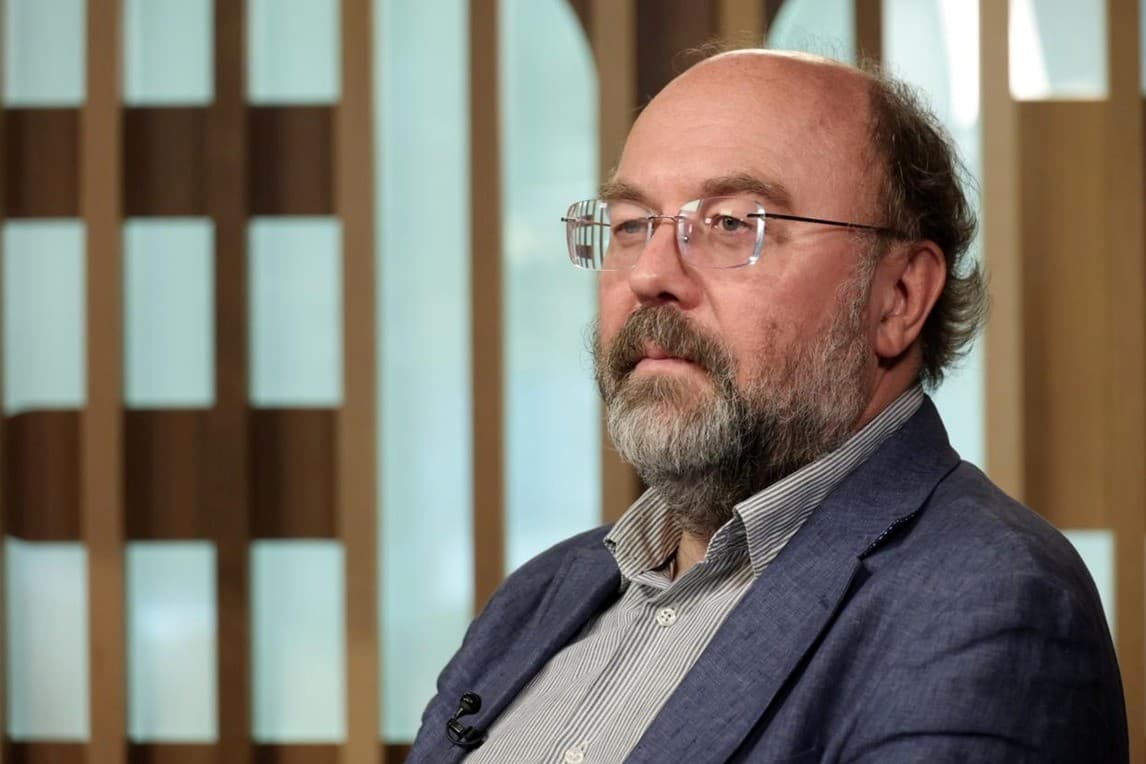
Ilya Kuzmenkov, vice-president of the Synodal Department for Church-Society Relations, discussed the relationship between religion and the economy, why the economy is not self-sufficient, how biblical principles relate to entrepreneurship, competition and active love, and whether Orthodox ethics can exist within a market economy.
He recalled having studied at the Faculty of International Economic Relations at MGIMO, the Russian university for diplomats, where, in one of his first lectures, the professor said that “for many, the economy is merely mathematics and objective economic laws, but the economy is, first and foremost, about relationships between people”.
If one looks at the economy from this perspective, “then a moral law emerges, an ethical question arises, and where there is an ethical question—a matter of moral choice—a religious context also emerges; questions of faith and values arise when decisions are made, whether macroeconomic or microeconomic”.
The economy must be viewed and understood within the broader context of civilisation and its fundamental values.
Referring to the Holy Scriptures as an economics textbook is, of course, not entirely correct, but “the subject of economics itself is not alien to the authors of the Holy Scriptures”.
Today, we look to traditional values in many areas of life – in culture, in the family, in social relations – and even in economics there are two fundamental themes for conservative values: the theme of property and that of freedom.
“God created man free and granted him free will, that is, the ability to make his own decisions and moral choices, and for economic systems the concept of freedom is a very important category”, observes Kuzmenkov.
The Russian Orthodox Church has for a long time been giving serious consideration to the idea of regular interaction between the Church, the State and business.
In 2009, by decision of Patriarch Kirill, Joseph of Volokolamsk was designated the patron saint of Russian enterprise; at the end of the fifteenth century, he defined the Church as the ‘founding institution of the State’ and ‘carried out extensive and highly effective economic activity within the monasteries’.
The economist recalls: “Thanks to his diligence, an efficient system of social support was established in Russia for the first time; this was not limited to distributing alms to the needy, but also involved accumulating substantial reserves of grain and distributing them to peasants for sowing during difficult years”
The Delo vo Vera Foundation (“Working in the Name of Faith”) collaborates directly with the Patriarchate and actively promotes the saints of the Russian Orthodox Church who were successful entrepreneurs before the Revolution, subsequently glorified as saints—some as martyrs and confessors—and who demonstrate that “entrepreneurial activity does not preclude the possibility of being not only Christian, but of embracing the path of holy living”.
Kuzmenkov refers to the document on the “Fundamentals of the Social Doctrine of the Russian Orthodox Church”, adopted by the Jubilee Synod of Russian Orthodox Bishops in August 2000, which contains sections on work, property and the moral dimension of the economy.
Drawing a comparison with Islamic banks, the expert states that “there cannot be an Orthodox bank in which interest rates and other economic categories and rules are determined by religious norms… attempting to replace the law of love with a set of banking procedures is profoundly alien to Orthodoxy”.
Moreover, without knowledge and understanding of moral laws and the history of the Gospel, “modern people are largely unprepared, even in certain respects, including in terms of business management”.
In conclusion, Kuzmenkov therefore states that “it is important that economic education, where possible, includes the study of God’s law, at least in a form suited to business understanding.
The business community is one of the most thoughtful and versatile in society. To run a business, one must be both a specialist and a manager, possess sensitivity towards people and a vision for the future’.
Entrepreneurs are often natural leaders, and if such a person combines leadership with a profession of faith and acts as a channel for the Christian mission, this is highly beneficial and important for society as a whole.