Moscow (AsiaNews) – In the early post-Soviet decades, Russian nationalists were in radical opposition to the government, whilst the Russian Orthodox Church distanced itself from it. Now, however, the Church has aligned itself ideologically with both the state and the majority of nationalists who are completely loyal to it. Orthodoxy is the most important element of Russian nationalism, in line with the old slogan: “Russian means Orthodox”.
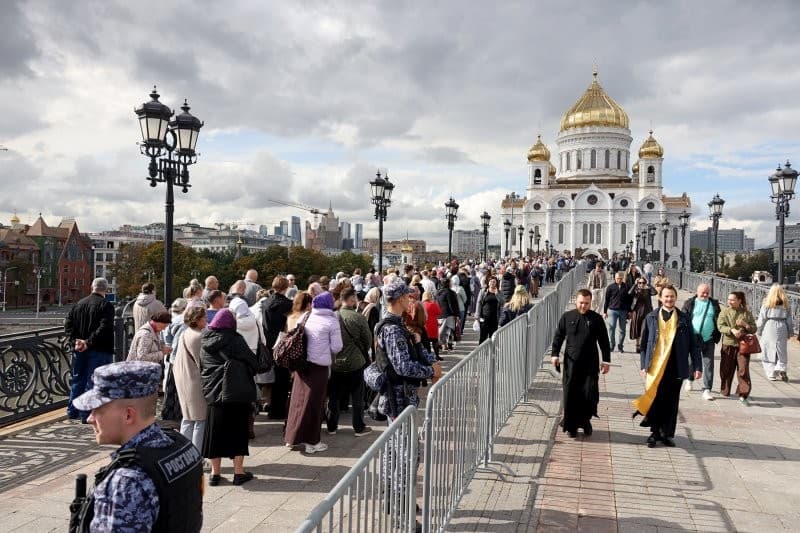
The history of Russian nationalism, ever since pre-revolutionary times, has been closely linked to the Orthodox Church, and it would appear that this link is still visible today, for example in the memorable procession of the cross in Moscow in September 2025.
In reality, however, the relationship between the various currents of Russian nationalism and the Orthodox Church – and indeed with religion in general – has been highly volatile over the last forty years, as demonstrated by the media project ‘Country and World – Sakharov Magazine’, published on its dedicated Telegram channel.
Post-Soviet Russian nationalism developed at the end of the Soviet era, when almost the whole of society, including nationalists, was rather detached from institutionalised religious life and from religion in general.
When Russian nationalism emerged as a political force, Orthodoxy was viewed more as part of the nation’s cultural heritage than as an independent source of ideas, particularly those of political significance. In fact, the group Pamjat (“Memory”) grew out of the Soviet Society for the Protection of Cultural Monuments, and Dmitry Vasilev’s radical, non-governmental political party “Memory”, in the early 1990s, aligned itself with the anti-Soviet Church abroad – or, more precisely, with its most politicised and anti-Semitic figures.
During the years of perestroika and in the early 1990s, there was no room for more moderate Orthodox nationalists: partly due to the apolitical nature of the Russian Orthodox Church, and partly because the main political issue was the clash between the democratic movement and the communists, whether in government or in opposition (from late 1991 onwards).
This situation forced moderate Orthodox nationalists, such as Viktor Aksjučits, to play secondary roles on one side or the other of this conflict. Among the radical Russian nationalists were also those who regarded Orthodoxy as “a Jewish growth on the body of primordial Russian spirituality”, and sought support in a reconstructed Slavic paganism.
Slavic neo-paganism in Russia is a complex phenomenon, not always politicised. Not every Slavic-style swastika denotes a reference to the Third Reich, but in the political arena, those neo-pagans for whom the struggle for the white race is an important, if not the most important, component of their beliefs have been and remain prominent figures.
Socially, their primary concept is ‘kinship’; the primary criterion for community is blood kinship; and they were also strongly influenced by Nazi racial mythology, based on Scandinavian paganism. The fundamentally racist search for support in Slavic antiquity could also prove attractive to those who regarded Orthodoxy as an important part of ‘Russianness’. This led to repeated attempts to fuse or even somehow combine neo-paganism with Orthodoxy, which some considered ‘superior to Christianity’.
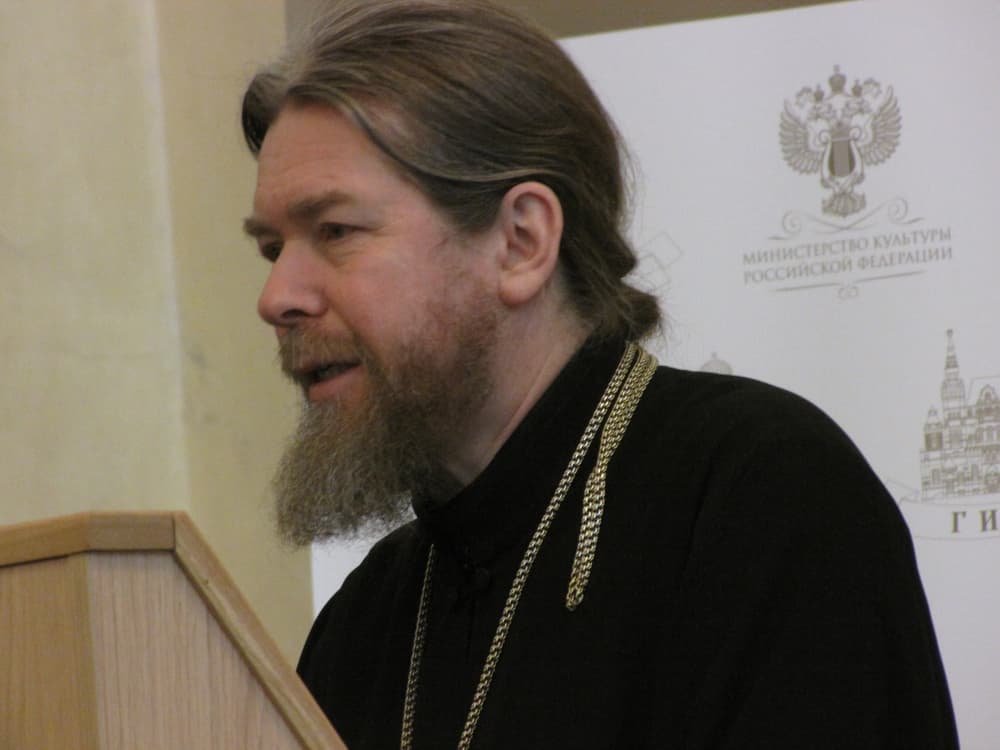
The second founder of Orthodox fundamentalism was the then abbot of the Sretensky Monastery in Moscow, now Metropolitan Tikhon (Ševkunov) of Crimea, who, in the late 1990s, introduced into Orthodox circles the idea of combating ‘satanic’ barcodes, tax codes (Inn), new passports and so on. At the start of the new millennium, this gave rise to the largest post-Soviet movement within the Russian Orthodox Church, in opposition to both the authorities and the ecclesiastical hierarchy.
Since 2022, a new type of nationalist organisation has emerged and flourished. The largest of these, the ‘Russian Community’, presents itself as an Orthodox organisation – and not merely a Russian one in the ethnic sense – with thousands upon thousands of activists in over a hundred cities.
The leadership of the Russian Orthodox Church could not ignore this situation: in Patriarch Kirill’s speeches over the last two years, the issue of migrants as a threat to the civic identity of Russians has been raised. The Russian Orthodox Church’s relationship with the ultra-nationalists will depend on the stance and rigour of the authorities, and one way or another, in the near future all these manoeuvres will unfold within the ideological space between the Church’s ‘Orthodox nationalism’ and the state’s ‘Russian civilising nationalism’, leaving behind the previous diversity of approaches.