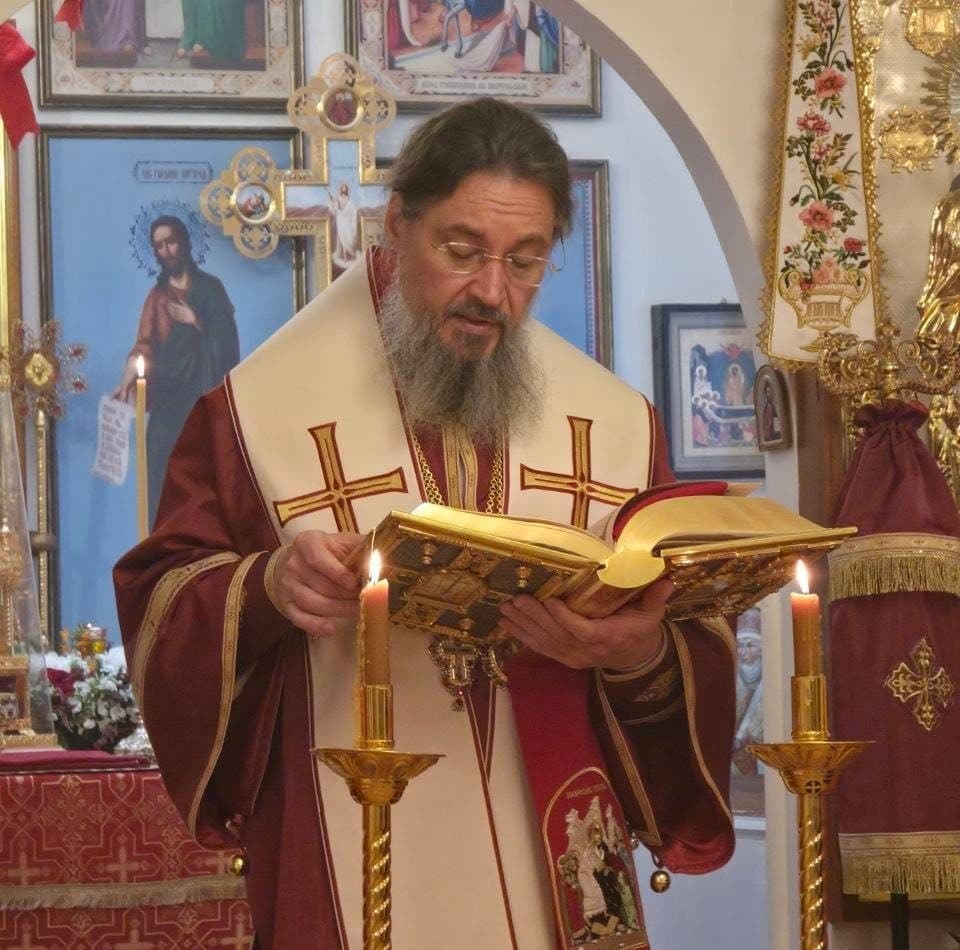
Moscow (AsiaNews) - The great assembly of the hegumens (abbots and abbesses) of the monasteries of the Russian Orthodox Church was held in Russia, presided over by the head of the Commission of the "Interconciliar Presence" (the title of the Moscow Patriarchal Curia) for the organization of monastic life, the metropolitan of Nizhny Novgorod Georgij (Danilov), who illustrated the contents of the meeting on the Russian portal Monastyrskij Vestnik, the "Monastic Messenger".
Georgij first commented on the speech of Patriarch Kirill (Gundjaev) in the Ecclesial Council Hall of the Cathedral of Christ the Savior in Moscow, underlining that "he spoke from the heart, recalling his long and profound monastic experience".
The head of the Russian Church recalls that many services are assigned to monasteries today, both spiritual and social, but the main part of his speech concerned the specific vocation of the monk which concerns "the fight against passions and evil spirits which is under heaven (Eph 6:12), in conversion, prayer, adoration and vigilance".
The monastery, insists the patriarch, "is first of all the place of prayer, hermitic in the cell and sobornaja [community] in the church", to be accompanied with "the admonitions of the holy fathers".
For this reason, monasteries must have good libraries, where "brothers and sisters must go often, to assimilate spiritual experience and thus have the possibility of continuing the tradition of Russian monasticism, which has weakened so much in the 20th century".
Metropolitan Georgij observes that in the patriarch's words he felt a particular consonance in the definition of the monk as a "soldier for Christ". In this dimension "if you go into battle, you cannot stop and look back, we must realize our vocation without sparing ourselves".
Nothing external must hold the monk back, “neither relatives, nor friends or other external distractions, which often create divisions between brothers and sisters”. In many interventions at the assembly, emphasis was placed on the podvig, the "sacrifice" of the monk.
One of the most important tasks of the superiors of monastic communities is the care of the education and spiritual growth of the novices: "today, fortunately, we have all the means at our disposal, it is enough to enter the monastery and take all the gold of the tradition of our predecessors , trying to use it well in practice, without ruining it".
The assembly was missing representatives of the Ukrainian monasteries of the Church (UPZ) linked to the Patriarchate of Moscow, but Georgij states that "our meeting had no political colour, we are all heirs of Holy Russia, our common roots date back to the saints Antonij and Feodosij of the Kiev Caves”.
According to the metropolitan "we are a single organism, which Heaven has predestined as the Russian Orthodox Church, and even if the enemy of the human race tries to divide us, but this is an earthly and transitory event, which will soon dissolve, and we will live as before according to the traditions of our fathers."
The Russian monks pray for Metropolitan Pavel (Lebed), former superior of the Kiev Cave Lavra today under house arrest, and for all the brothers expelled from the main Kiev convent: "may God grant courage to all those who suffer in Ukraine , fortitude and fidelity to the canons of the Church".
Patriarch Kirill compared this period to that experienced by his family under the persecutions of the Soviet period, but "the times of repression are over in our homeland, and the Church today lives with all its vital energies, as we are certain will also happen in Ukraine, we will once again be one family of blood and spirit."
Georgij also enthusiastically recalls President Vladimir Putin's recent visit to his eparchy of Nizhny Novgorod, where he was illustrated with the work of reviving devotion to Saint Serafim of Sarov in the Diveevo monastery, a destination for pilgrimages from all over Russia.
Putin listened to the testimonies of monks and collaborators "with emotion and great attention", as they reflected "the great rebirth of all the Russian people, who thanks to the monasteries can live on a par with the angels around the divine Throne".
Photo: Flickr / Троице-Сергиева