Kazan (AsiaNews) - A theological conference held between scholars and clergymen of the Russian Orthodox Church in recent days in Kazan and Bolgar in Tatarstan, on the theme of "Spiritual Paternity and False Starčestvo", on the spread of sectarian movements, unexpectedly turned into a heated dispute on "political Orthodoxy" that spread far beyond the restricted group of specialists, into the broad community of "Orthodox bloggers".
The conference was organised at a high level, with the participation of three bishops, including the director of the patriarchate's missionary department, Bishop Evfimij, several representatives of civil and ecclesiastical authorities in the area, the inventor of 'destructivism' (the demonstration of destructive religious tendencies) Roman Silantev, and Russia's leading sektoved, 'sect expert', Professor Aleksandr Dvorkin.
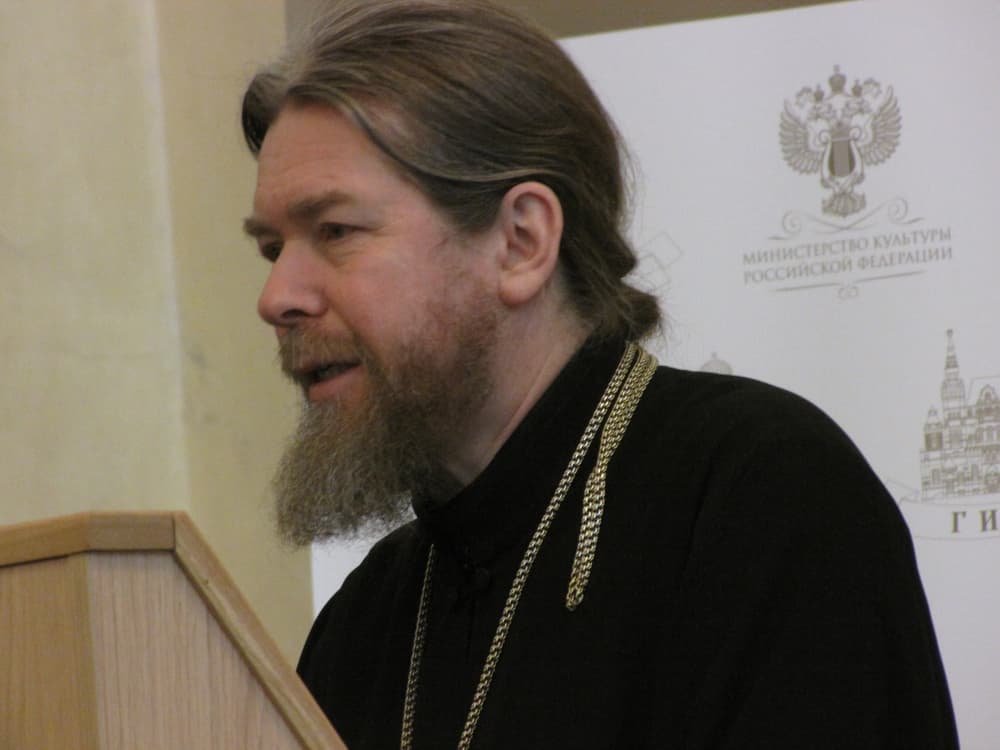
The discussion was sparked by the remarks of Fr Andrej Tkačev (pictured), one of the most ardent supporters of wartime Orthodoxy, who described the victims of the Isis attack on Krokus City Hall as "fools", and those killed in Belgorod under Ukrainian bombs as "unbelievers, who died because they did not know how to pray".
Tkačev was answered by priest Aleksandr Kuzmin, one of the conference organisers, calling his words 'scandalous and unacceptable, offending common sense and attracting hostility towards our Church'.
Furthermore, violations of the liturgical canons were denounced by Tkačev, who has replaced Fr Aleksej Uminskij in Moscow, expelled by the Patriarch for his pacifist tendencies, and now passages from the Apocalypse are proclaimed during processions, even inserting threatening phrases in the Eucharistic prayers. Fr Andrej is linked to a very radical movement, the National Liberation Movement led by the ultraconservative deputy Evgenij Fedorov, which finances his political-ecclesiastical activities.
Kuzmin then continued the controversy by publishing a document from the association of scholars of the Razirs sects, denouncing Tkačev as a 'false starets' who does not represent the Church, and 'causes enormous damage to the faithful and society as a whole'.
The statement was commented on by Dvorkin, the most authoritative member of the association, who assured that the condemnation of Tkačev is shared "at the conciliar level", a sobering opinion.
The professor is also a long-standing friend and collaborator of the expelled Fr Uminsky, and he now faces Fr Tkačev in the same Moscow church of the Holy Trinity in Khokhly, saying that 'the atmosphere in the church has become unbearable, he does not listen to anyone'.
Andrej Tkačev, who was born in L'vov, had served for a few years in Kiev before the war, and a parishioner at the time recounts: 'I thought he was just a misogynist, then I realised that he hates everyone, and especially Ukrainians'. In Russia, he was greeted by the most exaggerated as a 'victim of the Ukrainian Nazi regime', even Patriarch Kirill invited him to preach during his celebrations, and the Orthodox-militant oligarch Konstantin Malofeev gave him space on his Tsargrad TV channel, making him very famous.
Now the condemnation of Tkačev by influential figures such as Kuzmin and Dvorkin has uncovered a Pandora's box within the Russian Orthodox Church, where the "two towers" of the holy war and what was condemned as "the liberal sect", linked to the memory of the priest Aleksandr Men, the "spiritual father of dissent" of Soviet times murdered in 1990, of whom Uminsky was one of the closest disciples, are confronted.
If even the greatest sect specialist like Aleksandr Dvorkin condemns the vulgar brutality of war propaganda, it is clear that not all Orthodox in Russia are so convinced of the path taken by supporting the invasion of Ukraine.