Dhaka (AsiaNews) - When cyclones and tidal surges strike Bangladesh's coast, the difference between recovery and deeper poverty can depend on whether a family has seeds saved, money set aside, and the confidence to start farming again.
A new study presented in Dhaka has found that agroecology-based farming practices are helping vulnerable coastal communities become more resilient to climate-related disasters, reducing their dependence on loans and enabling them to resume agricultural activities more quickly.
National Seminar by Caritas Bangladesh
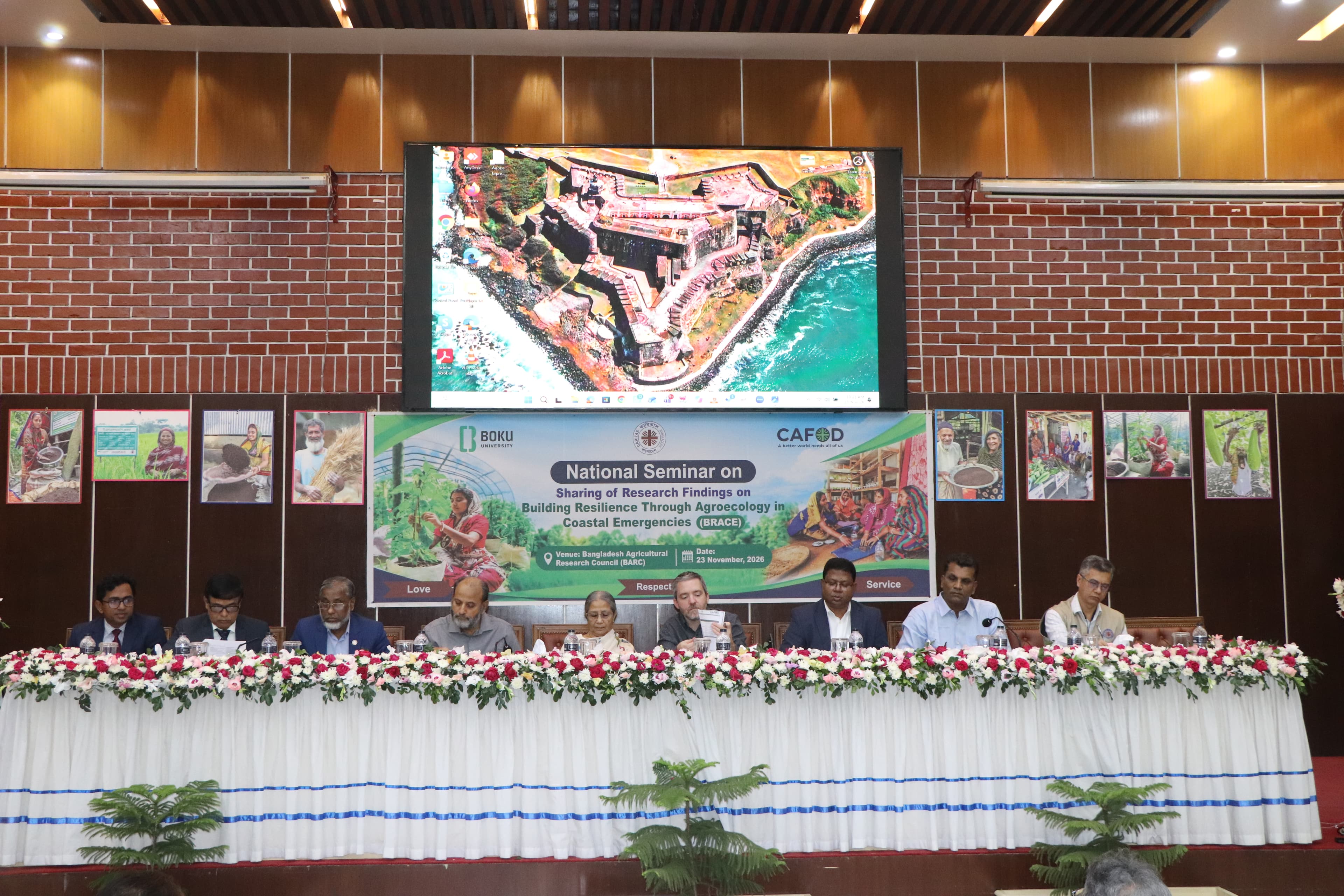
The findings were shared at a national seminar organised by Caritas Bangladesh at the Bangladesh Agricultural Research Council (BARC) on 23 November. The event brought together agricultural experts, researchers, government officials and development practitioners to discuss ways of helping farming communities confront increasingly frequent climate shocks.
The study, titled Enhancing Coastal Disaster Resilience through Agroecological Approaches, found that families participating in Caritas-supported programmes were better prepared for disasters and their aftermath than households outside the programme.
According to the research, 73 per cent of project-supported families relied on their own savings after a disaster, while 54 per cent of non-participating households had to depend on loans or credit.
The study also found that project participants were more willing to adopt new farming methods and diversify their income sources, both important strategies in regions regularly affected by cyclones, floods and salinity intrusion.
Nearly all farmers involved in the project participated in Farmer Field Schools and had access to community seed banks. Among households outside the programme, participation in such initiatives was minimal.
“This shows that resilience is not only about surviving a disaster,” said Michael Hauser, associate professor at the University of Natural Resources and Life Sciences (BOKU) in Vienna, Austria, who presented the study findings. “It is also about how quickly families can rebuild their livelihoods afterward.”
Bangladesh among the countries most vulnerable to climate change
For Bangladesh's coastal population, the challenge is growing more urgent. The low-lying delta nation is among the countries most vulnerable to climate change, with coastal communities facing recurring cyclones, storm surges, flooding and land degradation.
Panellists emphasised that technical solutions alone are insufficient. They called for approaches that place local communities, farmers' knowledge and environmental sustainability at the centre of disaster preparedness and recovery efforts.
Farida Akhter, executive director of UBINIG and a former adviser to Bangladesh's interim government, said climate change has evolved into a multidimensional disaster that threatens food systems and rural livelihoods.
She stressed the importance of preserving indigenous seed varieties and protecting farmers' traditional knowledge.
“Farmers must retain control over their seeds,” she said, arguing that community seed conservation has become increasingly important as climate-related disasters intensify. Maintaining emergency seed reserves allows farmers to restart cultivation quickly after crises, reducing dependency on external assistance.
A balance between modern technology and traditional wisdom
Disaster management expert Gawher Nayeem Wahra echoed those concerns, urging policymakers and development organisations to strike a balance between modern technology and traditional agricultural wisdom.
“The problems of the coastal region require deep reflection,” he said. “Farmers need access to innovation, but we must also value local knowledge and the relationship people have with their land.”
Speaking as chief guest, Dr Md Abdus Salam, executive chairman of BARC, highlighted the need for greater preparedness before disasters occur. He said science, technology and innovation should be integrated into coastal disaster management, particularly for protecting agricultural resources such as seed stocks.
He also noted that disaster recovery requires coordinated action among government agencies, civil society organisations, and local communities.
The Mission of the Catholic Church in Bangladesh
For the Catholic Church in Bangladesh, the issue is closely tied to its longstanding mission of serving marginalised communities. Through Caritas Bangladesh, the Church has worked for decades in disaster response, education, health care and livelihood development, particularly among poor and vulnerable populations.
Daud Jibon Das, executive director of Caritas Bangladesh, said the research offers important lessons for future disaster-response planning.
“Our work focuses on people whose lives are directly connected to the land and the environment,” he said. “Strengthening their ability to use local resources effectively is essential for building resilience.”
The study recommends expanding long-term agroecological programmes in coastal areas, integrating disaster preparedness into agricultural training, strengthening farmer networks and local institutions, and promoting savings and income diversification to reduce reliance on debt.
Researchers also urged policymakers to incorporate agroecological approaches into national frameworks, including Bangladesh's National Adaptation Plan and the Bangladesh Delta Plan 2100.
For coastal families living on the front lines of climate change, the findings suggest that resilience begins not only with emergency response but with the seeds, savings and community knowledge that help them start again after disaster strikes.