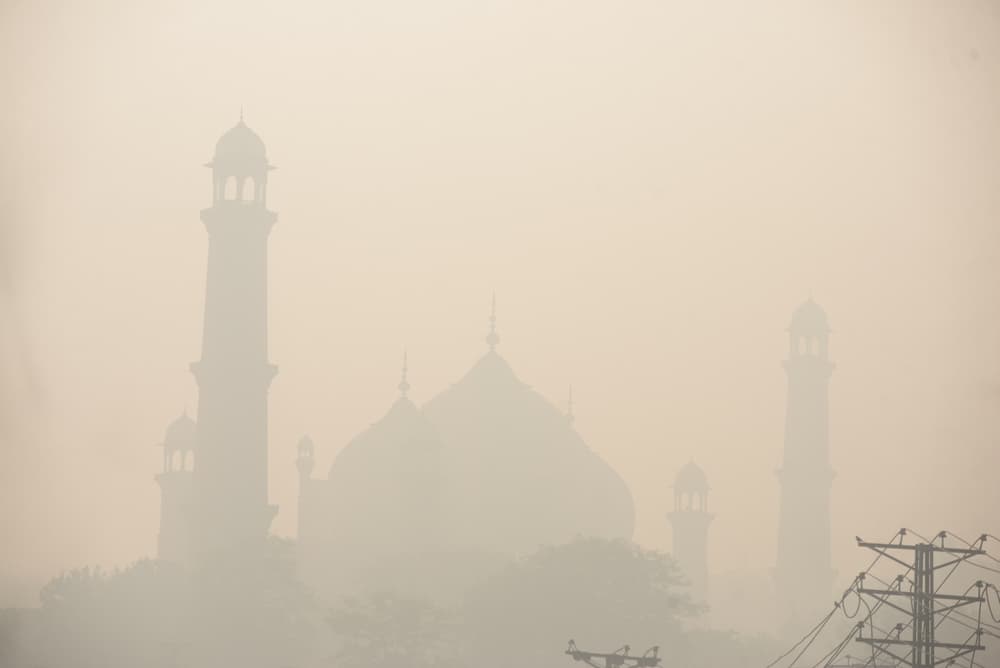
Lahore (AsiaNews) – The morning air no longer brings relief to the people of Punjab. Instead, it carries a thick blanket of toxic smog that obscures roads, irritates eyes and makes every breath uncomfortable. For thousands of families, stepping outside to go to school, earn a living or visit a hospital has become an everyday health concern.
In Gujranwala and Lahore, two cities repeatedly affected by severe winter pollution, residents are struggling with coughing, breathing difficulties, burning eyes and persistent throat irritation.
What was once considered a seasonal inconvenience has developed into a recurring public health and environmental crisis.
Afzal John, a resident of Gujranwala, says the situation has become increasingly difficult for ordinary families, particularly those living in poverty.
"People are becoming increasingly worried about the air they breathe every day. The smog is so thick that going outside has become uncomfortable and frightening, especially for children and elderly people.
“Families are concerned about persistent coughing, breathing difficulties and eye irritation. Poor people are suffering the most because they cannot afford air purifiers, expensive medicines or repeated visits to hospitals.
“We cannot simply stop working or remain inside our homes. The government must take serious and lasting measures to protect people's health," he said.
His concerns reflect the reality of millions who cannot escape polluted neighbourhoods or afford the protection available to wealthier households.
According to reported air-quality readings on Friday morning, Gujranwala recorded an Air Quality Index (AQI) of 661, followed by Multan at 641 and Lahore at 465 between 7 am and 8 am. Sargodha registered 289, Sialkot 232, Rahim Yar Khan 228 and Bahawalpur 198. These readings illustrate how widespread the pollution has become across Punjab.
A medical emergency hidden in the air
For Samir Ali, a medical student in Lahore, the crisis goes far beyond reduced visibility or temporary discomfort. He warns that prolonged exposure to polluted air can have serious consequences for human health.
“Fine particulate matter enters deep into the lungs and can aggravate asthma, bronchitis and other respiratory conditions. Children, elderly people and patients with existing medical conditions are particularly vulnerable,” he explained.
“What worries me most is the long-term impact of repeated exposure to polluted air. We need stronger environmental policies, public awareness and preventive healthcare rather than temporary measures every winter," he added.
One of the most dangerous components of smog is PM2.5, microscopic particulate matter capable of penetrating deep into the lungs and entering the bloodstream. The World Health Organization associates exposure to air pollution with respiratory and cardiovascular diseases, stroke and lung cancer.
A crisis, years in the making
Punjab's smog crisis gained national attention in November 2016, when Lahore and surrounding districts experienced exceptionally severe air pollution. Since then, the problem has repeatedly returned during the winter months.
Vehicle emissions, industrial pollution, brick kilns, construction dust, waste burning and agricultural residue burning contribute to deteriorating air quality. During winter, atmospheric conditions, including temperature inversions and weak winds, trap pollutants close to the ground.
Rapid urbanisation, growing traffic, inadequate environmental planning and weak enforcement of pollution-control regulations have further complicated the situation.
When poverty makes breathing dangerous
The human cost is particularly severe for people whose livelihoods depend on outdoor work. Street vendors, traffic police officers, construction labourers, sanitation workers and motorcycle delivery riders cannot simply remain indoors when pollution levels rise.
For poor families, purchasing air purifiers, quality protective masks and medicines is often beyond their financial means. Even a routine hospital visit can become an additional burden for households already struggling with inflation, unemployment and rising living costs.
Children from disadvantaged communities also face disrupted education when schools close or outdoor activities are suspended. Many live in overcrowded homes where avoiding polluted air is almost impossible. The crisis therefore exposes an uncomfortable inequality.
Protecting our common home
The Catholic Church's concern for the environment is inseparable from its commitment to human dignity, social justice and the common good.
In his encyclical Laudato Si', Pope Francis reminds the world that environmental destruction disproportionately affects vulnerable communities. He calls for an ecological conversion that recognises the relationship between environmental protection, human dignity and responsibility towards future generations.
For Pakistan, this means moving beyond temporary winter restrictions towards sustained action: cleaner public transport, effective industrial emission controls, alternatives to crop burning, improved waste management and transparent air-quality monitoring.
Public hospitals must also strengthen their capacity to treat pollution-related illnesses, while authorities should provide timely health warnings and protection for vulnerable workers.
For Afzal John and Samir Ali, the issue is not simply about statistics or seasonal weather. It concerns the right of ordinary people to live without fear of the air they breathe.