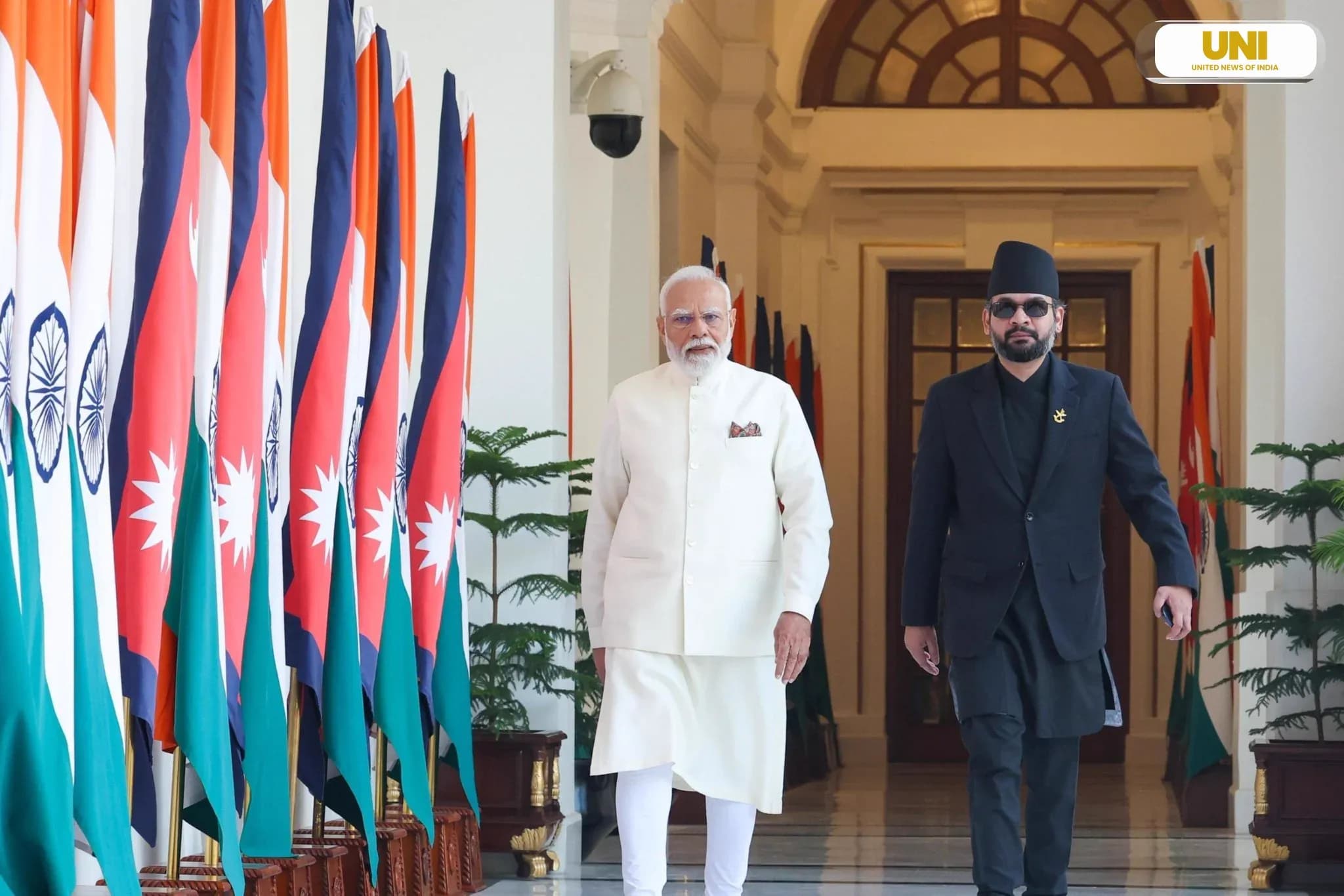
Kathmandu (AsiaNews) – Rebuilding flood-devastated areas, revitalising infrastructure, and reducing the costs of foreign trade are among the key priorities that took centre stage during Nepali Prime Minister Balendra “Balen” Shah’s first official visit to India in New Delhi on 22–23 November.
Narendra Modi’s government announced an aid package of 240 billion Nepali rupees, about US$ 1.6 billion, earmarked for post-flood reconstruction and various development projects. Yet, in Kathmandu, a question remains: how much of these resources will actually translate into tangible action on the ground?
A major precedent
Following the 2015 earthquake, India had pledged US$ 1 billion for reconstruction. However, a substantial portion of the soft loans was never utilised because of New Delhi’s conditions, which, among other things, required the use of Indian materials, services, and firms. This made it hard to launch many projects, particularly small-scale initiatives across the country, and limited employment opportunities for local workers.
In September 2016, Nepal signed an agreement with the Export-Import Bank of India to mobilise US$ 750 million in concessional loans, in addition to US$ 250 million in grants, with the stipulation that at least 75 per cent of the materials, equipment, and services, and 50 per cent of the materials used for civil works, had to be sourced from India.
In the past, difficulties had arisen in the reconstruction of schools and healthcare facilities.
The Amrit Science Campus in Kathmandu, for instance, continues to hold classes in earthquake-damaged buildings deemed unsafe, even though it was included among the institutions slated for reconstruction with Indian support.
A similar situation affects 39 facilities at Tribhuvan University, where projects have remained on hold because the loan funds were never mobilised.
The Nepali government had requested that the process be simplified and that an Exim Bank liaison office be established in Kathmandu, but these efforts did not yield the desired outcome.
The current situation
There is a risk that this new package could encounter similar obstacles, at a time when Nepal is facing one of the most challenging reconstruction efforts in recent years.
Floods and landslides in the Himalayan nation claimed more than 1,400 lives, with thousands still missing. According to government estimates, the cost of rebuilding the affected areas could reach US$ 4.8 billion.
The flooding damaged more than a dozen hydroelectric stations, reducing electricity generation capacity by approximately 10 per cent and halting energy exports. Consequently, support for the energy sector is of particular importance to Nepal’s economic recovery.
The package announced by Modi amounts to 150 billion Indian rupees, roughly US$ 1.6 billion.
It includes 35 billion Indian rupees (around US$ 380 million) in grants for post-disaster reconstruction and new infrastructure projects, as well as a 115-billion Indian rupee (US$ 1.24 billion) line of credit to support initiatives in the energy sector.
The selection of specific projects and the mechanisms for utilising these resources will be determined through further consultations between the two governments.
According to economist and former Nepali ambassador to India, Shankar Sharma, the decision to direct the loans primarily towards large-scale hydroelectric projects and transmission lines may make them easier to implement, though he notes that conditions regarding materials and labour could still pose challenges.
Sharma pointed out that the availability of local resources and workers should be taken into account when designing these interventions, even when the work is contracted to Indian firms.
Connectivity: Nepal’s great challenge
Shah’s visit to New Delhi yielded agreements on trade and transport, sectors that are critical for a landlocked nation heavily dependent on India’s infrastructure.
According to the joint statement, Kathmandu has secured a new transit route via the port of Kandla in Gujarat, while the port of Paradip in the state of Odisha will become available once the necessary infrastructure is in place.
Until now, Nepal has primarily relied on the ports of Kolkata, Haldia, and Visakhapatnam for trade with third countries.
The ability to diversify access points could reduce reliance on a limited number of routes and provide alternatives in the event of congestion.
For Nepali businesses, however, the actual benefit will depend on the real-world costs and transit times.
Utilising these new ports will require amendments to the transit treaty and the rail services agreement between the two countries, as well as new arrangements regarding customs procedures and links to the Sirsiya dry port in Birgunj, Nepal’s primary commercial hub.
Consequently, industry operators are calling for regular rail connections, competitive tariffs, and simplified procedures. Without these conditions, access to new ports risks remaining nothing more than an opportunity on paper.
The visit also addressed rail connectivity. The two prime ministers inaugurated a link between Ayodhya, in India, and Janakpur, in Nepal, a city of importance in Hindu tradition as the birthplace of Lord Rama’s wife, Sita.
Regarding air travel, however, Kathmandu did not succeed in securing new entry points into Indian airspace, a request intended to boost international traffic to the airports in Bhairahawa and Pokhara.
The two countries have, nonetheless, agreed to make the existing route between Kathmandu, Bhairahawa, and Lucknow bidirectional.
The agreement will need to be implemented through further technical consultations, specifically to define flight conditions within Indian airspace.
According to some analysts, India’s reservations regarding the airports are also linked to China’s involvement in the two airport projects: Pokhara was built with a Chinese loan, while a Chinese firm worked on the Bhairahawa project.
Balendra Shah’s balancing act
Situated between India and China, Nepal has always sought to maintain a balance between its two powerful neighbours.
In recent years, relations with New Delhi have been marked by tensions, accusations of political interference, and an as-yet-unresolved border dispute.
During their meetings in public, Shah and Modi did not address the issue directly, though they did acknowledge in a joint statement that certain matters remain open.
According to some observers, the Nepali government chose to focus on more pressing development needs, deferring talks over the most contentious dossiers.
For 36-year-old Shah, who rose to power following protests led by Generation Z that brought down the previous government, the visit represents an attempt at rapprochement after the friction of recent years, as well as an opportunity to reiterate the demand for a relationship based on equality.
The challenge for his administration will now be to translate the commitments made in New Delhi into concrete projects capable of addressing the urgent needs of a country still grappling with the aftermath of floods and a slow-moving reconstruction process.