Bandarban (AsiaNews) – In the Catholic village of Jaitun Para, in the hills of the Chittagong Hill Tracts in south-eastern Bangladesh, 14 residents have been arrested on charges of involvement in the murder of a Bengali Muslim man. The arrests are also causing financial hardship, as the men who have been detained are the sole breadwinners in their families.
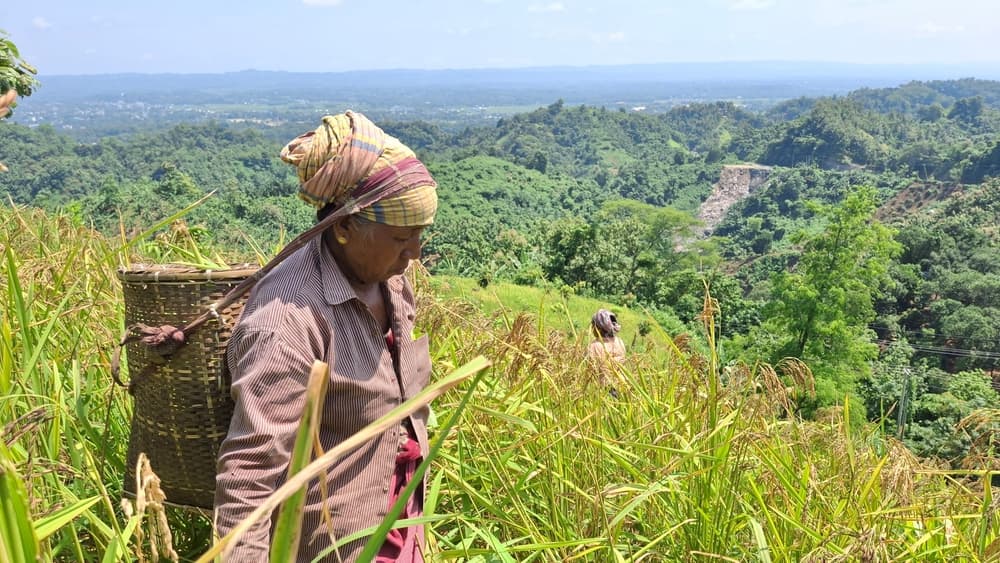
The village, inhabited mainly by families of the Tripura ethnic group and belonging to the parish of Bolipara, is home to around thirty Catholic households. Most live off subsistence farming and the traditional jhum system, a form of shifting cultivation practised in the hills that alternates between periods of cultivation and land fallow. In such contexts, the men are almost always the sole source of income.
The incident began on 5 June, when a man identified as Liton entered the village. According to the villagers, his behaviour had aroused suspicion because he had been unable to provide a convincing explanation for his presence. For this reason, some residents reportedly informed members of the Parbatya Chattagram Jana Samhati Samiti (PCJSS), the main political movement representing many of the indigenous peoples of the Chittagong Hill Tracts.
According to the residents’ account, some PCJSS members subsequently took the man into custody. Three days later, his body was found in a wooded area near the village of Eden Para. It was the residents themselves, who had gone out to work in the fields, who alerted the police after discovering the body.
The post-mortem, carried out at Bandarban Hospital, revealed gunshot wounds to the head. Investigators recovered a bus ticket from among the victim’s personal effects. The police have launched a murder investigation and stepped up patrols in the area in conjunction with the Border Guard Bangladesh (BGB).
The authorities, led by Police Superintendent Shahidullah Kawsar, have arrested and questioned several suspects, but so far have not publicly attributed responsibility to either the PCJSS or any other organisations. The investigation remains open.
However, the financial burden of these investigations now weighs heavily on the families. “We became suspicious and alerted the JSS because we were worried for our safety,” a resident who asked to remain anonymous told AsiaNews. “We never imagined that man would be killed. Now it is our families who are suffering. We just want our relatives to be able to come home.”
A woman, whose husband is among those arrested, describes a situation that has become unbearable: “There are four of us. My husband was the only one working. Since he was arrested, we’ve been struggling even to put food on the table. I don’t know how we’ll manage to get him out of prison.”
On top of the loss of income, there are legal fees and the costs of travelling to attend court proceedings – expenses that are difficult for families with little in the way of savings to bear.
In recent days, the community has also been struck by a second tragedy. A woman from the village died following complications from a leg injury. After initially being admitted to a Border Guard Bangladesh facility, she was transferred first to Bandarban and then to Chittagong, where she died.
According to local residents, the woman’s husband, son and son-in-law are all among those arrested in connection with the ongoing investigation and were unable to be with her during her final days or be by her side when she died. “It’s a tragedy within a tragedy,” says one resident. “None of them were able to be by her side. The whole village is sharing this family’s grief.”
These events have refocused attention on the Chittagong Hill Tracts, a mountainous area bordering India and Myanmar inhabited by numerous indigenous communities, collectively known as the “Jumma”, including the Tripura, Chakma and Marma communities. For decades, the region has been the scene of a conflict between the Bangladeshi state and indigenous movements, which were demanding greater autonomy and recognition of their land rights.
The conflict formally ended with a peace agreement signed in 1997 between the Government of Bangladesh and the Parbatya Chattagram Jana Samhati Samiti. The agreement provided, amongst other things, for the disarmament of the guerrillas, the gradual withdrawal of military camps, the creation of local autonomous institutions and the return of occupied lands to the indigenous peoples.
Almost thirty years after it was signed, however, many of the provisions have not been fully implemented. The military presence remains significant, land disputes continue and various armed groups are still active in the Hill Tracts. Meanwhile, the PCJSS has abandoned armed struggle and is now a legally recognised political organisation, but tensions between indigenous communities, state authorities and the Bengali population continue to affect daily life.
Whilst the police continue their investigation into the murder, the residents of Jaitun Para are calling for the case to be fully clarified. “We want the truth to come out,” says one resident. “But we also want our families to have a future.”