Kuala Lumpur (AsiaNews) – Malaysia has eliminated the requirement mandating that certain private educational institutions ensure that at least 30 per cent of their equity be held by Bumiputera partners, a category comprising people of Malay ethnicity and the country's indigenous populations.
The decision, announced on 21 September by the Ministry of Education, does not concern student admission percentages, and applies to private educational institutions managed by private companies that fall under the Ministry's jurisdiction.
The principle of Bumiputera protection
Protectionist policies for the Bumiputera stem from a principle enshrined in the constitution adopted on the eve of independence in 1957.
Article 153 tasks the King of Malaysia with safeguarding the "special position" of ethnic Malays and the indigenous peoples of Sabah and Sarawak. This involves reserving for them a percentage of civil service positions, scholarships, educational opportunities, and certain commercial licences or permits, deemed "reasonable" by the monarch.
The same article also mandates the protection of the legitimate interests of other communities, aiming to redress the socioeconomic imbalances resulting from British colonial rule.
The allocation of quotas has thus always been fundamental in Malaysia, shaping access to education, public sector employment, and numerous economic opportunities.
But who are the Bumiputera?
The term literally means "son of the soil" and primarily refers to ethnic Malays and other Indigenous groups of Peninsular Malaysia, as well as the native populations of the states of Sabah and Sarawak in Malaysian Borneo.
According to the OECD, Malays make up approximately 64 per cent of the Malaysian population, while Chinese and Indians account for 23 per cent and 7 per cent respectively; the remaining 6 per cent is made up of other indigenous groups and people of mixed heritage.
The origin and evolution of Malaysia’s quota system
The quota system was significantly expanded following interethnic tensions and clashes in 1969 following the introduction of the New Economic Policy (NEP) in 1970–71. This policy had two objectives: to eradicate poverty irrespective of race and to restructure society in order to reduce the identification of economic function with ethnicity.
The NEP also sought to increase Bumiputera ownership of corporate equity, aiming at increasing it from 2.4 per cent in 1970 to at least 30 per cent by 1990, and to foster Bumiputera participation in commerce and skilled professions.
The issue of quotas has always been a sensitive one for Malaysia’s successive governments.
On one hand, proponents argue that policies of affirmative action are necessary to address historical socioeconomic inequalities. On the other, critics believe these policies prioritise ethnicity over need or merit.
Even after the NEP ended, the 30 per cent figure remained a long-standing benchmark in public policy. For instance, the requirement recently abolished had been introduced in guidelines published in 2006.
The Malaysian government continues to play a major role in funding and regulating institutions, and preferences for Bumiputera have historically been part of policies governing access to specific educational opportunities.
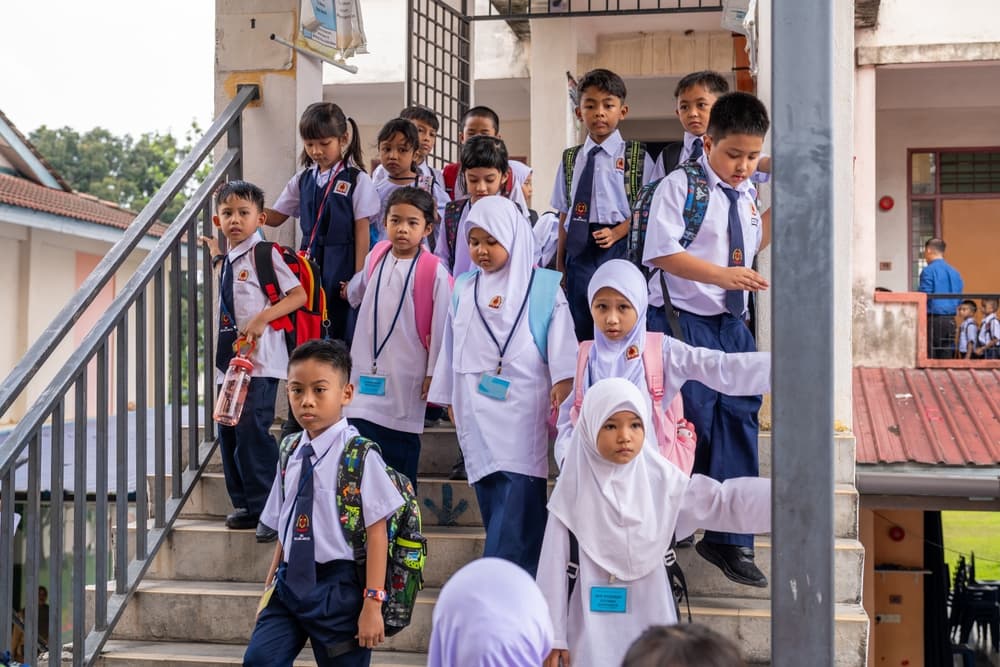
However, Malaysia also boasts a significant private education sector that operates under different regulatory and ownership rules. These institutions, founded by corporations, foundations, and other private entities, enrol both Malaysian and international students.
The elimination of the 30 per cent equity ownership requirement does not, therefore, automatically alter public university admission policies, government scholarships, or other forms of affirmative action regarding access to higher education, areas where quotas still play a fundamental role today, despite having been officially abolished in 2002.
Other quotas: access to the education system
According to an OECD report published in July 2026, Bumiputera students currently account for 82 per cent of public university enrolments, even excluding Universiti Teknologi MARA (UiTM), the country’s largest public university (with approximately 190,000 students), which is reserved exclusively for Bumiputera. This figure reflects the actual composition of the student body, rather than a quota set at 82 per cent.
Another key element is the matriculation college system, one-year pre-university programmes serving as a pathway to public universities, where 90 per cent of places are reserved for Bumiputera, while the remaining 10 per cent are available to others.
In 2026, the Ministry of Education confirmed that this ratio remains unchanged; however, it also guaranteed admission to all candidates who achieved at least 10A grades (a very high score) on the Sijil Pelajaran Malaysia (the final secondary school examination), regardless of their ethnicity.
Anwar Ibrahim’s balancing act
Prime Minister Anwar Ibrahim’s government has inherited this complex policy landscape. Anwar has long been associated with the concept of reformasi, yet he also leads a government comprising parties and constituencies with differing views on the future of pro-Bumiputera policies.
His administration has thus had to strike a balance between calls for institutional and economic reform and the political imperative of maintaining safeguards for the Malay majority.
The latest decision regarding education can be viewed within this broader public policy debate, though it would be premature to characterise it as dismantling of affirmative action policies.
The ministry itself explained that ownership rules for certain private educational institutions should reflect the sector's present needs and allow participation by parties that can contribute to national development.
The approved change gives private education operators greater flexibility over ownership structure. Thus, the decision on private education may be better understood as a targeted adjustment rather than a wholesale policy reversal.
It also reflects a question Malaysia will continue to face, namely how should policies originally designed to address socioeconomic inequalities in decades after independence evolve as the economy becomes more complex and globally connected?