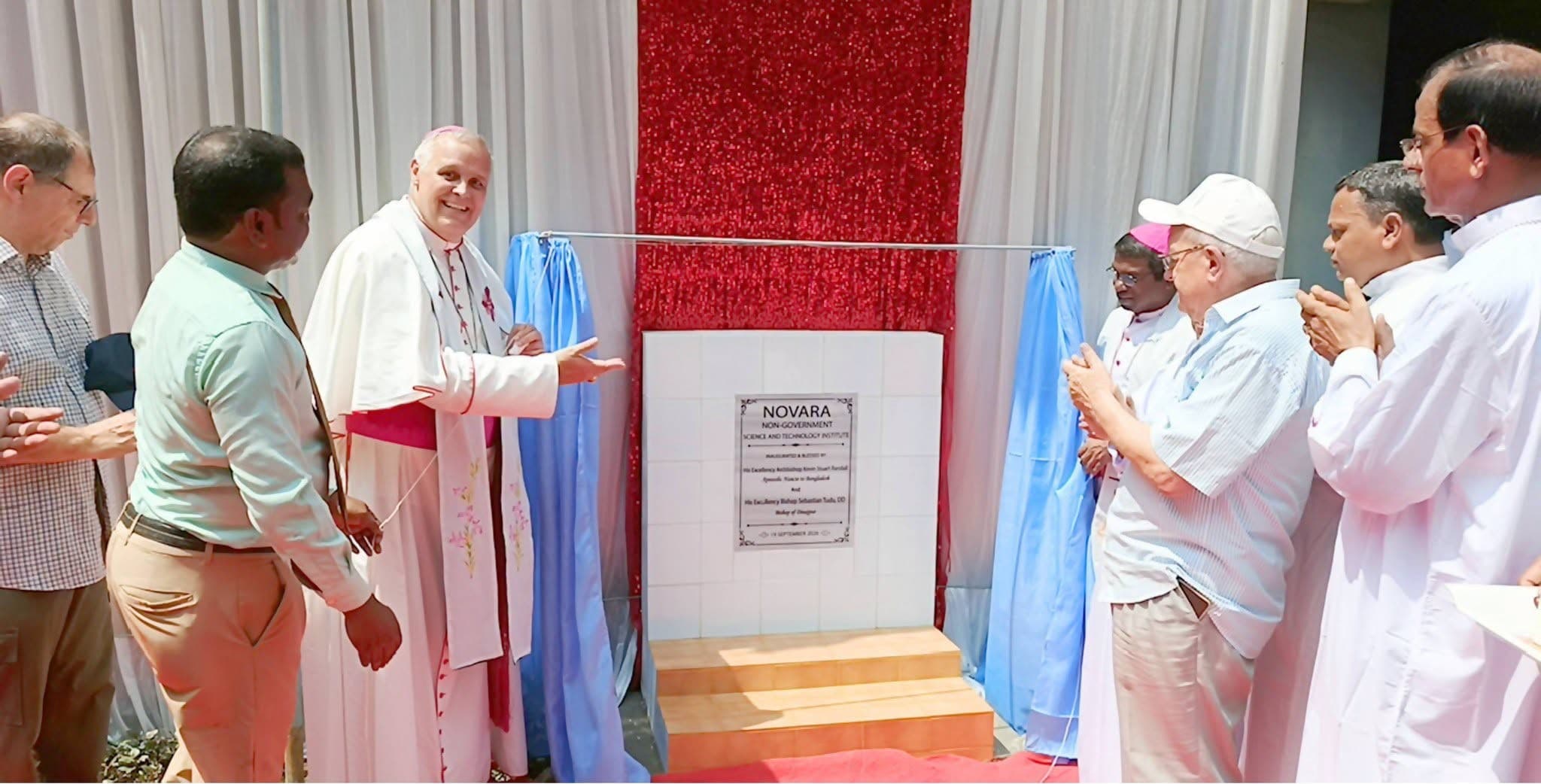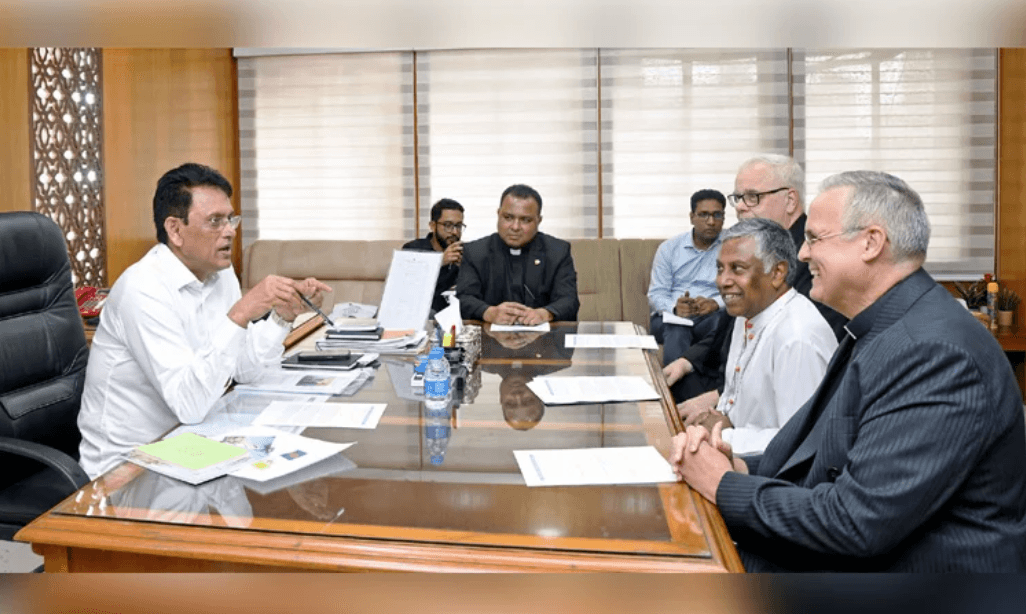
Dhaka (AsiaNews) – A meeting described as “extremely productive and positive” for all those involved, but above all “for the children” of the country. This is how Archbishop Kevin Randall, Apostolic Nuncio to Bangladesh, commented to AsiaNews on the meeting held on 28 September between local Catholic leaders and the Minister for Primary and Mass Education, Abu Naser Muhammad Ehsanul Hoque Milan.
The delegation also included the Archbishop of Dhaka, Bishop Bejoy N. D’Cruze, President of the Catholic Bishops’ Conference of Bangladesh (CBCB) and of the Board of Catholic Education (BCEB), and Charles Gordon, Vice-Chancellor-designate of Notre Dame University Bangladesh. During the meeting, the parties discussed cooperation in the field of education and the contribution of Catholic institutions to the country’s education sector, and Monsignor D’Cruze presented the Minister with a memorandum setting out “concerns” regarding schools run by the Church.
In a letter, the Archbishop of Dhaka thanked the government for the cooperation it had offered to Church-run schools and institutions over the past 55 years, highlighting the significant progress made in the education sector since independence. At the same time, he noted that certain issues, already raised in previous meetings with the education authorities, remain unresolved. Hence the Catholic delegation’s request to “maintain the established administrative procedures” for the schools under its management and to ensure that hundreds of them – which cater for children from disadvantaged backgrounds – are not forced to close.
One of the Church’s main concerns relates to the appointment and transfer of headteachers, deputy headteachers and academic coordinators at Catholic schools. The BCEB has requested that ecclesiastical authorities be allowed to continue appointing qualified candidates – including priests and members of religious orders – to fill leadership roles in schools under their administration. This is in accordance with a practice already recognised by previous government decisions.
The document also raised concerns regarding Church-run institutions that receive state funding or are included in the MPO (Monthly Pay Order) system, which governs teachers employed at private schools and institutions receiving government funding. According to the bishops, several management roles are currently held by qualified religious staff who are not covered by the MPO system; however, the government would consider some of these posts to be vacant, thereby initiating procedures for new appointments. The Church has urged the authorities to resolve the issue by taking into account the actual situation on the ground.
Another issue concerns property ownership. Church leaders have asked the government to continue recognising title deeds and allocation documents issued by ecclesiastical bodies as valid proof of ownership for educational institutions, in accordance with established administrative practice. Particular attention has been drawn to a recent directive requiring unregistered primary schools to complete the registration process by the end of today. The Church pointed out that around 500 primary schools and educational centres run by Catholic organisations operate in remote villages, hill areas, indigenous communities and urban shanty towns, often with limited infrastructure and scarce resources.
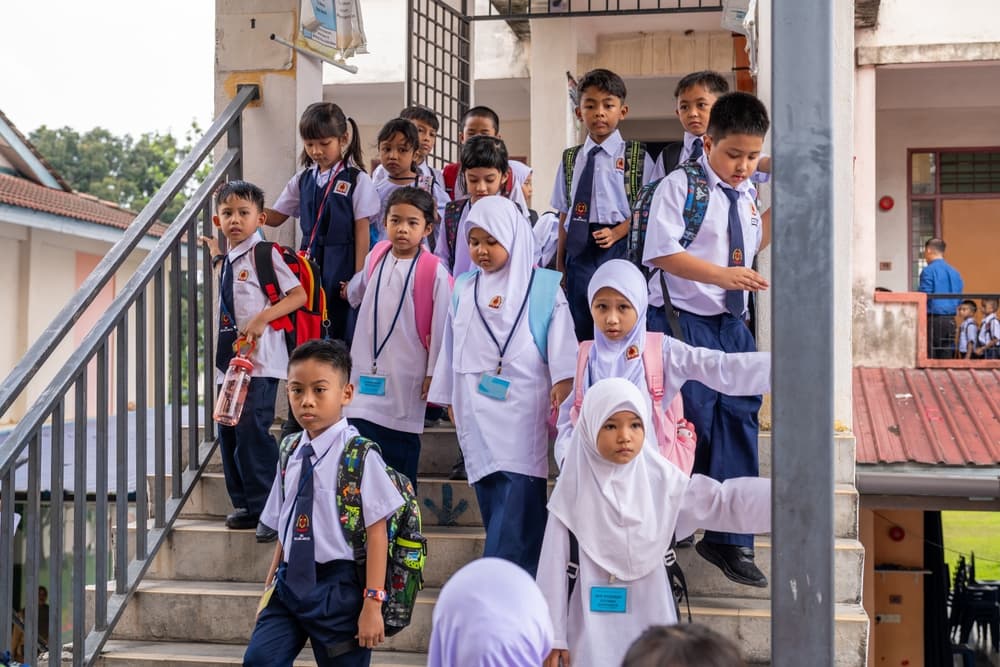
The bishops also requested that the governing bodies of Church-run institutions retain authority over the selection of teaching and non-teaching staff not subject to the Mpo system; furthermore, that existing procedures, which allow for the transfer of religious staff between Catholic institutions, continue without interruption. Figures from the Bishops’ Conference indicate that the Catholic Church runs around a thousand educational institutions throughout Bangladesh, including pre-primary and primary schools, lower and upper secondary schools, university colleges, teacher-training institutes and universities. These institutions welcome students of all religious faiths and have contributed to education, character building, sport, cultural activities and teacher training throughout the country.
Speaking to AsiaNews at the end of the meeting, the Apostolic Nuncio expressed his satisfaction: “The Minister and his staff, the Director-General and other officials,” he said, “have proved extremely willing to resolve every issue. No aspect has been overlooked: every problem has been resolved for the benefit of the students involved, particularly those from disadvantaged backgrounds living in small villages.” Monsignor Randall went on to add that the government has shown a strong commitment to guaranteeing educational opportunities for all, working “actively to ensure the fundamental right to a quality education and is grateful to the private schools that collaborate with it for the common good”.
During the meeting, the Vatican delegation highlighted the historic contribution of Catholic schools to girls’ education and inclusive education in Bangladesh, expressing an interest in strengthening educational cooperation between the Holy See and the Asian nation. For his part, ANM Minister Ehsanul Hoque Milon praised the long-standing relations between Bangladesh and the Vatican, expressing the hope that cooperation between the two parties would be further developed. Finally, he also reaffirmed the government’s commitment to improving the quality of education and modernising the national education system.