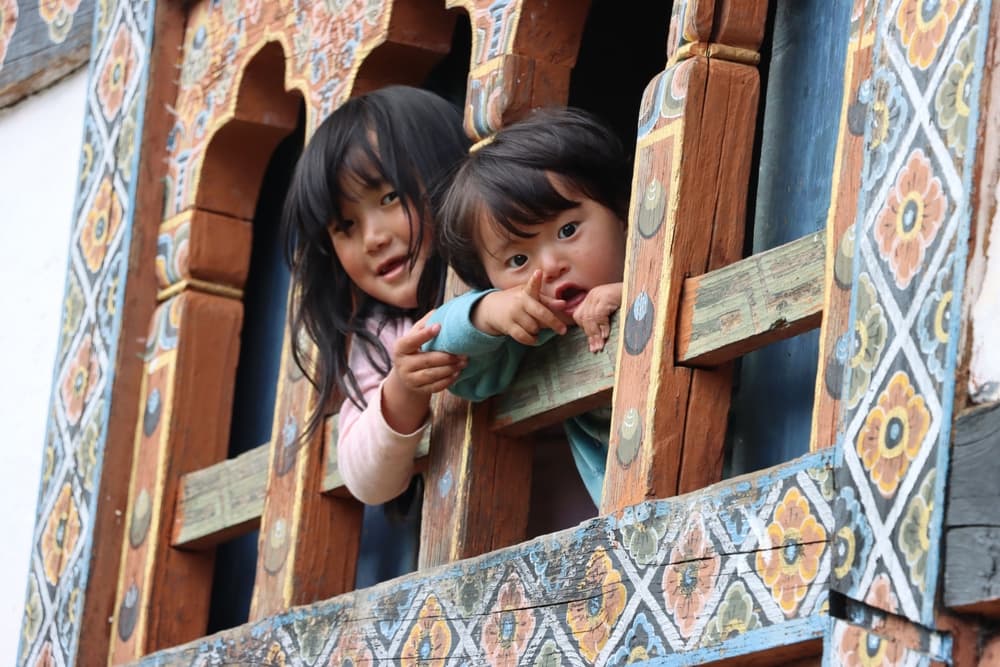
Thimphu (AsiaNews) – A new measure extending childcare leave for public servants was approved in early November. Both parents are eligible: those with a child under the age of ten are entitled to five days of leave per year, while those with three or more children may receive up to nine days.
This new policy, which falls under the Third Child Plus Programme, seeks to support parents and encourage an increase in the birthrate, which is currently in sharp decline in the Himalayan nation.
Bhutan announced the Third Child Plus Programme this past June; the initiative includes, among other measures, financial support for families with three or more children.
Under the plan, for every child born after 4 June, families will receive 10,000 Bhutanese ngultrum (approximately US$ 104) per month until the child reaches the age of three.
The programme also covers children born before June 2026 who are under three years of age; payments for these children began following the approval of the plan.
The programme comes at a time when the decline in births is becoming an increasingly urgent issue for the country.
According to government data, the annual number of births has fallen from 11,001 in 2015 to 8,153 in 2024. During the same period, the fertility rate, the average number of children per woman, has dropped below the replacement level of 2.1 children per woman.
The government warns that this trend, combined with emigration, could have long-term consequences for Bhutan’s workforce, economic growth, and social development.
In recent years, a significant decline in the number of third and subsequent births has been reported. It is against this backdrop that the parental leave policy was approved in early November, offering additional benefits for larger families.
Bhutanese Prime Minister Tshering Tobgay announced that approximately 31 million Bhutanese ngultrum (roughly US$ 324,000) has been allocated for the 2026–2027 financial year to fund the Third Child Plus Programme.
Beyond financial assistance, the programme includes a range of measures designed not only to encourage higher a birthrate but also to improve the overall well-being of families, parents, and children.
These measures include expanding childcare services, offering greater flexibility in work arrangements for parents, strengthening parental leave policies, and implementing other initiatives aimed at reducing the costs and challenges associated with raising children.
Bhutan is not the only nation grappling with demographic decline; the phenomenon affects many countries across Asia, several of which have introduced specific programmes to address it.
The measures include financial grants for newborns, savings programmes earmarked for children’s education and healthcare, and housing incentives for young couples, particularly in urban areas where the cost of living is higher.
While the public sector is making some progress in recognising parental rights, protections in the private sector remain limited; in some companies, for instance, maternity leave lasts only two or three months.
The issue was raised during a parliamentary debate in 2025, in which the government acknowledged the need to strengthen protections for parents.
However, the implementation of these measures remains uncertain, largely due to limited resources and the variation in policies adopted by individual companies.