Delhi (AsiaNews) - India's bishops have expressed “deep sorrow” and called for “solidarity” with the victims of the devastating floods that have struck Nepal and Tibet in recent days, particularly in the border region.
In a statement sent to AsiaNews, the Catholic Bishops’ Conference of India (CCBI) express their “condolences” to the families who have “lost their loved ones”, together with their “spiritual closeness” to those injured, displaced or deprived of their homes and livelihoods in the disaster.
The bishops join Pope Leo XIV in prayer for the victims and for all those struggling to cope with the consequences of the disaster. “Just as the Holy Father has assured the victims of his spiritual closeness, so too we, as the CCBI, stand in solidarity – the statement continues – with our brothers and sisters in this hour of sorrow”.
Speaking on behalf of the Catholic Church in India, Cardinal Filipe Neri Ferrão, President of the CCBI, calls upon bishops, priests, religious congregations, Catholic institutions, the faithful and all people of good will to respond to the crisis with “compassion, prayer and practical solidarity”.
The cardinal calls for assistance “in whatever way each person is able to do so”, adding that the response must “go beyond” words and find “expression in concrete acts of compassion and support”. At the same time, the Bishops’ Conference calls for prayers for the rescue workers and for all those involved in relief operations.
Finally, the statement concludes by encouraging the Catholic community in India to “remain united in prayer and solidarity with the people of Nepal during this time of suffering”.
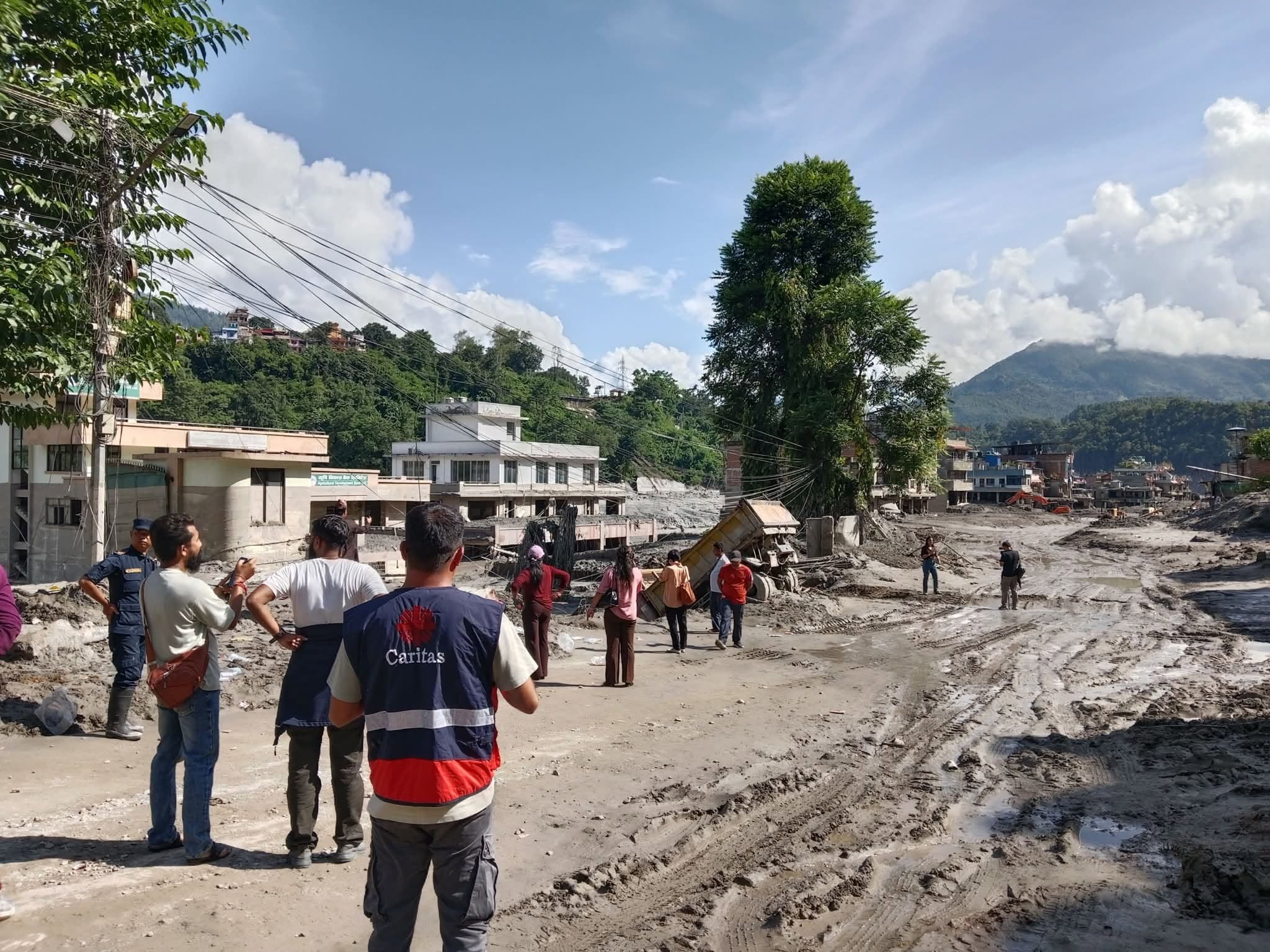
Among the organisations involved in the relief efforts is Caritas Nepal, which has recently reached the flood-affected areas in Nuwakot, delivering essential supplies to support families affected by the devastation.
The supplies were delivered to the local headquarters of the District Co-ordination Committee, which operates under the District Administrative Office (DAO) in Nuwakot, in collaboration with government authorities.
At the same time, Caritas Nepal has launched an appeal to the public and the international Christian community, asking them to support the relief efforts through donations and funding.
“Together,” states a message from the management shared on social media, “we can bring hope, relief and dignity to all those who have been affected” by the disaster.
Meanwhile, the death toll from the flood on 26 August continues to rise, with figures – whilst still provisional – becoming increasingly grim.
The latest figures released this morning by Nepal’s National Disaster Risk Reduction & Management Authority (NDRRMA) put the death toll at 626, with over 2,400 people missing; at the same time, the Chinese authorities report seven fatalities and more than 550 people missing on the Tibetan side, although the information is subject to censorship and there are no independent reports.
This disaster has claimed not only human lives but has also caused significant economic and infrastructural damage: Kathmandu’s Finance Minister states that the country will require between four and five billion dollars for reconstruction.
“This is merely an estimate,” Swarnim Wagle clarified. “Losses and damage are currently being assessed.” As well as sweeping away homes, the flood has destroyed key infrastructure such as roads, bridges and hydroelectric power stations.
On the Nepalese side, further rainfall has been reported across the north of the country; this is not only hampering the work of emergency teams in the most remote areas but also risks causing further landslides.
Meanwhile, from the Chinese side, the first videos have emerged showing emergency personnel at work in Gyirong County, Tibet, coming to the aid of the affected populations. Among the teams present are units from the Sichuan Fire and Rescue Mobile Corps, who are combing the mountainous areas with the primary task of searching for people who are buried or missing.
Despite the sparse footage, the Beijing government is maintaining strict censorship in this region, which is (also) sensitive from a political and religious perspective, whilst Tibetans in the diaspora continue their – so far fruitless – search for further news. But when one compares the country’s online content with what much of the world has seen online in recent days, the Chinese firewall becomes more visible than ever.
Tibet, which Beijing annexed in the 1950s, has long sought to resist the rule of the Communist Party. Over the years, China has consistently denied allegations of protests – often suppressed by force – and has been accused of serious violations of the religious freedom of Tibetan Buddhists, whose leader in exile, the Dalai Lama, is regarded as a separatist political leader. Along with Tiananmen Square and other sensitive topics, it is one of the most censored terms online by the authorities.
Meanwhile, the Nepalese government has reversed its previous decision not to request assistance from international search and rescue teams, partly as a result of intense diplomatic pressure from countries whose citizens are among those still missing following the disaster.
On the very day of the tragedy, the government stated that Nepalese rescue workers would be able to handle the search and rescue operations and that it would not agree to the deployment of rescue teams from other nations.
“We have come under enormous pressure from the international community to at least allow search and rescue teams and some experts in, as their citizens are also among those missing in the floods,” said a senior government official. “We are therefore allowing,” he clarified, “a limited number of experts in certain areas.”








.jpg&w=3840&q=75)