Dhaka (AsiaNews) – Ripon Gomes (a pseudonym), an accountant at a co-operative credit union in Dhaka, is learning digital marketing after office hours. His salary is no longer enough to support his family of five, so his wife also works at a beauty parlour. Yet the couple continue to struggle to meet their monthly expenses.
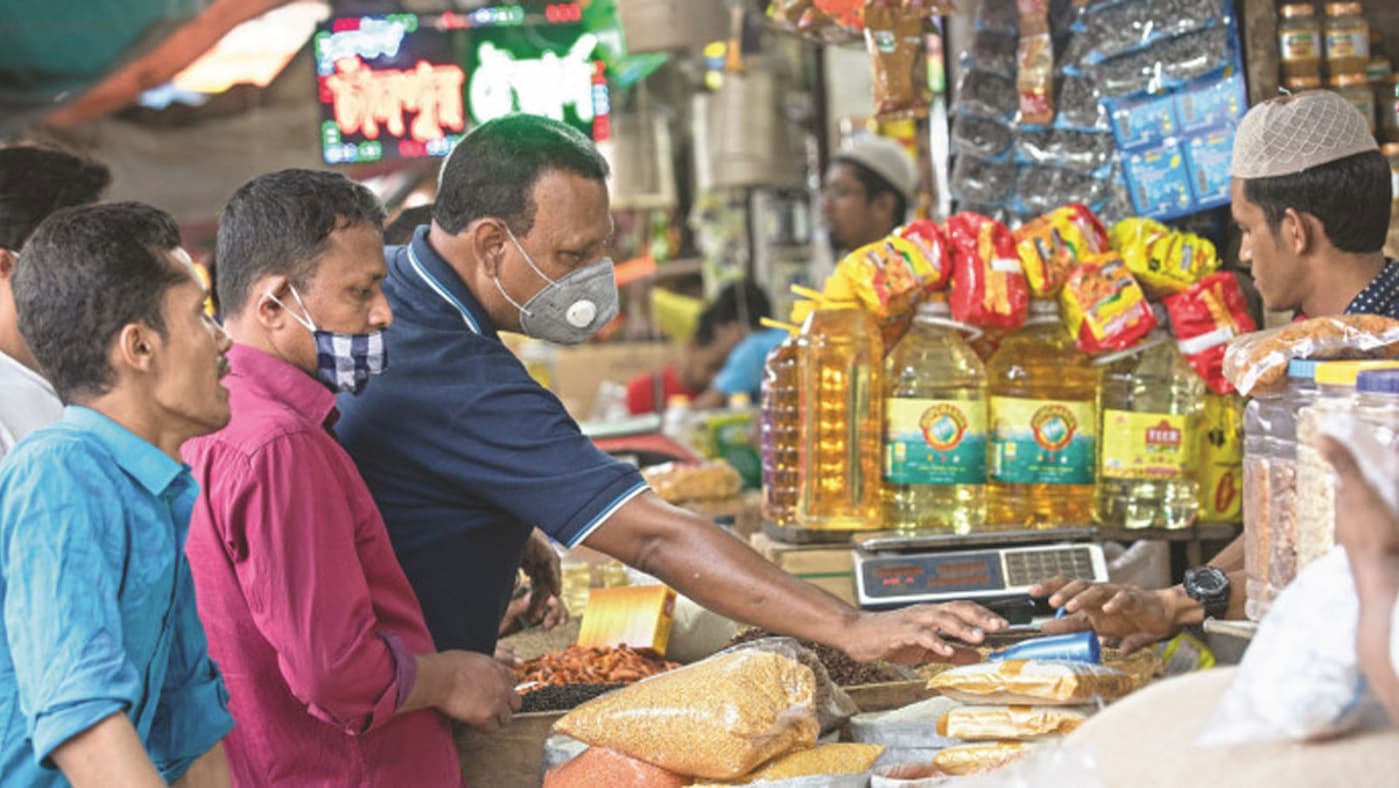
For Gomes, the rising cost of living has turned even ordinary grocery shopping into a difficult calculation. “Back in 2023, a kilogram of rice cost around 60 taka (US$ 0.48). Now it costs up 85 taka (US$ 0.68),” he says.
With rising gas and fuel prices pushing up production and transportation costs, household budgets have come under growing pressure, while private-sector salaries have largely failed to keep pace.
“I used to buy 12 bananas; now I buy six. I used to buy a kilogram of eggplant; now I buy 500 grams,” he explains. “This is how I have to cut expenses just to keep the household running.”
His experience reflects a wider struggle among Bangladesh’s lower-middle-class families, particularly those living in urban areas.
With monthly incomes increasingly unable to cover basic expenses, many are exhausting their savings, borrowing money or reducing food consumption. Meat and fish are becoming less frequent on some family tables, replaced by lentils, eggs and cheaper vegetables.
The lower-middle class faces particular vulnerability. Many households earn too much to qualify for poverty-targeted social assistance but have neither substantial savings nor alternative sources of income to withstand rising prices.
Rent, utilities, transportation, children's education and healthcare leave little room for unexpected expenses.
The burden is especially heavy for families renting homes in Dhaka. Electricity, water, gas and transportation costs consume an increasing share of their earnings. Traffic congestion adds further pressure, forcing some workers to spend more time and money commuting.
The rising price of liquefied petroleum gas (LPG) has added to household difficulties. In April 2021, following a High Court directive, the Bangladesh Energy Regulatory Commission (BERC) began regulating privately supplied LPG prices. A 12-kg cylinder then cost 975 taka (US$ 7.85). Over 63 monthly adjustments, prices rose 32 times, dropped 26 times and remained unchanged five times.
On 2 November, the price of a 12-kg cylinder was set at 2,060 taka (US$ 16.55), more than double its April 2021 level. For households without access to piped gas, purchasing cylinders has become another substantial monthly expense.
Healthcare and education are also suffering. Families struggling to balance their budgets increasingly postpone medical consultations, diagnostic tests and medication. School fees, books, uniforms and transportation costs place additional pressure on parents, who often sacrifice their own needs to keep their children in school.
The scale of the problem is reflected in official figures. According to the Bangladesh Bureau of Statistics (BBS) 2025 Special Survey on the Standard of Living, 47.42 per cent of households have taken loans to meet living expenses. The proportion rises to 51.91 per cent in rural areas, compared with 40.19 per cent in urban areas and 32.11 per cent in city corporation areas.
The survey puts average monthly household income at 33,513 taka (US$ 270), against expenditure of 35,313 taka (US$ 265), leaving an average monthly deficit of 1,798 taka.
Inflation is further eroding purchasing power. BBS data for September 2026 put overall inflation at 8.34 per cent, while wage growth stood at 7.90 per cent. The gap means that even salary increases are insufficient to maintain the same standard of living.
SM Nazer Hossain, vice-president of the Consumers Association of Bangladesh (CAB), points to weaknesses in market supervision as another factor behind the pressure on consumers.
He says inadequate monitoring allows some businesses to set prices arbitrarily, while certain traders hoard essential goods to create artificial shortages and manipulate supply.
Consumers ultimately bear the cost, with lower-middle-income families particularly affected.
Hossain argues that stronger market oversight and enforcement are needed to protect consumers from unjustified price increases.
Beyond market regulation, economists point to the need for higher household incomes, more employment opportunities, and affordable essential services.
Investment in industry and business, reliable supplies of electricity and gas, and lower production costs could help support economic activity and employment.
Affordable housing, accessible healthcare, lower education costs and reasonably priced food are also important, particularly for vulnerable urban households.
Welfare measures, they argue, should consider not only families living in poverty but also lower-middle-income households at risk of falling into it.
For families such as Gomes's, however, the crisis is already reshaping everyday life. It affects what they eat, when they seek medical treatment, how they educate their children and whether they can save for the future.
Behind the apparent normality of city life, many households are quietly struggling to make ends meet. For Gomes, learning a new skill after work is not simply a career ambition; it is an attempt to ensure that his family can get through another month.