Colombo (AsiaNews) - Efforts to date to protect Sri Lanka's wetlands, which include lakes, rivers, marshes, peatlands, estuaries, mangroves, coral reefs, rice paddies, reservoirs and mudflats, are futile if development projects continue to destroy them.
This is the alarm raised in recent days by experts from the Centre for Environmental Justice (CEJ), who are renewing their commitment to safeguarding an ecosystem that covers ‘only’ about 6% of the Earth's surface but is home to up to 40% of plant and animal species.
This appeal coincides with World Wetlands Day, celebrated every year on 2 February in commemoration of the adoption of the Ramsar Convention on Wetlands in Iran in 1971.
Scientists believe that wetlands provide essential ecosystem services, including flood control, water regulation and water purification, while supporting biodiversity, health, food supply and tourism. Globally, more than one billion people depend on wetlands for their livelihoods, and they also play a significant role as a barrier against climate change.
Meanwhile, land reclamation also threatens key ecosystems such as the Muthurajawela (Royal Treasure) marsh, the largest coastal salt marsh. Despite legal frameworks and protection policies, uncontrolled infrastructure projects and weak enforcement of regulations are causing irreversible damage to its biodiversity.
Environmentalists Sandesha Karunatillake and Athula Dissanayaka explain to AsiaNews that ‘major infrastructure projects, including the Colombo-Katunayake motorway, which divides the wetland in two, have had a significant impact on critical areas such as Muthurajawela, which covers 3,068 hectares’. In addition, industrial expansion and housing construction are taking priority over conservation, thereby reducing the wetlands' ability to act as natural barriers against flooding.
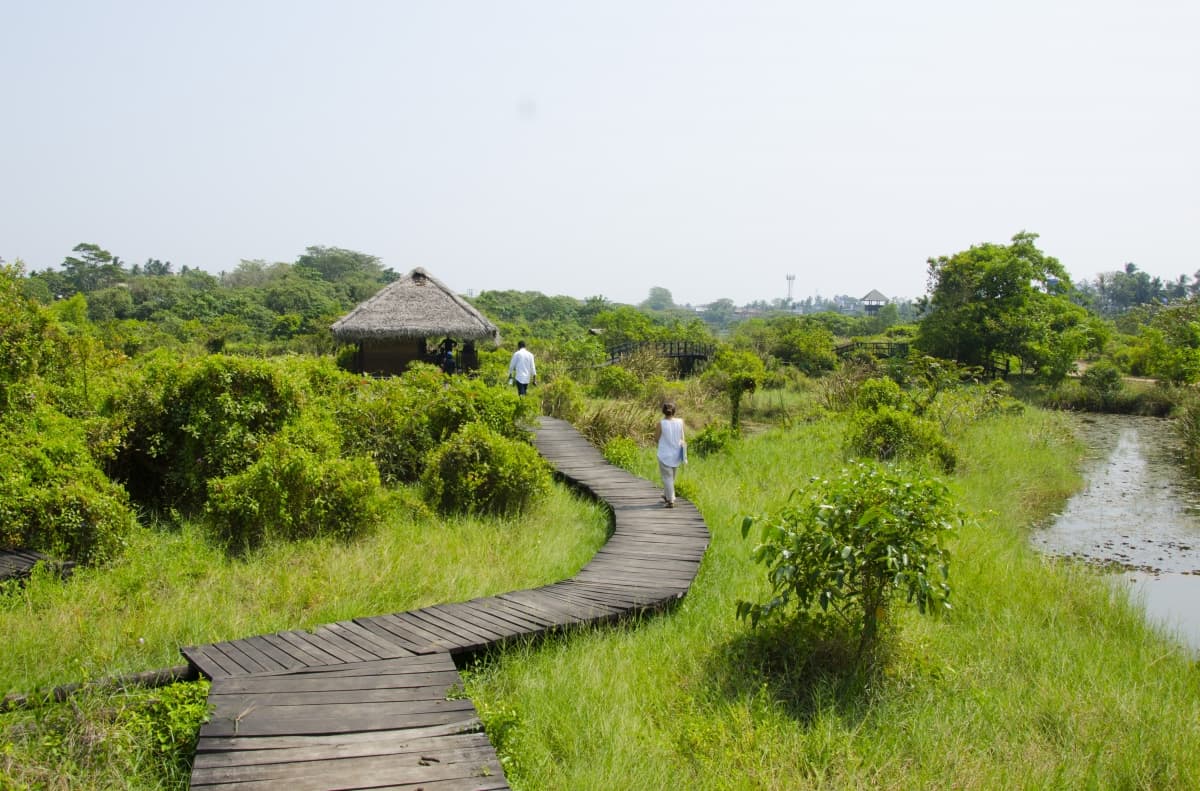
The Colombo wetlands, a 900-hectare system comprising marshes, lakes and urban canals, despite being designated as the first city in the world to obtain Ramsar Wetland City accreditation in 2018, continue to be under enormous pressure from urbanisation. “These vital ecosystems, which include Beddagana Wetland Park and Lake Thalangama, act as natural barriers against flooding, protecting the city thanks to their ability to store large amounts of water,” experts warn.
"These wetlands function as sponges for flood management, reduce temperatures, treat wastewater and are biodiversity hotspots. Despite its Ramsar status, the area suffers an annual loss of 1.2% due to rapid development, illegal waste dumping and pollution. Projects such as Beddagana Wetland Park and Parliamentary Wetland Park aim to conserve these areas by combining green infrastructure and urban planning."
Academics Mayantha Guruge and Ravihari Alwis believe that “political connections often exacerbate these threats. With the destruction of wetlands such as Anawilundawa, Negombo Lagoon and reclamation projects in Muthurajawela, including plans for the construction of roads, tourist hotels and industrial facilities, these fragile ecosystems are being invaded”.
According to the 2006 National Wetland Inventory compiled by the Central Environment Authority (CEA), the International Union for Conservation of Nature (IUCN) and the International Institute for Water Management, Sri Lanka has 62 wetlands. Of these, experts point out, at least 18 are “highly threatened”. The CEJ intervened in the development project of the Wedithalathivu Nature Reserve, threatened by an aquaculture park, including shrimp farming, which led to widespread destruction of mangroves.
CEJ senior officials believe that “state intervention is essential and that development planning must prioritise wetland conservation to ensure that these vital ecosystems are not damaged by development”.
The government, they warn, must ‘create and enforce policies, including the National Wetlands Policy, to prevent the conversion of wetlands into industrial or residential areas, preserving biodiversity and contributing to flood control.
Their loss, the scholars reiterate, is considered ’a direct cause of increased flood risk". According to the Urban Development Authority (UDA), the main objective of the Colombo Commercial City Development Plan (2019-2030) is to create a city network of green spaces connected by wetlands and waterways.