Phnom Penh (AsiaNews) – Dozens of activist organisations – both international and local – are appealing to the leaders of Francophone countries to put pressure on Phnom Penh over human rights violations during the historic summit scheduled for this weekend in the Cambodian capital. The most prominent foreign leader visiting the South-East Asian country is French President Emmanuel Macron, who is also the one facing the most intense pressure; one of the two cases on which the activists are focusing, in fact, concerns the murder of a Franco-Cambodian dissident in exile, which took place last year on the streets of Bangkok.
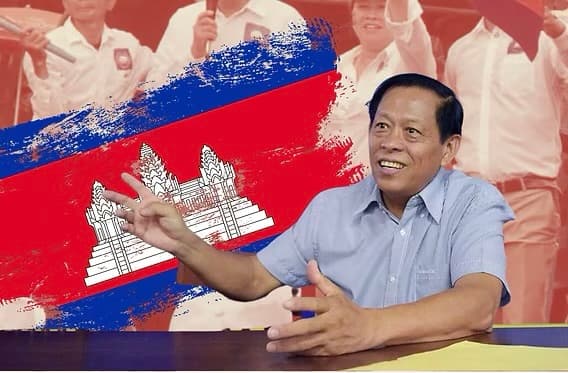
In addition to the murder of Lim Kimya (pictured), a former Cambodian opposition MP and fierce critic of the country’s former leader and strongman Hun Sen, the coalition is calling for the release of five young environmental activists better known by the nickname ‘Mother Nature Cambodia 5’ (MNC5). They were imprisoned in 2024, receiving sentences ranging from six to eight years for an (alleged) plot against the government and lèse-majesté.
The UN Special Rapporteur on the situation of human rights in Cambodia, Tom Andrews, who carried out an assessment visit earlier this year, yesterday joined the call for their release. The UN representative also urged the various leaders attending the summit to “uphold the fundamental values of the International Organisation of La Francophonie (OIF), by working with Cambodia to ensure the release of those who are unjustly detained”.
“The promotion of peace, democracy and human rights is one of the OIF’s core mandates,” said Andrews. “By releasing those detained,” the Special Rapporteur continued, “for exercising their fundamental freedoms, the Royal Government of Cambodia would honour the OIF’s values, whilst sending a message far stronger than words.”
When interviewed by AsiaNews, Phil Robertson, director of Asia Human Rights and Labour Advocates (Ahrla), a leading organisation within the human rights coalition, welcomed and echoed Andrews’ statement. “As usual, Tom Andrews has impeccable timing and a spot-on message, saying exactly what needs to be said to both the Cambodian government and the Francophonie leaders attending the summit,” he told our agency. “The key point,” he continued, “is that respect for human rights is central to the entire Francophone community, and releasing the MNC5 and other human rights activists now is the best way for the summit’s host country to honour that principle.”
“What Cambodia needs,” says Robertson, “is to restore international trust and, with it, foreign investment, after being labelled the centre of fraud in the known universe, and this is precisely what is at stake at the Francophonie Summit.” “The fact that Cambodia needs this summit to be a success,” adds the long-standing activist, “is precisely why it should release the MNC5, which would earn it widespread international praise right at the start of the summit.”
Phnom Penh, whose international reputation has been tarnished by more than two years of scandals linked to fraudulent housing developments, human trafficking and transnational crime, as well as by the conflict with Thailand, is pinning its hopes on the summit to revive its now-tarnished image. In this regard, last week Prime Minister Hun Manet, son of Hun Sen, stated that “Cambodia’s hosting of the 20th Francophonie Summit represents a major international diplomatic undertaking for the kingdom, providing a vital platform to strengthen its international profile”. The summit will begin on Saturday with a ministerial session, whilst heads of state and government will meet on 15 and 16 November.
Cambodia is the first Asian country to host the biennial summit in the last 30 years and only the second in the organisation’s 56-year history. For this reason, Phnom Penh had hoped to capitalise on the prestige derived from hosting the meeting to repair some of the damage to its international reputation caused by abuses and human trafficking linked to the transnational cybercrime scandal. This year’s summit, entitled ‘Reinvesting in Peace for Shared Prosperity and Lasting Stability’, will officially focus in particular on geopolitical stability, multilateral conflict resolution, digital technology and international economic partnerships.
Alongside Ahrla, global human rights organisations are led by other major international human rights associations; these include Amnesty International and Human Rights Watch, alongside local groups such as the Cambodian League for the Promotion and Defence of Human Rights (Licadho), one of the Kingdom’s oldest, most influential and active human rights movements. The MNC5, who were aged between 20 and 30 at the time of their conviction, lodged an appeal immediately in mid-2024. However, not a single hearing has been held in the two and a half years since.
The first, scheduled for June this year, was suddenly cancelled at 48 hours’ notice because the judge claimed to be too busy. The government maintains that the delays are part of the normal Cambodian judicial process and that the independence of the judiciary must be respected. “When people’s right of appeal is systematically denied – simply by refusing to set a date for the hearing – this constitutes a denial of justice,” Robertson told AsiaNews.
The summit will take place on a peninsula separated from the main part of the city by the Mekong River, under heavy guard by special police units. Keen to capitalise on the international attention that comes with hosting this prestigious event, the capital has been spruced up and large areas of the city centre and the riverbanks will be closed to traffic. The five-day ‘Village Francophonie’, running alongside the summit, aims to bring together Phnom Penh’s French-speaking communities to celebrate cultural diversity, encourage dialogue and promote business and solidarity. Under the theme ‘The Khmer smile will be the smile of the Francophonie’, from the 13th to the 17th, the pavilions will showcase the flavours and cultures of the member countries.