Jakarta (AsiaNews) – Two years on from the signing of the Istiqlal Declaration, Indonesian interfaith leaders are calling for the principles set out in that document – signed two years ago during Pope Francis’ historic visit – to go beyond mere ceremony and translate into concrete action for fraternity, peace and care for the earth.
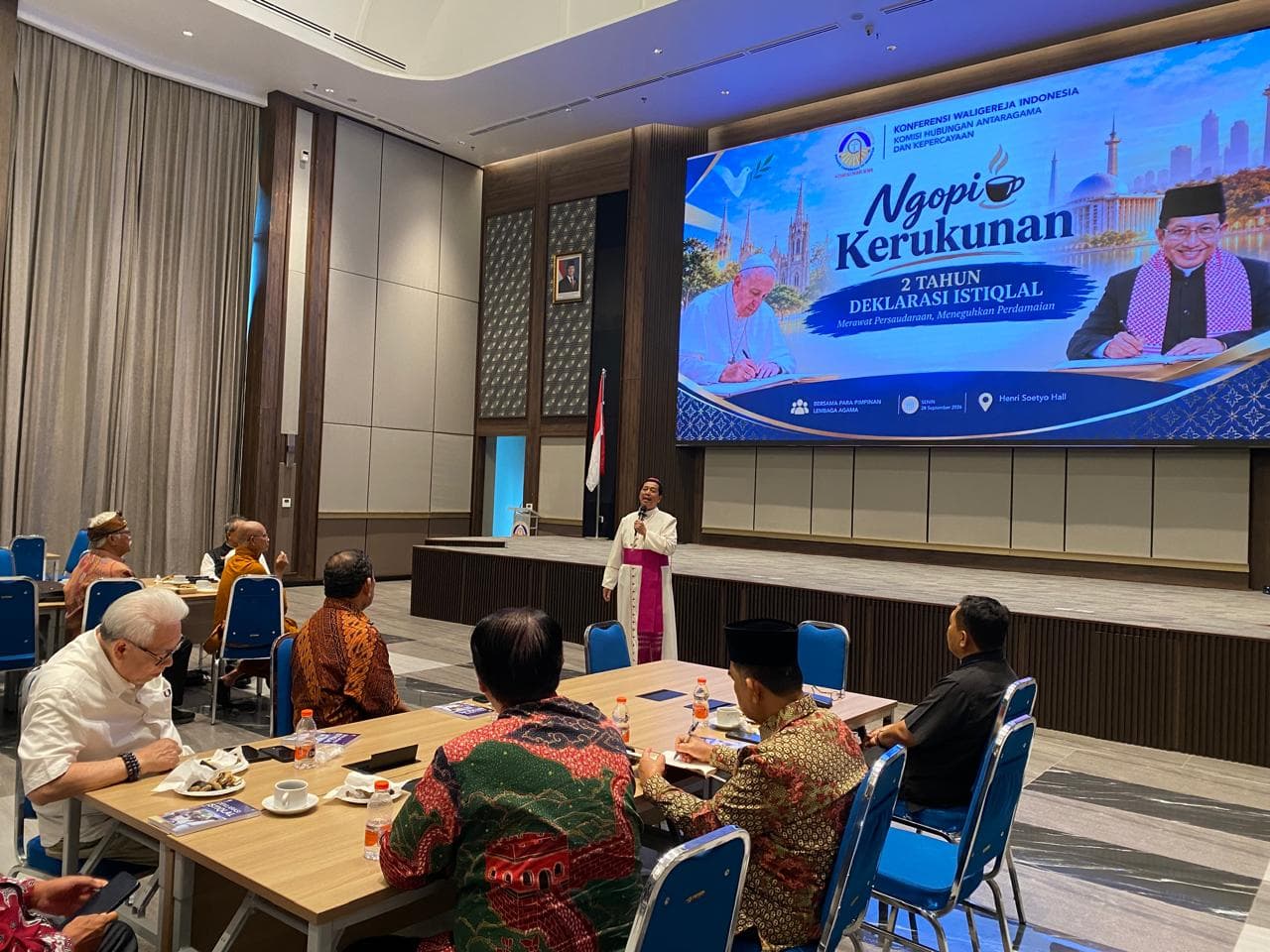
The appeal was made during the “Coffee Afternoon of Friendship – Two Years of the Istiqlal Declaration: Nurturing Fraternity, Strengthening Peace” held at the headquarters of the Indonesian Bishops’ Conference (KWI) in Jakarta on 28 September. The Istiqlal Declaration was signed on 5 September 2024 by Pope Francis and Prof. Nasaruddin Umar – Grand Imam of the Istiqlal Mosque and Indonesia’s current Minister for Religious Affairs – as a shared response to global challenges, including dehumanisation and climate change.
For the Bishop of Purwokerto, Monsignor Christophorus Tri Harsono, chairman of the Commission for Interreligious Relations of the Indonesian Bishops’ Conference, the declaration should not be seen as a final agreement, but as an ongoing process: “There are still intolerant people, and much behaviour remains inconsistent with the spirit of brotherhood and peace. But this is a process that must continue so that brotherhood and peace can flourish.”
The bishop emphasised that brotherhood, peace and the protection of the earth must be put into practice in daily life. Interfaith meetings, he said, should go beyond formal gatherings and become opportunities to build trust, mend relationships and learn to accept differences. “Let us become more brotherly,” he said, “let us build peace and care for the earth as our common home.”
From aid to the root causes of crises
Ms Hening Purwati Parlan, vice-president of the Environment Council of the Muhammadiyah Muslim association and vice-president of the Environment Council of ‘Aisyiyah, focused on the environmental dimension. Drawing on her own experience in Wonogiri, in Central Java province, Hening described the changes she has witnessed since childhood. “The river where I used to swim as a child now has very little water. In the past, you could hear the frogs after the rain, but now there are none left.”
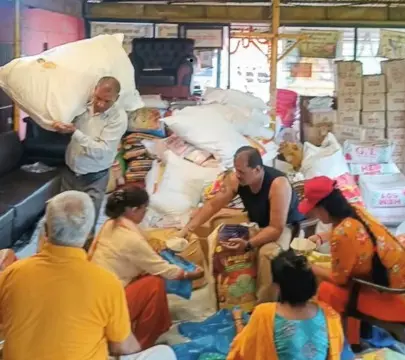
Hening pointed out that Indonesia recorded 4,727 disasters in 2025 alone, with over 1,600 deaths, whilst forest fires affected vast areas and communities. Religious communities have responded through humanitarian aid, supporting victims, planting trees and reforestation. But Hening argued that these efforts, whilst necessary, are not enough. “When the earth is wounded, we shouldn’t simply apply a remedy. We must look at the root causes.” He called on interfaith movements to commit to tackling the systems and policies that contribute to environmental destruction. He proposed action on three levels: strengthening awareness and solidarity at community level; engaging policy-makers through measured and peaceful approaches; and encouraging religious leaders to speak out firmly on the ethical responsibility to protect the earth.
The happiness of all living beings
Bhante Dhammasubho Mahathera brought a Buddhist perspective to the discussion, linking care for the earth to the fight against dehumanisation. Speaking of Siddhartha Gautama, he said: “He studied at the university of nature, graduating with a degree in the Law of Karma”. For Bhante, saving the earth begins with right understanding – being upright towards oneself, towards others and towards the environment. He highlighted the Buddhist greeting “Sabbe Satta Bhavantu Sukhitatta”, which means “May all living beings be happy”. “Everyone,” he remarked, “ Those who live in the air, in the water, on the earth, in the mountains, in the trees, those with legs and those without legs…”. He suggested that this expression could become a simple yet powerful message to promote peace.
He also recalled having taken part in tree-planting and reforestation initiatives in various locations across Jakarta, including the Pluit basin, Kalijodo and Daan Mogot. “Obtaining permission was difficult, but once the trees had grown well, they were all felled because of a road project,” he said bitterly.
Two years on from the Declaration of Istiqlal, the reflections shared in Jakarta thus point to a common challenge: turning words into habits, encounters into relationships, and shared religious values into concrete action.






.jpg&w=3840&q=75)