Kuala Lumpur (AsiaNews) – A balancing act that is becoming increasingly difficult to maintain: Prime Minister Anwar Ibrahim’s recent statements in support of China’s position on Taiwan have drawn praise from Beijing and criticism from Taipei.
These remarks – and the reactions they have provoked – once again highlight the delicate (and ambivalent) position Malaysia is trying to maintain between ever-closer ties with China and the preservation of economic links with the ‘rebel’ island.
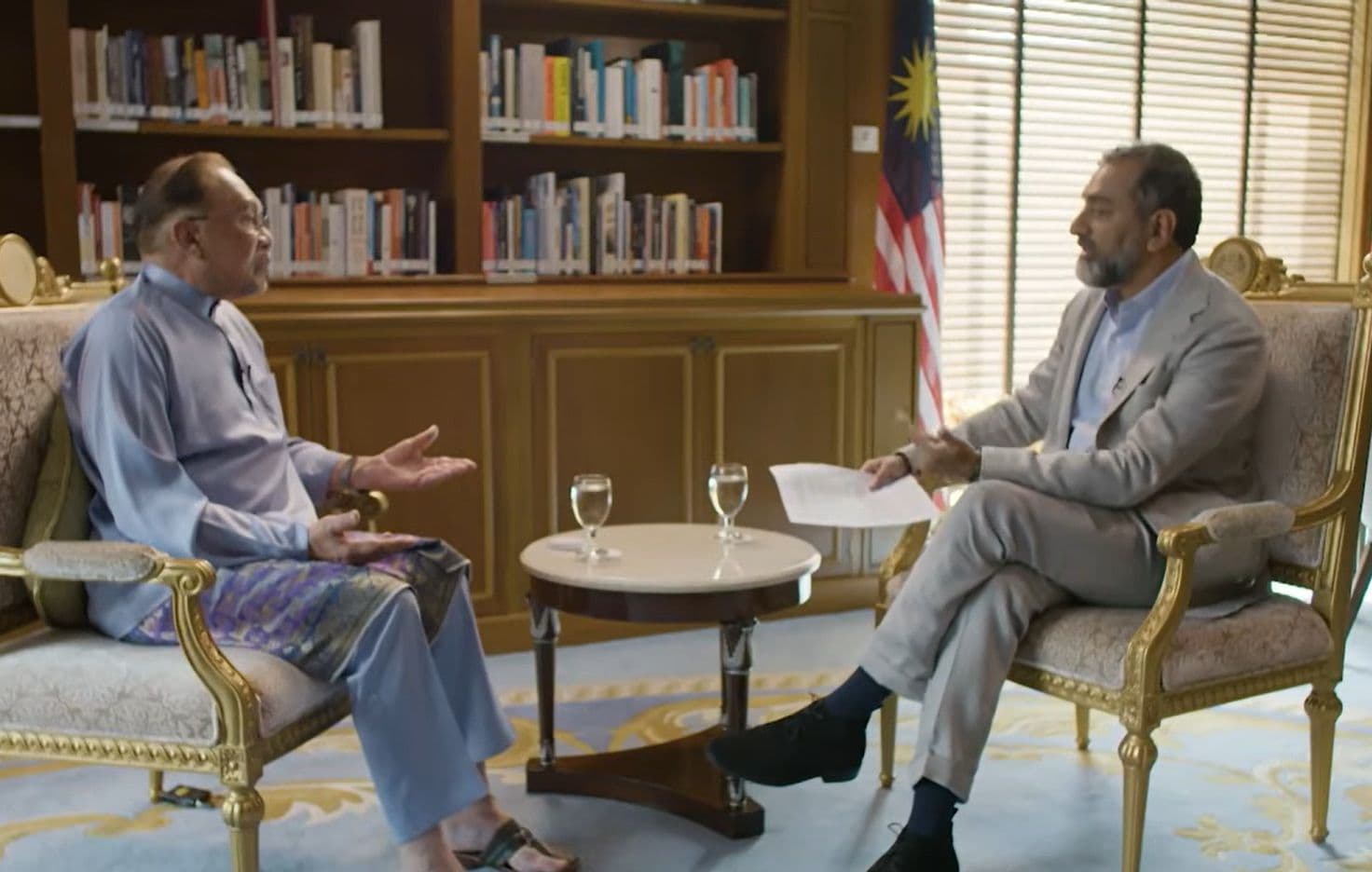
In an interview with Al Jazeera published on 16 August, the head of the Kuala Lumpur government stated that he considers Taiwan to be part of China and reaffirmed Malaysia’s adherence to the ‘One China’ policy.
“Taiwan is part of China, full stop,” said Anwar. When asked whether Malaysia would condemn China should Beijing resort to force to bring Taiwan back under its control, Anwar replied that the Asian giant has the right to defend the unity of its territory.
The Prime Minister also compared the issue to Malaysia’s own stance on territorial integrity. “If a province decided to secede, would we resort to force?” he asked. “I think,” he continued, “that I would defend the sanctity and unity of the nation.”
The head of government’s remarks were welcomed by Beijing. “China appreciates Prime Minister Anwar’s remarks,” said Chinese Foreign Ministry spokesperson Lin Jian during a press conference on 19 August. “I would like to reiterate,” added Lin, “that there is only one China in the world. Taiwan is an inalienable part of Chinese territory, and China must be and will be reunified.”
Taiwan, on the other hand, has criticised the Malaysian leader’s stance. The Ministry of Foreign Affairs in Taipei stated that Anwar’s “unilateral support for China” could affect Taiwanese businesses’ confidence in investing in Malaysia. Taipei’s foreign minister also warned that supporting a change to the status quo in the Taiwan Strait through the threat of force could “seriously damage political trust between Taiwan and Malaysia”.
The ministry questioned Anwar’s stance, given that he has often presented himself as a champion of democracy and human rights. In this regard, the senior Taiwanese official pointed out that this also includes respect for “the will of the people of Taiwan”.
The controversy comes at a time when Kuala Lumpur is seeking to strengthen economic ties with China, whilst maintaining extensive trade links with Taiwan and other major Asian economies. Beijing is Malaysia’s main trading partner, with bilateral trade amounting to hundreds of billions of ringgit a year. Taiwan, for its part, has become a major investor in the electronics and semiconductor sectors.
Taiwanese companies, including Foxconn and ASE Technology, have invested in Malaysia as the country consolidates its position as a regional hub for electronics and semiconductor manufacturing. Throughout this, the Southeast Asian nation has sought to maintain a pragmatic foreign policy whilst strategic competition between China and the United States intensifies across the Asia-Pacific region.
Kuala Lumpur has generally avoided taking sides in the rivalry, whilst maintaining relations with both Washington and Beijing and supporting regional stability through ASEAN. Anwar’s latest statements could therefore attract greater attention from both sides of the Taiwan Strait. Malaysia has maintained diplomatic relations with Beijing since 1974 and officially recognises the ‘One China’ policy.
It has no formal diplomatic relations with Taiwan, although economic, educational and people-to-people ties remain active. Taipei operates a de facto representative office in Malaysia, whilst Malaysian citizens and businesses continue to maintain extensive links with the island.
For Beijing, Anwar’s statements reinforce the country’s official position on Taiwan at a time when China is increasingly sensitive to international statements regarding the “rebel” island, which it considers an integral part of its territory.
Taiwan has been autonomous since 1949, when Chiang Kai-shek’s Nationalist government retreated there following its defeat by the Chinese Communist Party in the Chinese Civil War. Beijing has never renounced the use of force to achieve reunification. Conversely, Taipei rejects the claim to sovereignty and maintains that Taiwan’s future must be decided by its people.
All this presents a difficult diplomatic balancing act for Malaysia: its economic relations with China are strategically important, whilst Taiwanese investment and Malaysia’s ambitions in the semiconductor sector make its close economic ties with Taiwan equally significant.
Anwar’s statements therefore further highlight Kuala Lumpur’s long-standing ‘One China’ policy, at a time when tensions over Taiwan are increasingly influencing relations between the major Asian powers. The challenge for Kuala Lumpur will be to safeguard its economic interests and diplomatic flexibility without allowing its stance on Taiwan to jeopardise relations with other key regional partners.