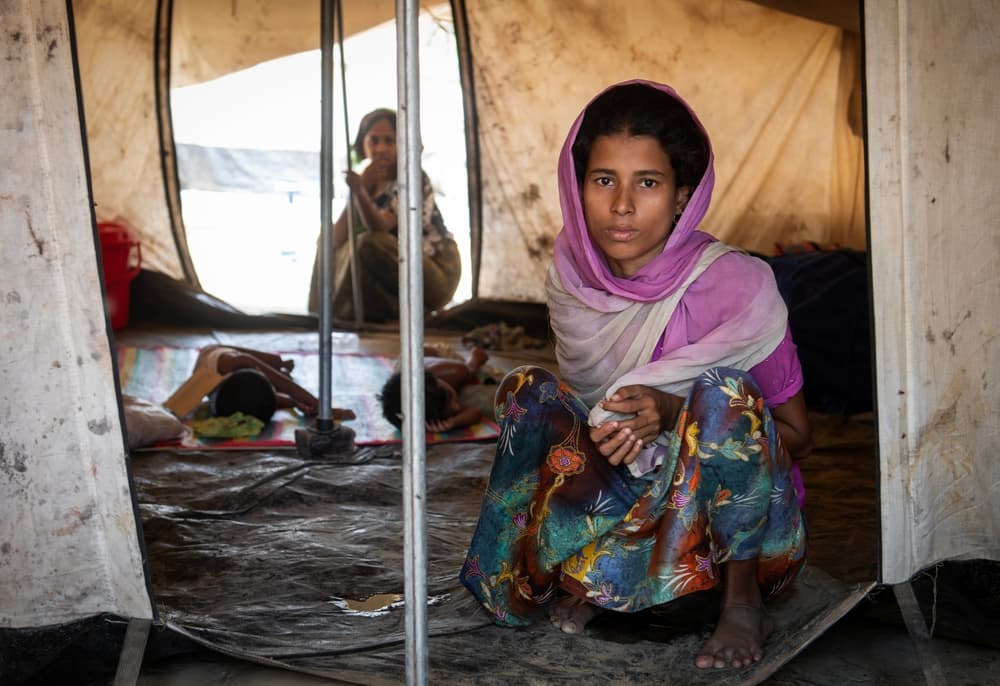
Milan (AsiaNews) – “The recognition of the Rohingya genocide is a historic precedent.” This phrase, which has been doing the rounds on social media and in newspaper headlines in recent days, encapsulates all the hypocrisy with which the persecution of this minority – which has always been relegated to second-class status – continues to be viewed. Much like the civil war in Myanmar, dismissed as a “forgotten war”, which, however, becomes just that when we stop talking about it, effectively fuelling a new form of racism between peoples to whom we owe our attention and outrage.
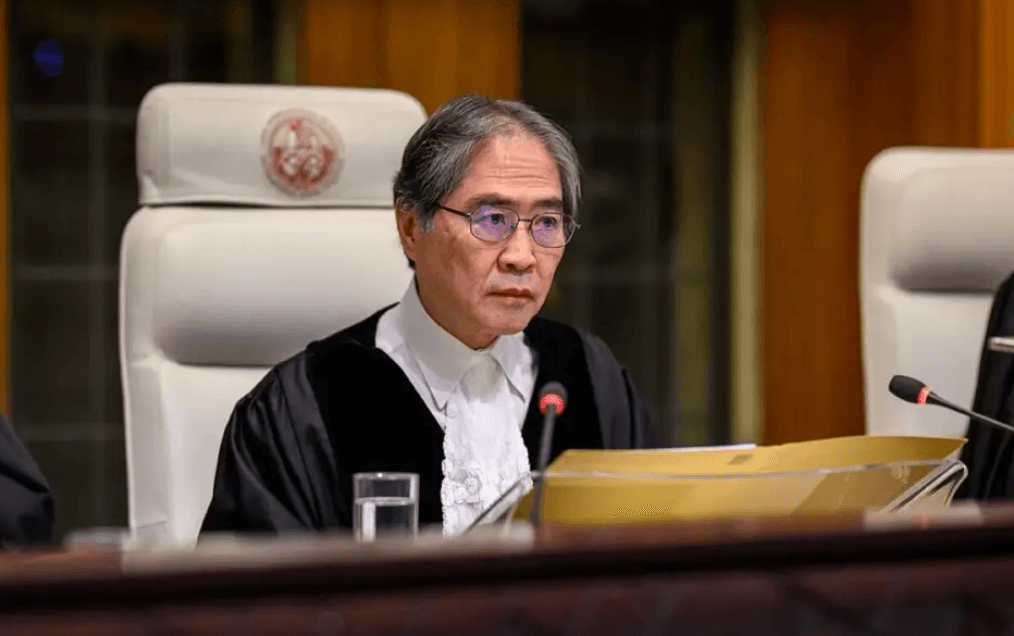
The ruling by the International Court of Justice is truly historic because, for the first time, a state has been found responsible for genocide. Until now, the Court had gone no further than finding Serbia guilty, in 2007, of failing to prevent the Srebrenica massacre. The problem lies precisely in the word ‘precedent’. It suggests that the genocide of the Rohingya matters above all for what it might mean for others – namely, a future condemnation of Israel for what it is doing in the Gaza Strip and the West Bank.
These are two different conflicts, which have almost nothing in common, save for the cruelty and dehumanisation with which a people considered foreign to one’s own land are viewed. Thus, the word ‘genocide’, which should denounce the gravest of crimes, is reduced to an ideological label to be bent to one’s own social agenda. And the suffering of the Rohingya, past and present, is once again pushed into the background, overshadowed by that of others who seem to have a greater right to compassion, to public attention and to global outrage.
Repatriations from Malaysia
This lack of outrage was evident just a week after the ruling, when, on 24 November, Malaysia’s Prime Minister Anwar Ibrahim announced that a further 6,803 Burmese citizens would be repatriated next month, defending the dialogue his government had initiated with Myanmar’s military leadership following the sham elections that confirmed General Min Aung Hlaing as president. 1,500 will depart on 6 and 7 December aboard three Burmese navy vessels, whilst the remaining 5,303 will fly out later this month, at Myanmar’s expense. They join the 10,476 already sent back this year.
Anwar said he respected the Court’s ruling but wished to continue negotiating with Naypyidaw regarding repatriations. Kuala Lumpur maintains that all returns are voluntary, but according to human rights organisations, the refugees have had little choice. Meanwhile, in October, Malaysia had been forced to seek clarification from Myanmar following reports that hundreds of returnees had (coincidentally) ended up in detention.
Repatriations that are not possible
Meanwhile, reality has already overtaken the ruling. The Court is calling on Myanmar to facilitate the safe and dignified return of the Rohingya to Rakhine: a recommendation which, as we reported in recent days on AsiaNews, sounds naive to say the least. This is because Rakhine is now almost entirely in the hands of the Arakan Army, the Buddhist militia of the Arakan or Rakhine ethnic group which, since November 2023, has been fighting against the army and presents itself as a liberation force. It is a pity that, for the Rohingya, liberation has the same face as persecution.
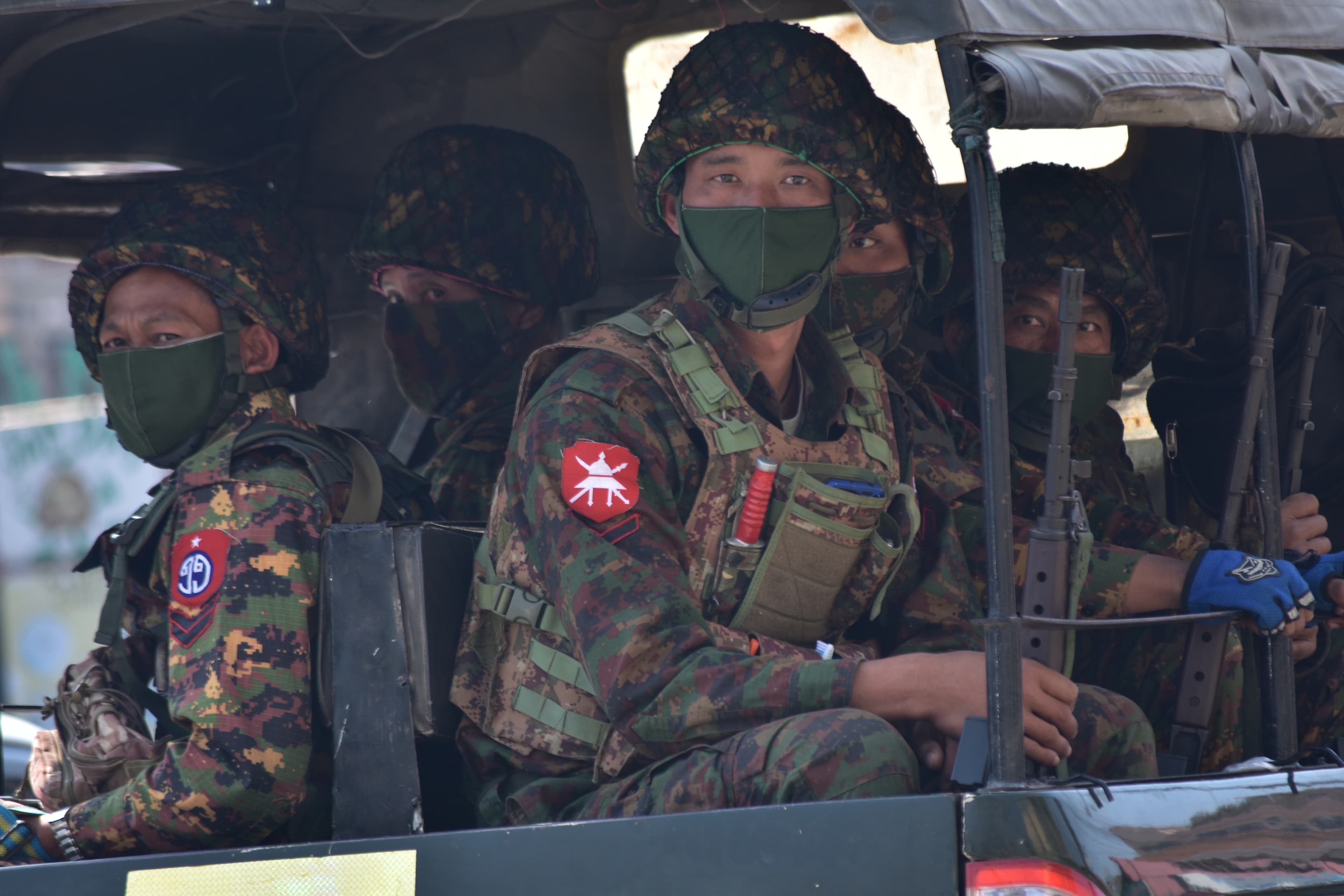
In May 2024, during the capture of Buthidaung – the town with the largest remaining Rohingya community in the country – the militants bombed, looted and set fire to entire Muslim neighbourhoods. On 5 August of the same year, on the banks of the Naf River, on the border with Bangladesh, dozens (perhaps hundreds) of fleeing civilians were killed by drones and mortar fire. The Arakan Army has consistently denied the allegations, shifting the blame onto the army. Today, according to the UN Office for Human Rights, it forcibly recruits boys as young as 12 and imposes forced labour on villages. The army, for its part, is no better: the very soldiers accused of genocide have, since 2024, been conscripting Rohingya and sending them to fight against the Arakan Army, further fuelling the hatred between the two communities.
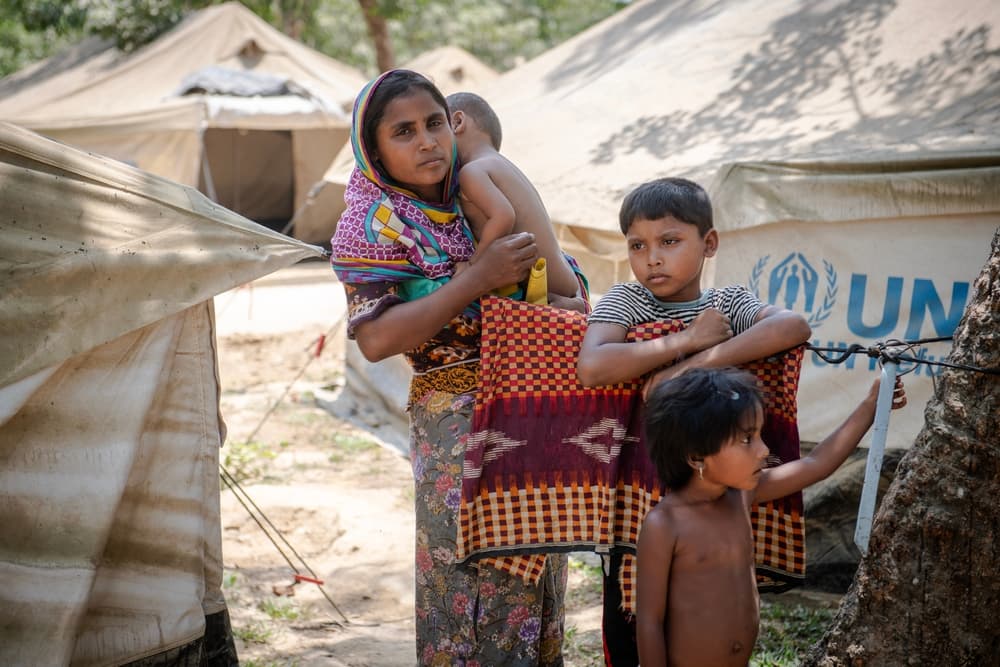
Even fleeing offers no escape. In the camps at Cox’s Bazar, in Bangladesh, where around 1.2 million Rohingya live, armed groups such as ARSA and RSO lay down the law. They claim to be fighting for their own people, yet they abduct and conscript young people, and in Myanmar they have allied themselves with the very army that drove them out. In the first three months of 2026, 455 serious security incidents were recorded in the camps – 40 per cent more than in the previous quarter.
A long history of discrimination
The Rohingya in Myanmar have always faced discrimination. In areas controlled by the military – in Yangon or Mandalay, for example – when speaking of them, it is best to refer to them as ‘Bengalis’ so as not to arouse suspicion. This is despite the fact that in the major cities they live alongside all the other ethnic groups that make up the marvellous mosaic of former Burma. The term refers to their origin, but serves above all to deny their sense of belonging. Yet a Muslim presence in Arakan – now known as Rakhine – has been documented since at least the 15th century, at the court of Mrauk-U, and subsequently grew with migrations from Bengal during British colonial rule. In the eyes of Burmese nationalism, they have remained guests who arrived in the wake of the colonisers. In 1982, the citizenship law of Ne Win’s regime excluded them from the ‘national races’ – the 135 officially recognised ethnic groups – effectively rendering them stateless. Since then, their history has been a succession of exoduses: in 1978, in 1991–92, and in 2012, which confined some 140,000 people to camps for displaced persons around Sittwe, where many still live today. 2017 was not a bolt from the blue, but the latest chapter, to date, in a persecution that began decades earlier.
Yet, instead of looking at what is happening today in Rakhine – one of the hottest fronts in a civil war that will have lasted six years in a few months’ time (longer than the war in Ukraine or that in Sudan) – attention to the Rohingya has stalled at the verdict from The Hague. At best, some have returned to blaming Aung San Suu Kyi. The democratic leader, now in her eighties, has been held captive by the military since the 2021 coup. In April, her sentence was commuted to house arrest, but her exact whereabouts remain unknown; only recently, following pressure from ASEAN, have some photographs of her been released. A Nobel Peace Prize laureate and heroine of democracy, following the violence of 2017 she came to be seen, in the eyes of the world, as being on the side of the perpetrators. All the more so after she travelled to The Hague in person in 2019 to defend Myanmar before the very Court that has today found it guilty. But, as her son Kim Aris – who has taken up the baton in giving voice to the suffering of the people of Myanmar – has repeatedly pointed out, Aung San Suu Kyi sought to avoid direct confrontation with the military. She had managed to set the country on the path to democracy, though she was unable to see it through to the end, because there was little she could do against an army that has ruled Myanmar for most of its history since independence in 1948, with one dictatorship following another.
Every Burmese person I met in Myanmar told me that it was the Covid pandemic and the international community’s indifference that paved the way for the coup and the civil war. On more than one occasion, I was told that if the armed opposition groups had received even a tenth of the aid sent to Ukraine, the military would already have been defeated. We are talking about an army that often sends its soldiers to fight in the jungle with makeshift equipment, but which can rely on aerial bombardments, made possible by the economic and military support of China and Russia. The only judge on the Court to find Myanmar not guilty on all charges was Xue Hanqin of China. Yet, so far, even the condemnation of Beijing for its involvement in the conflict has been scarce and half-hearted. But to realise this, one would need to look at the situation in Myanmar for what it is, and not as a precedent for something else.