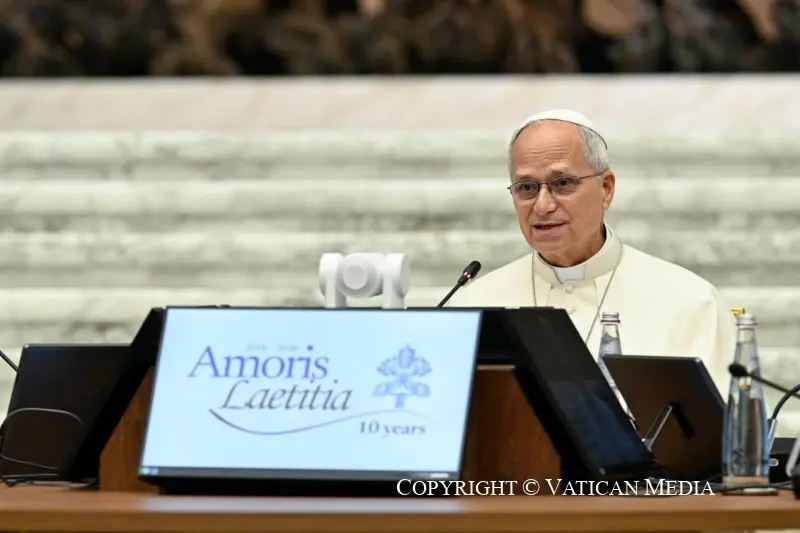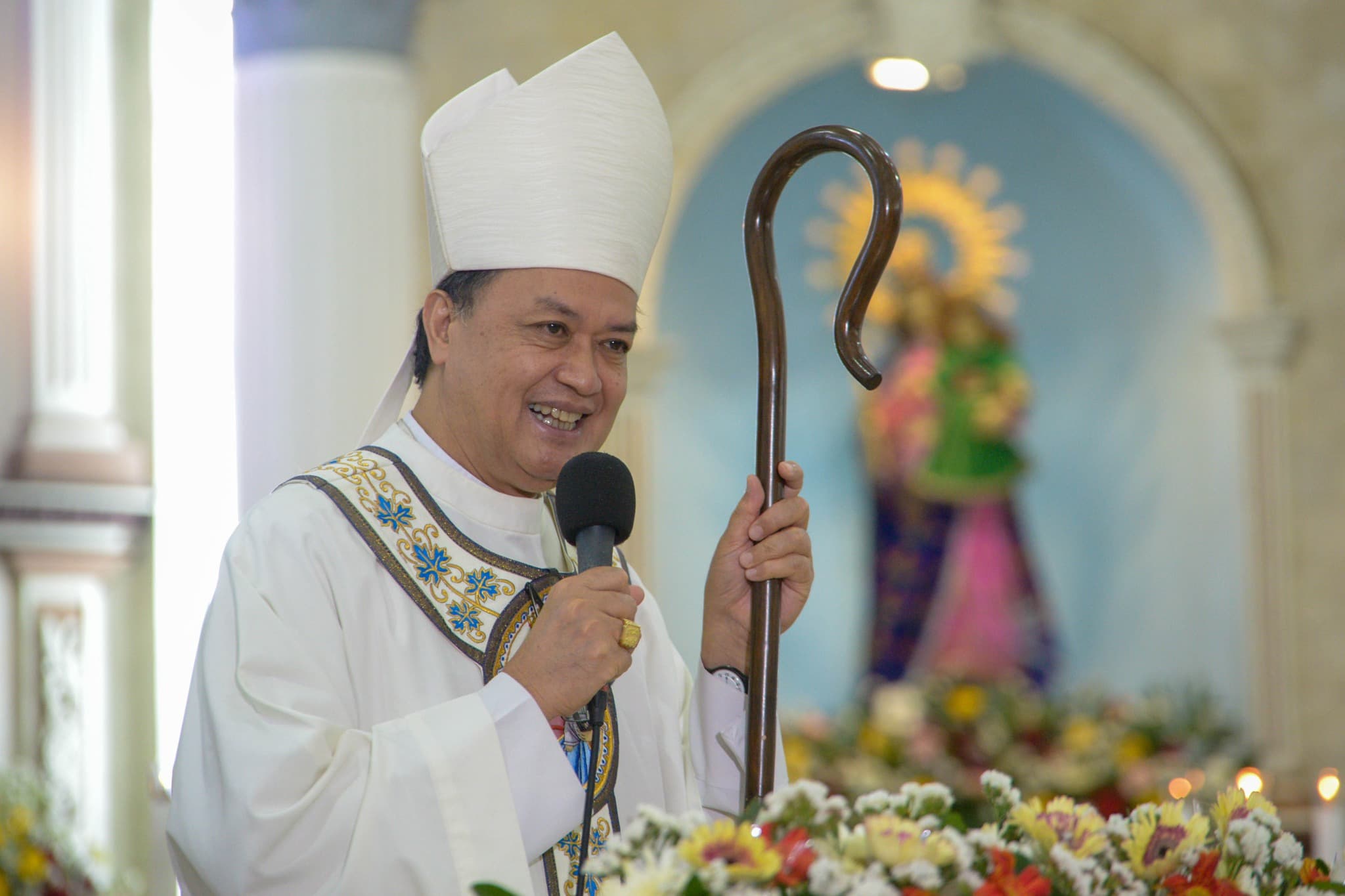
Vatican City (AsiaNews) – This morning, Card Pablo Virgilio David, bishop of Kalookan[*] and vice-president of the Federation of Asian Bishops' Conferences (FABC), spoke at the meeting with the heads of Eastern Churches and presidents of bishops' conferences, convened ten years after the promulgation of the apostolic exhortation Amoris Laetitia.
In his address, the prelate said that, “the fragility of many families is not produced only by personal choices. Family life can also be wounded by poverty, migration, violence, addiction, imprisonment, injustice and precarious work.” In fact, “These realities can severely limit people’s freedom and their capacity even to approximate the Christian ideal of family life. This is why Amoris laetitia has been so important for us.”
To make his point, Cardinal David talked about his diocese's experience standing with the victims of the violent anti-drug campaign waged by former President Rodrigo Duterte, which resulted in the deaths of a large number of drug addicts and low-level dealers in the poorest neighbourhoods.
“I remember one family whose situation could easily have been described simply as ‘irregular’. The parents were separated. The father was caring for their four children, the eldest twelve and the youngest three. Then he was killed. Suddenly the relatives had to take responsibility for the children. What category should we place such a family in?”
“This is why Amoris laetitia has been so important for us. It does not ask us to abandon the ideal. It asks us to accompany real people in the often painful distance between the ideal and their actual situation.
“It gave us a language for what we were already learning pastorally: to discern concrete situations rather than begin with classifications, to accompany gradual growth, and to trust that grace can already be at work even in lives and relationships marked by weakness and incompleteness.”
The Diocese of Kalookan’s response during the years of the war on drugs began with visits to grieving families.
“Our missionaries visited grieving families. They listened without judging. They prayed with them. They assured them that they had not been forgotten.
“Then something beautiful began to happen. One widow met another widow. Parents who had buried their children met other parents who understood their grief. Shared suffering created relationships. Relationships created mutual support. And mutual support gradually became community.
“This experience helped shape our Mission Stations. These are small ecclesial communities we established precisely in neighbourhoods that our ordinary parish structures were hardly reaching.
“Priests, religious and lay missionaries began by walking the streets and listening. Eventually the poor themselves – widows, young people, recovering addicts and ordinary families – became pastoral leaders and companions of others.”
“We discovered that many poor Catholics did not really feel that they belonged to the Church. They might have a Santo Niño, an image of Our Lady or a rosary in their homes. They identified themselves as Catholics. But some thought that the parish was for people with money, proper clothes, education or social standing.
“They were physically near the Church but spiritually and socially distant from it. So instead of asking, ‘Why do they not come to Church?’ we began to ask, ‘Will the Church go to them?’ That question changed us.
“I would say today that the Mission Stations changed our Diocese more than our Diocese changed the Mission Stations. The Gospel of the family is therefore not an abstract ideal untouched by human fragility. It is Emmanuel – God-with-us – entering precisely into it,” Cardinal David explained.
“And something even more beautiful happens. Those who have been accompanied begin accompanying others. Widows accompany widows. Recovering addicts support other recovering addicts. Families who once received help begin helping others. People who once thought they did not belong discover gifts for leadership and service.”
Ultimately, “They cease to be merely recipients of pastoral care. They become subjects of mission.”
For the bishop of Kalookan, “Perhaps this is one way of understanding the invitation of Amoris laetitia: not simply to ask how close families are to the ideal, but also how close the Church is willing to come to families in their actual struggles.”
In fact, “The Church cannot always wait for people to come to her.” Instead, “Sometimes she has to go where people live, where they struggle, where they grieve, where they hope – and discover that Christ is already there, waiting for us.”
[*] Part of Metro Manila.







.jpg&w=3840&q=75)