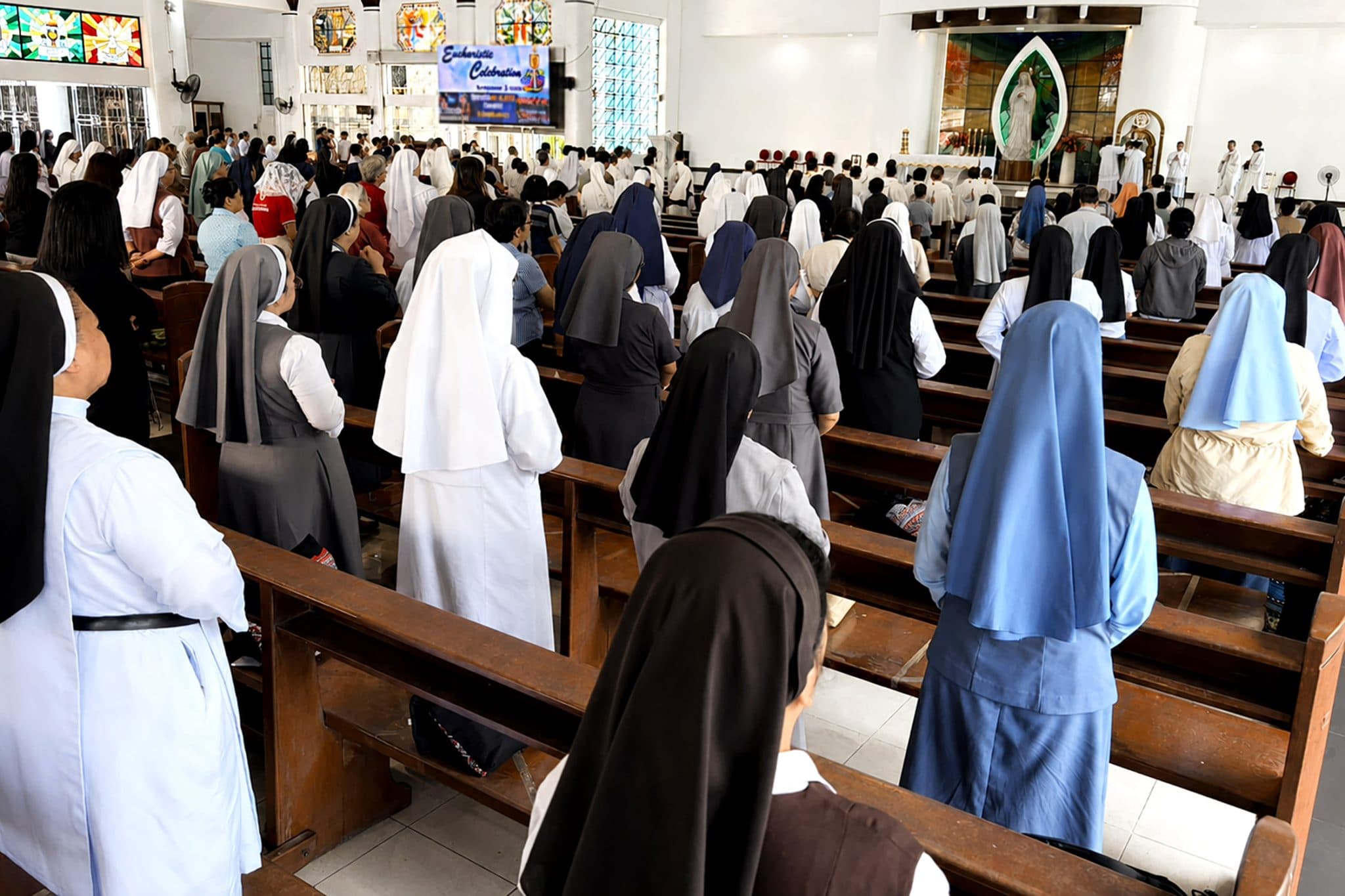
Manila (AsiaNews) – With the decline in vocations to consecrated life and the general ageing of the population, nuns in the Philippines are increasingly having to contend with issues related to an ageing population within their communities. The issue came to light through a study presented during the second national assembly of the Conference of Major Superiors of the Philippines (CMSP), attended in recent days in Zamboanga by 233 consecrated men and women representing 159 congregations.
As reported by the Philippine Bishops’ Conference press agency, the research, carried out by the Centre for Applied Research in the Apostolate (CARA) in collaboration with the CMSP, examined 45 Philippine women’s religious congregations. The data paint a significant picture: around 70 per cent of nuns are aged 50 or over, whilst almost 48 per cent are over 60. Twenty-four per cent are over 70.
The findings were presented by Sr Thu Do, of the Congregation of the Lovers of the Holy Cross, who emphasised that care for the elderly can no longer be regarded as a matter solely for individual communities. “Today, care for the elderly and other issues relating to consecrated life are no longer an isolated problem for a single congregation,” she stated. “These are collective challenges that affect all institutes.”
Many elderly nuns continue to be engaged in their ministry, but supporting them represents a growing financial burden, especially for smaller institutes. Nearly 40 per cent of congregations allocate more than half of their budget to the care of elderly sisters, whilst 79 per cent cite financial aid as their main need.
The situation is further complicated by rising healthcare costs and a decline in the number of nuns engaged in income-generating activities. Convent facilities are also often ill-suited to the needs of the elderly: there is a lack of ramps, handrails and accessible toilets. “They were built for young, dynamic missions, not for caring for the elderly,” observed Sister Do. Most congregations rely on external hospitals for medical care, and only a third have dedicated care facilities.
To tackle the problem, Sister Do proposed greater sharing of resources, expertise and staff, alongside the training of caregivers and the establishment of common standards. The proposals also include the creation of an inter-congregational facility aimed primarily at smaller institutions. The idea was met with interest by 57 per cent of the congregations involved in the study.
Care, Sister Do pointed out, must, however, encompass not only physical and medical aspects, but also emotional and spiritual ones. At the same time, it is necessary to prepare for ageing well before retirement. “Healthy ageing does not begin with retirement,” commented the nun. “The way a person lives between the ages of 40 and 50 directly determines how they will age between 70 and 80.”
At the end of the Assembly, the religious congregations committed to developing joint programmes to support the elderly, based on human dignity, the training of caregivers, the sharing of resources and collaboration between institutions, as part of a broader declaration which identifies child protection policies, leadership, dwindling resources and the training of younger members as further persistent challenges for religious communities.