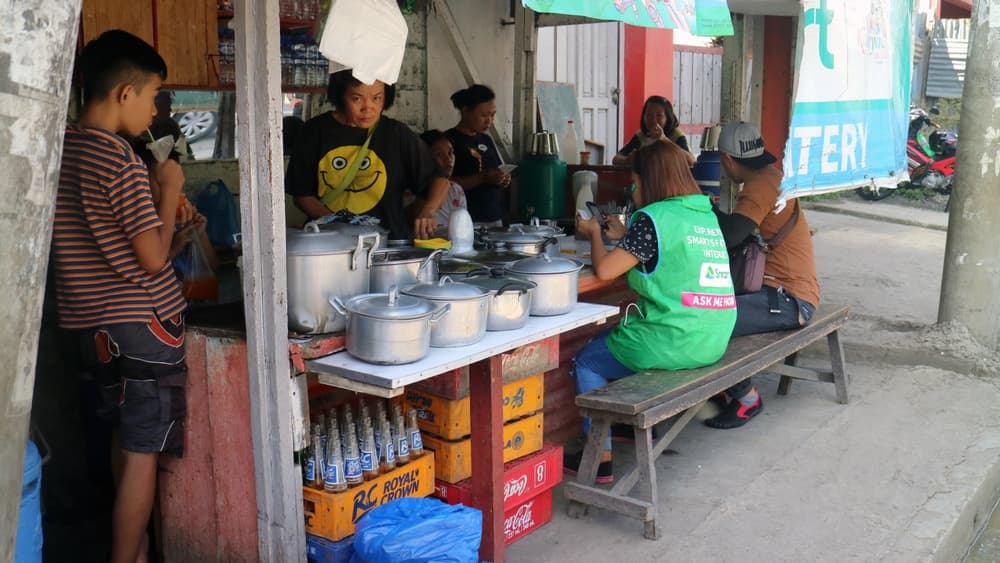
Manila (AsiaNews) – In the Philippines, 52.6 million people cannot afford a healthy diet, the second-highest number in Southeast Asia, next to Indonesia (195.9 million), the human rights advocacy group Ibon Foundation reported recently, citing data from the United Nations Food and Agriculture Organisation (FAO).
This figure could rise even further due to the climate crisis, while the lives of Filipinos will remain in a state of constant crisis, exacerbated by a deep-seated food security problem.
Many people in other Southeast Asian countries have not had access to healthy food since 2025, such as Vietnam (7.1 million), Laos (3.9 million), and Malaysia (0.5 million). Data for Brunei, Cambodia, Myanmar, Thailand, Timor-Leste, and Singapore are not available.
Founded by Sister Mary Soledad Perpiñan in 1978, the Ibon Foundation is a non-profit organisation focused on research, education, and information development, based in Quezon City, Philippines.
CenPEG: Household income allocated to food
According to the Center for People Empowerment in Governance (CenPEG), another human rights advocacy group, millions of families are unable to afford sufficient and nutritious meals, despite the availability of food in the markets.
The Philippine Statistics Authority reported that in September 2026, inflation stood at 7.2 per cent, up from 6.1 per cent in August, with food inflation reaching 6.8 per cent.
Amid the crises in West Asia and the Middle East, the Philippine peso has weakened, driven by the costs of imported fuel, fertilisers, and agricultural products, which are placing pressure on the food supply chain.
CenPEGhighlighted that millions of families are spending much of their income on purchasing food at higher prices with some opting for cheaper or less nutritious food. As a result, many families often lack money for medicine, education, transportation, and public services.
For CenPEG, there is an urgent need to improve domestic food production and reduce reliance on imported agricultural products, as well as increase investment in irrigation and climate-resilient agriculture.
According to the advocacy organisation, food is a fundamental human need and a right, not merely a commodity to be consumed.
The country’s economic development indicators should reflect whether families have access to sufficient and nutritious food without having to sacrifice other essential needs. In fact, food security is achieved when food is both available and affordable for millions of people, CenPEG noted.
CEED: Food security entails healthy ecosystems
Furthermore, the Center for Energy, Ecology, and Development (CEED) points out that food security also entails the protection of marine ecosystems that support fisheries and coastal communities, hence the urgent need to protect marine and coastal areas, while the country faces numerous environmental vulnerabilities and climate crises.
CEED Executive Director Gerry Arances notes that healthy ecosystems are an essential component of food security, pointing out that rising pollution and industrial activity have negative impacts on food systems, marine life, not to mention the fishers, their families, and the communities that depend on the sea for their livelihoods and income.
The CEED notes that in February 2023, an oil spill in the waters off some Philippine provinces, following the sinking of the MT Princess Empress near Naujan, Oriental Mindoro, caused an estimated 40.1 billion pesos in environmental damage and 1.1 billion pesos in socioeconomic losses. In the aftermath, a fishing ban affected at least 24,698 fishers.
Father Edwin Gariguez, a former official at Caritas Philippines, explains that maintaining the country’s food supply depends largely on safeguarding the seas, ecosystems, and coastal communities that feed the population.
Various vulnerabilities could worsen, since climate change and economic and environmental pressures are deeply interconnected, while marine biodiversity remains under threat from risks associated with fossil fuels.