Beijing (AsiaNews) - Xi Jinping wants religions to ‘accelerate’ on the path to Sinicisation. The Chinese president made this request on 29 September during an ad hoc study session he convened at the Politburo of the Chinese Communist Party on the subject of religious policy.
This is further confirmation of how central the control of the activities and messages conveyed by the five officially recognised religions (Buddhism, Taoism, Islam, Protestantism and Catholicism) is to his political vision.
‘As history and practice show,’ Xi Jinping said, ‘only by continuously promoting the sinicisation of religion in China can we foster the gentleness (和順) of religion, ethnic harmony, social harmony and long-term national stability. As a socialist state led by the Chinese Communist Party,’ he added, ‘it is an inevitable requirement to actively guide religion to adapt to socialist society.’
‘We must lead religious figures and the masses of believers,’ the Chinese president continued, ‘to firmly establish a correct view of the state, history, nation, culture and religion, and to constantly strengthen the “five identities” (五個認同), so that they willingly participate in the construction of Chinese-style modernisation.’
The “five identities” to which Xi refers are identification with the “great motherland” (so-called patriotism), with the Chinese nation, with Chinese culture, with the Chinese Communist Party and with socialism with Chinese characteristics.
These identities clearly show that for Beijing, Sinicisation is not simply a matter of translating the message of each faith into its own cultural categories, but a patriotic imperative that views religions as cogs in its own system.
In this context, according to reports from the Xinhua agency, Xi Jinping wants ‘doctrines, rules, management systems, rituals and customs, and norms of behaviour’ to embody ‘Chinese characteristics’ and adapt ‘to the needs of the times’.
Hence the proliferation of laws and regulations on religious activities to be ‘strictly enforced, improving the level of legality in religious work’. This is apparently a general principle, but its true meaning of control is easily understood by looking, for example, at what has happened in recent months in the Buddhist world around the Shaolin monastery and the sudden fall from grace of its abbot.
Finally, by asking Party committees to strengthen ‘their leadership over religious work,’ they are asking ‘at all levels’ to build teams dedicated to this area, ‘forming a joint force to promote the Sinicisation of religion in our country.’
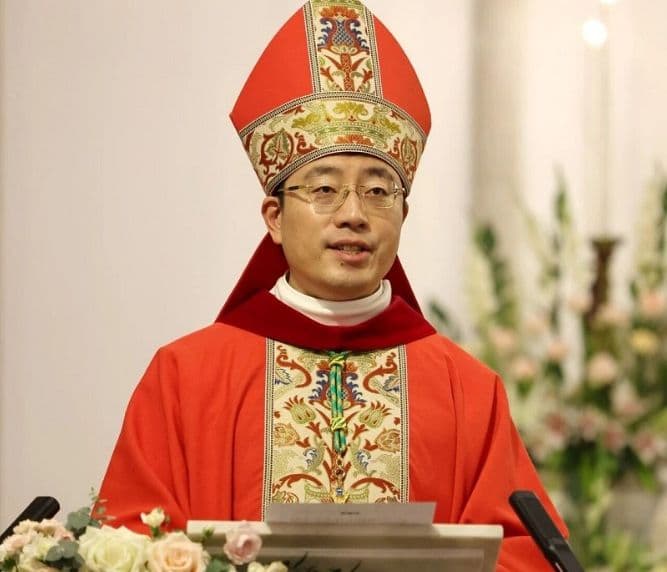
Xi Jinping's precise political line must also be taken into account in the path towards unity of the Catholic Church in China.
This makes the passage from the recent interview with Pope Leo XIV extremely important, in which he explains that at this stage he is meeting different people who think differently, in order to ‘better understand how the Church can continue its mission, respecting both the culture and political issues that are obviously of great importance, but also respecting a significant group of Chinese Catholics who for many years have experienced some form of oppression or difficulty in living their faith freely.’