Bangkok (AsiaNews) – Ministers gathered in Bangkok for the Fifth Ministerial Conference on Transport, organised by the United Nations Economic and Social Commission for Asia and the Pacific (ESCAP), have agreed to a five-year plan aimed at promoting more eco-friendly transport, improving connectivity, and enhancing road safety across Asia and the Pacific, while offering users more accessible transport options.
The transport sector plays a fundamental role in the region’s economic, social, and environmental development; the growth of trade, urbanisation, and an expanding population are fuelling demand for transport services and logistics networks, which are essential for supporting regional supply chains.
A sector employing 149.5 million people
According to the report Review of Developments in Transport in Asia and the Pacific 2026: emerging trends and innovations for sustainable transport, presented by ESCAP during the conference, the transport sector contributes approximately 8–10 per cent to the region’s gross value added and provides employment for a total of about 149.5 million people.
From a social perspective, improved connectivity fosters inclusion, notably enhancing the lives of women, girls, seniors, and those living in rural areas.
The proportion of the rural population lacking access to all-weather roads fell from approximately 30 per cent in 2019 to 18 per cent in 2023. In urban areas, rapid transport networks more than doubled between 2011 and 2021, reducing travel times and improving mobility.
Road safety remains a significant challenge, despite some slight improvement over time; however, the price paid by the environment is far too high.
In the Asia-Pacific region, energy consumption in the transport sector rose by 42 per cent between 2010 and 2023, driven primarily by road transport.
During the same period, carbon dioxide emissions grew by 43.4 per cent, while emissions of nitrogen oxides and sulfur oxides increased by 5.5 per cent and 52.3 per cent, respectively.
Despite this increase, emission intensity, that is, the amount of greenhouse gases emitted per unit of economic output, decreased, reflecting progress made in energy efficiency and the introduction of cleaner technologies.
Freight transport: growth and sustainability
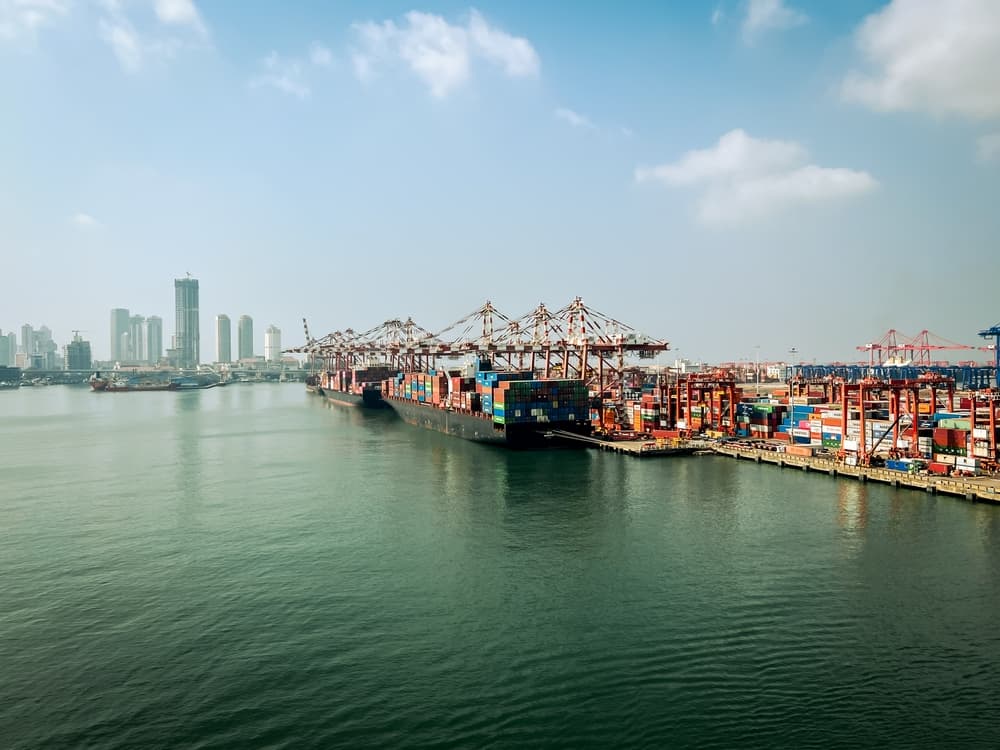
To improve further, it is necessary to examine the economic transformations currently underway. Since 2015, the demand for freight transport in the region has increased by more than 35 per cent, driven by the growth of trade between Asian countries, a trend expanding at a faster pace than intercontinental trade. The requirements of digital commerce are also contributing to this shift.
Road and rail freight transport remain fundamental to this sector; however, heavy-duty lorries continue to be the primary source of emissions.
Addressing these critical issues requires new technologies, including electric and hydrogen-powered vehicles, intelligent transport systems, autonomous vehicles, and digital tools designed to facilitate transport and trade.
ESCAP proposes two distinct scenarios to governments: the first is aligned with the climate goals currently adopted by national governments, while the second, termed High Technology Innovation, is based on a more rapid and coordinated adoption of technologies, supported by appropriate policies and infrastructure.
If effectively implemented, this second model could reduce sector emissions by approximately 40 per cent by 2030 and by 78 per cent by 2050.
How passenger transport is changing
Alongside the demand for freight transport, the demand for passenger transport is also growing, driven primarily by population growth, urbanisation, and the proliferation of private vehicles.
According to an ESCAP study, this trend is set to continue over the coming decades, placing further strain on infrastructure and making it harder to meet climate goals.
Another contributing factor is the ongoing shift away from public and rail transport towards the use of private vehicles, which results in higher emissions.
There are also significant regional disparities in passenger transport.
In East and North-East Asia, passenger transport emissions began to decline in 2019, thanks to the electrification of vehicles and the expansion of high-speed rail networks. Conversely, in Southeast Asia, South Asia, and South-West Asia, emissions have seen a slight increase.
The challenge, now, hinges on the adoption of technological innovations, such as the progressive electrification of vehicles, the use of alternative fuels, transport automation, smart mobility, and the integration of various mobility services via digital platforms.
In this context, ESCAP’s High Technology Innovation scenario suggests that emissions could be reduced by 23 per cent by 2030 and by 63 per cent by 2050. However, much depends on the ability to extend these advanced services to rural areas, which currently generate a higher total volume of emissions than urban mobility.
Policy choices
According to the plan developed by ESCAP, policies for freight transport should focus on improving the efficiency of logistics systems, digitising processes, integrating various modes of transport, and fostering the adoption of zero-emission technologies.
Furthermore, infrastructure investments, institutional coordination, and regional collaboration are essential.
As for passenger transport, it is necessary to incentivise the use of low-emission, high-capacity vehicles, promote shared mobility, improve accessibility for all social groups, and expand rail networks, particularly for regional and intercity connections.
Policies must also take into account differences in gender, age, disability, and income, ensuring that technological innovations do not exacerbate existing inequalities.
Finally, it will be crucial to collect more detailed transport data, enabling the development of policies increasingly grounded in hard evidence.