Milan (AsiaNews) – The illness of Bishop Paul Meng Ningyou of Taiyuan, a diocese in Shanxi Province, has deeply touched the hearts of the faithful in China. Earlier this year, he was diagnosed with laryngeal cancer, and more recently he is unable to take in food. Believers from all over have spontaneously organised a novena for him, praying for a miracle, or for a peaceful passing.
Born in 1963, Bishop Meng was ordained a priest in 1991. Consecrated auxiliary bishop in 2010, he became the ordinary bishop of the diocese in 2013.
Bishop Wu Junwei of Yuncheng (Shanxi Province), who was consecrated in the same month, passed away four years ago following a heart attack. Now, another bishop is gravely ill, leaving the faithful filled with sorrow and deep emotion.
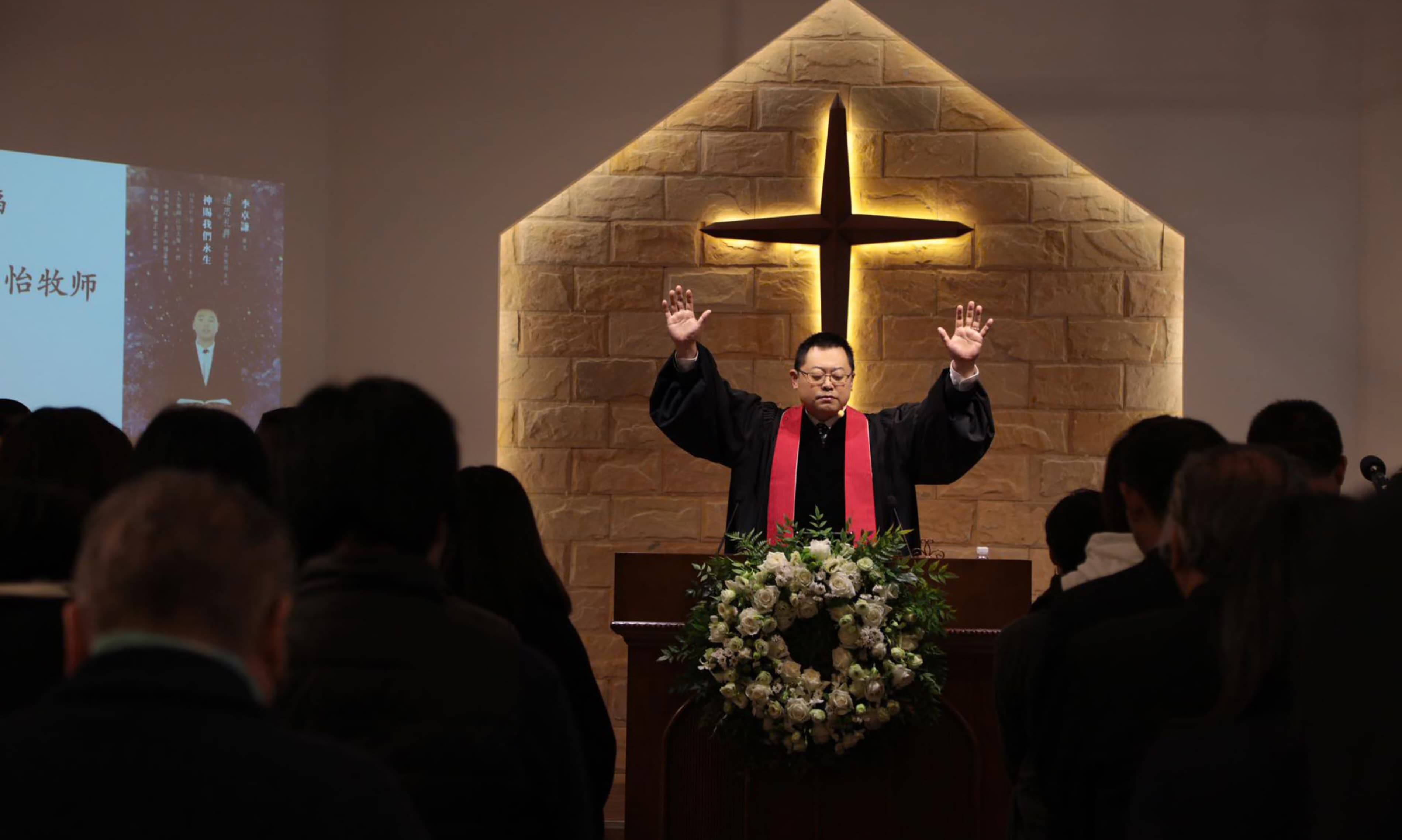
Against this backdrop, a video has resurfaced online showing a Mass during which Bishop Meng administered the sacrament of Confirmation to children. In the footage, he expresses gratitude to the summer catechism teachers, while thanking the parents for bringing their children to the church to receive instruction in the faith.
When he mentions the enormous difficulties in organising catechism classes, his voice breaks with tears, yet he remains firm: Whatever may happen in the future, as bishop, he will take full responsibility for it. “Do not be afraid,” he says, “a person lives, at most, a little over thirty thousand days.”
A ban that has become the rule
Watching that video, recorded in the middle of the summer of 2019, evokes deep sadness today.
The reason behind Bishop Meng’s tears that year was the enforcement, within the Church, of a ban on “minors entering religious venues”. Shanxi, a province with a large Catholic population, and the Diocese of Taiyuan were clearly subjected to unimaginable pressure.
Today, the total prohibition against minors entering churches has become the rule everywhere.
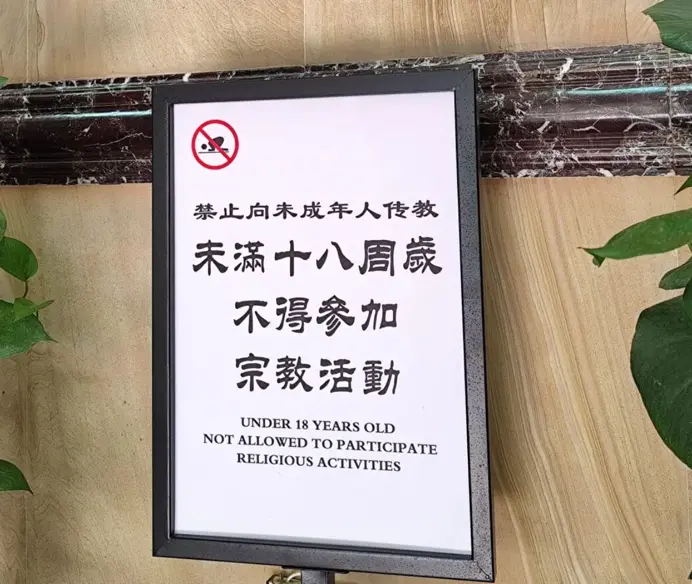
Outside legally recognised Catholic churches, one finds signs, notices, or banners declaring: “Minors are forbidden from entering”.
On Sundays, members of the Chinese Catholic Patriotic Association or other designated personnel stand guard at the doors; local religious affairs bureaus and neighbourhood offices conduct spot checks on church attendance.
During major holy days or politically sensitive periods, community monitors or local workers appear at church entrances to ensure no minors are inside.
In quite a few churches, surveillance cameras, linked directly to government bureaus or a centralised religious affairs intelligence platform, have even been installed at the entrances or in the buildings themselves.
Furthermore, a cross-departmental mechanism linking schools and families is severing the transmission of faith at its very root.
In some places, schools, the broader educational system, the Communist Youth League, the Women’s Federation, and other institutions conduct joint inquiries into the religious beliefs of children, from primary to middle schools, even kindergartens.
They hand out papers such as a “Declaration of Non-Belief in Any Religion” or “Informational Letter on Preventing the Entry of Religion into Schools,” requiring parents to sign them.
In some areas, they even go so far as to mobilise students to get personally involved, encouraging them to report the religious activities of their peers or family members, and tell families that participating in illegal religious activities will affect their children’s access to higher education or future employment.
Catechists arrested in private homes
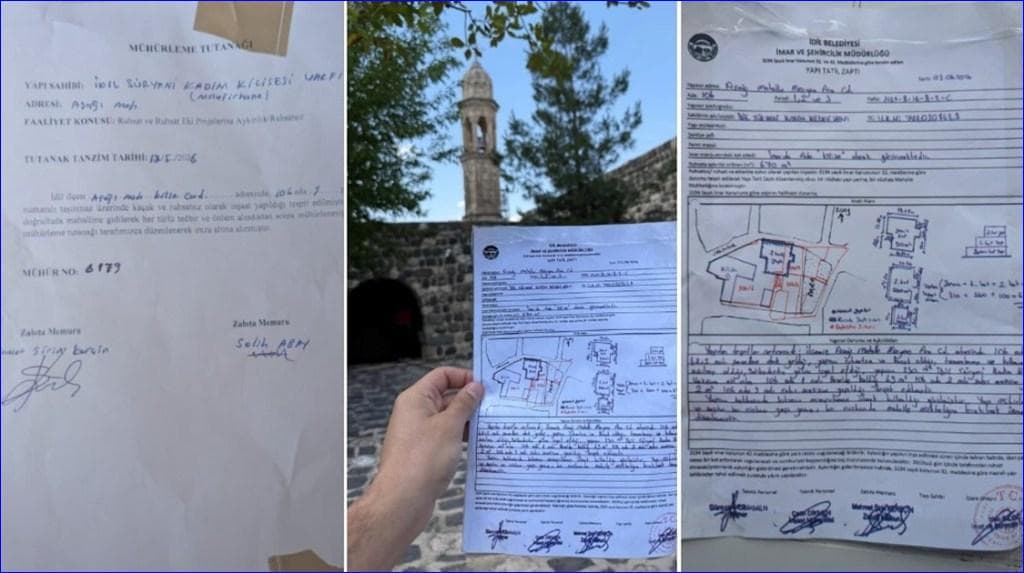
Recently, in some areas, the United Front Work Department and the Department of Religious Affairs have gone so far as to include a ban on minors entering churches in compliance of “safety regulations for religious activity venues”, or similar documents, requiring priests to sign and stamp them.
The commitment to keep minors out of churches has been linked to the official registration status of the clergy, the annual review of the church, and property certification – any violation, even a single instance, triggers direct penalties for the clergy and those in charge of the parish.
In enforcing these pressures, some absurd situations have emerged. The director of a local religious affairs office even proposed searching a priest’s private residence to see if any children were present for catechism.
Meanwhile, the bishop of a diocese with great symbolic significance has repeatedly and sternly warned priests and nuns during diocesan assemblies not to harbour any illusions. He singled out certain priests by name for continuing to allow children to serve as altar boys at Mass, accusing them of “endangering the Church”.
It is clear that, when faced with this storm, not every shepherd has shown the courage once demonstrated by Bishop Meng of Taiyuan.
The strict prohibition has caused traditional Sunday schools and parish summer camps to vanish entirely from public religious spaces. Consequently, the religious initiation of children has been forced back into the private sphere, within the family or through informal, small-group instruction.
Not all parents, however, are in a position to take on this responsibility; furthermore, even the strictly private sphere is now under pressure.
News has recently emerged from Zhejiang where on 7 November, four catechism teachers and more than 20 children were taken away because they were holding Sunday school in various private homes.
Fortunately, the children were released that same evening following questioning, while the four laywomen were punished with ten days of administrative detention.
"Everyone is treated the same way"
In recent years, there has been no shortage of online criticism, from a legal perspective, of the extreme practice of "banning minors from entering churches”.
Critiques argue that this rule is not a formal law enacted through a legitimate legislative process, but rather a control mechanism that emerged from the unchecked expansion of local administrative power, lacking any basis in higher-level legislation.
Such a practice, they contend, violates both the religious freedom of minors and the rights of parents regarding the upbringing of their children. Yet, these public voices remain weak and carry little weight.
In the Church, another argument is also circulating. The "ban on minors entering religious sites" applies to other religions, not Christianity alone. The claim is that "everyone is treated the same way", as if this somehow makes the practice more acceptable, providing a rational justification for one’s own cooperation in enforcing it, and thereby easing any pangs of conscience.
Not all pastors carry out these directives willingly. They recognise that the harm caused by this practice is multifaceted. And, as Bishop Meng said in 2019: “Do not be afraid, a person lives, at most, a little over thirty thousand days.”
The main damage concerns the intergenerational transmission of faith within the Church.
The Catholic Church is defined by its sacraments, and fundamentally built upon them. By preventing minors from entering the church, denying them catechesis, and participation in the Mass, the sacraments of initiation (Baptism, First Communion, and Confirmation) are rendered flawed.
Protestantism, by contrast, places greater emphasis on family settings, Bible study, and preaching. In Catholicism, the liturgy, specifically the Eucharistic sacrifice of the Mass, is central, and must be celebrated in a church or a designated sanctuary by a legitimately ordained priest.
For many of the faithful, life within a parish during adolescence serves as an invaluable spiritual heritage. Summer camps, choirs, altar service, and various parishes or diocesan activities, such as charity sales and performances, not only hone young people’s practical skills but also play an indelible role in shaping a sound character and a strong moral foundation.
In the Catholic Church, members of religious orders observe celibacy and require a long period of reflection and discernment; a life lived in harmony within a parish community provides an essential environment for nurturing such vocations. Preventing minors from entering a church is, in effect, removing the very fuel that keeps the fire burning.
A second consequence is the absence of the Church from the sphere of social governance. Today, mental health among teenagers in China is a major issue, with suicide occurring at increasingly younger ages, a problem inextricably linked to academic pressure, the hollow ideological education provided in schools, and other contributing factors.
The Church possesses a wealth of resources for pastoral care and could play an active role in fostering spiritual resilience among adolescents; however, this strict prohibition not only disrupts the transmission of faith but also severs a benevolent force through which the Church contributes to society and offers healing to young people.
Overcoming space through time
Pope Francis once said that, “Time is greater than space.” Faced with persecution by the Roman Empire, the early Church broke bread in the catacombs and prayed in homes; and is so doing, the faith took root and blossomed.
Returning to the lament voiced by Bishop Meng all those years ago: How is the torch of the Church passed on? The answer lies with every ordinary family, in the perseverance of so many anonymous individuals, people who seek no spotlight, who make no grand political declarations.
These people are parents, nuns, priests, bishops, and catechists who never give up, even when under pressure. They are the likes of those four laywomen . . . humble figures casting a faint, gentle light.
May the stories of these individuals, who today in China persevere in silence, be heard by the universal Church. And may their modest light be brought to prominence within the memory of our communion.