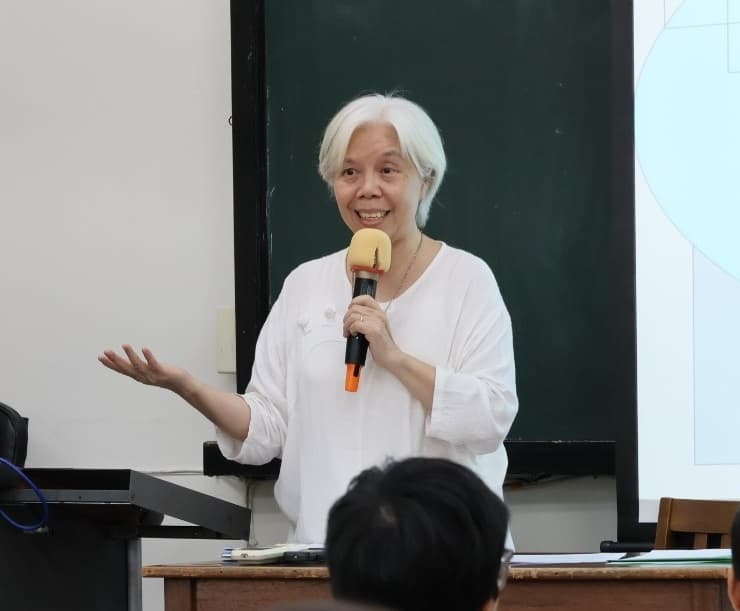
Taipei (AsiaNews) – The new members of the International Theological Commission, appointed last month by Leo XIV for the five-year period 2026-2031, are gathered in Rome these days for their first meeting. Thirty theologians from around the world – 22 men and 8 women, including priests, women and men religious, and 8 lay people — who have the task of assisting the Dicastery for the Doctrine of the Faith in examining doctrinal questions. The group also includes four theologians from Asia: priests Fr. Clarence Devadass (Malaysia) and Fr. Gilbert De Lima (India), Korean laywoman Teresa Hyeon Soon Choi, and Taiwanese Sister Maria Teresa Hu Shu Chin.
This last name is particularly significant: since Paul VI established it in 1969, in fact, this is only the second time that a theologian from the Chinese context has been called to be part of this body. Before Sister Hu Shu Chin it had been the Salesian Savio Hon Tai Fai, who was a member of the International Theological Commission for two terms from 2004 to 2014, during which in 2010 he was also chosen by Benedict XVI as secretary of the then Congregation for the Evangelization of Peoples.
Born in Taipei, having come to Catholicism as a student of Spanish language and culture during her university years, Sister Maria Teresa Hu Shu Chin is a religious of the Daughters of Jesus, a congregation founded in Spain in the second half of the nineteenth century whose charism is education. She teaches Dogmatic Theology at the St. Robert Bellarmine Faculty of Theology, which in Taipei is located within the complex of Fu Jen Catholic University, the great Catholic university founded in Beijing in 1925 and then reopened in Taiwan in 1961. Teaching theology in Mandarin, the St. Robert Bellarmine Faculty in Taipei is a privileged place for dialogue with the Chinese world. And it is precisely here that, a few days ago, AsiaNews met this religious called by the pope to bring her contribution to the reflection of the universal Church.
Sister Maria Teresa Hu Shu Chin, how did you receive the news of this appointment?
“Bishop John Lee — the bishop of Hsinchu who is president of the Episcopal Conference of Taiwan — had called me last year to tell me that he had proposed two names to the Vatican, including mine. We had worked together in the Office for Theological Concerns (OTC) of the Federation of Asian Bishops’ Conferences. And then the Church in Taiwan is small, it is not difficult to know each other. At the end of May the Episcopal Conference informed me that Rome wanted my curriculum vitae. I did not think, however, that I would be selected: I was very surprised when on October 19 I was informed of the appointment…”
Before you the only member of the International Theological Commission from the Chinese world had been Msgr. Savio Hon…
“I believe that my appointment has little to do with my personal theological abilities. It is linked to the rise of China and the growing importance of its Catholic community for the Catholic Church. I also believe that Taiwan’s specific position in the context of Chinese culture may be one of the reasons. But as a religious and teacher, I believe I have a very simple life experience and this is also reflected in my theological reflection. I consider myself a bridge representing a small part of the overall picture. For this reason I would like to build a team involving theologians from mainland China, Hong Kong, Macao and Taiwan: a group to share and reflect, thus hoping to provide a better service to the International Theological Commission. I have already contacted some of them.”
How do exchanges with mainland China take place from Taiwan?
“In terms of tourism, they are very frequent. Despite the political antagonism, there is great interaction at the grassroots level, in academic and cultural exchanges, and even in interactions linked to popular devotions. Economically too, the two sides have a high degree of interdependence. As for the Catholic Church, because of political issues, these matters are usually handled in a more personal and discreet way, to avoid unnecessary attention. I hope that in the near future, the governments of Taiwan and China can reach a peaceful consensus - along with practical methods for implementation - to jointly contribute to peace in East Asia and the world”.
What is the state of theological reflection in China today?
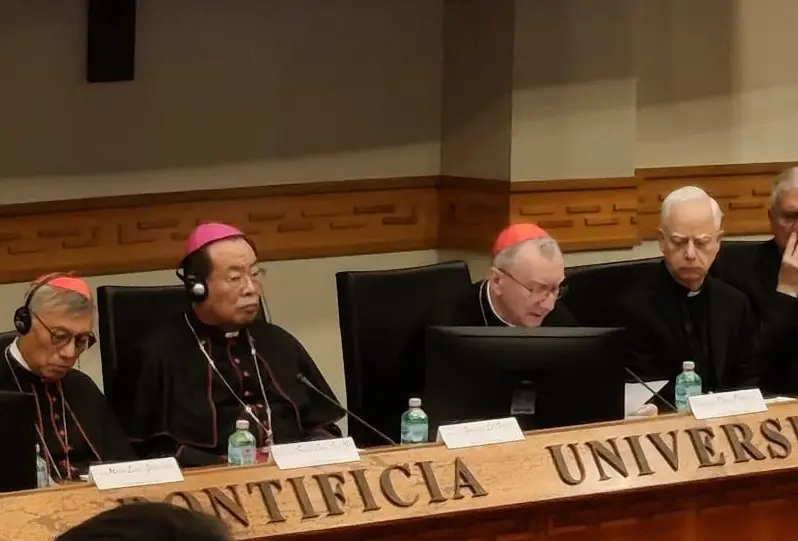
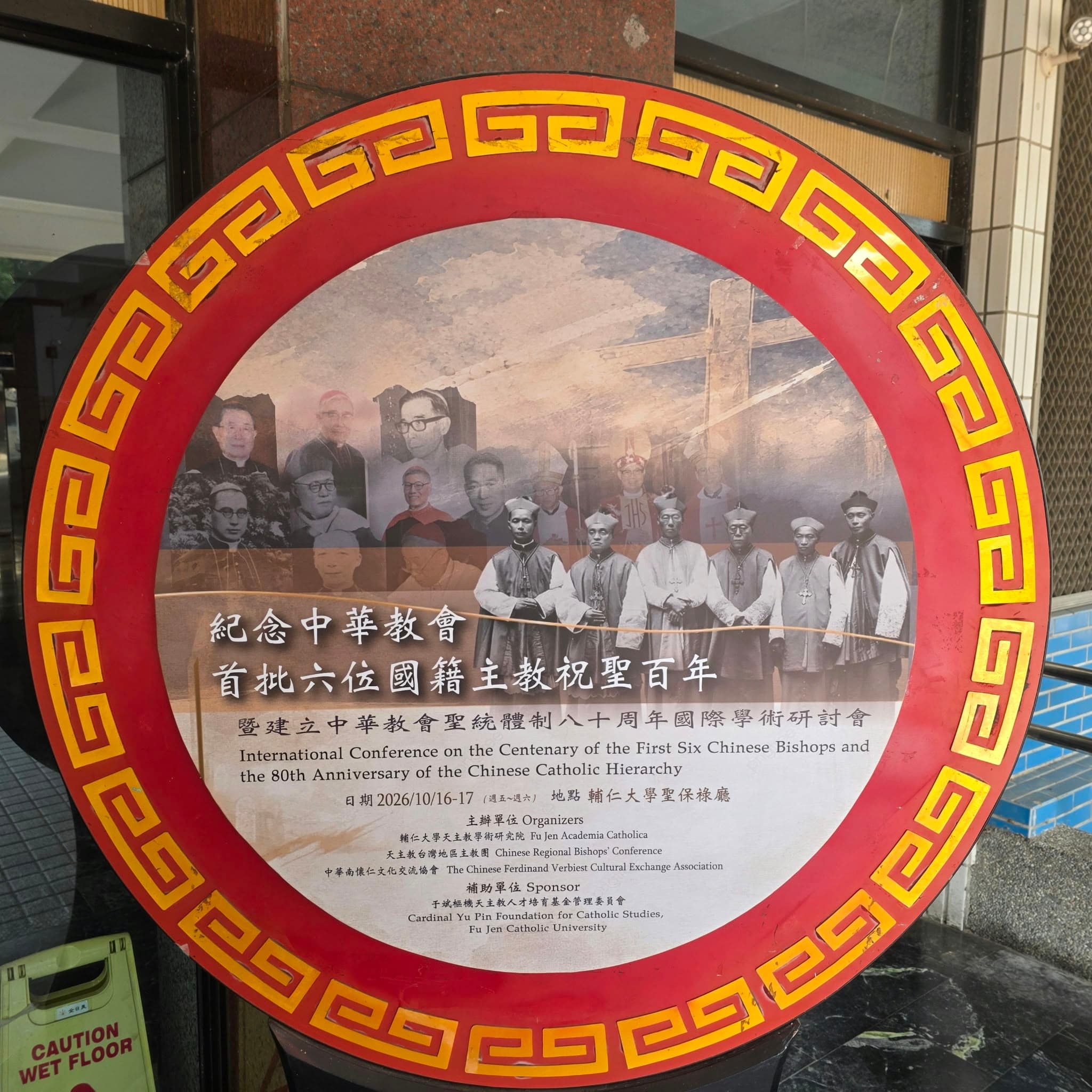
“China is vast, I cannot speak on behalf of everyone. Overall, however, I believe that today it is possible to objectively re-examine the historical experience of the Church in China, addressing the different challenges coming from government policies, society and culture, but also engaging with the arrival of the world of artificial intelligence and how to respond to it. Today a group of Chinese biblical scholars is working intensively on the translation of the Bible. And I believe that the talk given by the bishop of Beijing, Li Shan, in Rome on the occasion of the conference on the centenary of the ordination of the first Chinese bishops, also provides valuable information, showing the questions, positions and challenges that the Church in mainland China is currently facing. Although he represents the official Church, we must also listen to the voices of the underground communities. I am deeply convinced that, under the guidance of God’s grace, the Church in China - as a whole - will continue to move forward throughout the course of history.”
What specific contribution can the experience of those who live in the Chinese cultural context bring to theological reflection on today’s world?
“Despite secularization, the roots of Christianity in Chinese society remain deep, especially in rural areas. Many people take their faith seriously, are willing to bear witness to it and desire to pass it on to the next generation. This is a great witness, as well as a mission and a challenge. Due to historical factors, the clergy and members of religious orders, including newly appointed bishops in China are, on average, younger than those in the universal Church. Many devout families have also generously offered their only children to the Church. Overall, the Church is full of vitality and it seems to me a sign of great faith”.
And what, instead, are the main challenges that the Church today must face in Taiwan?
“The Church in Taiwan has a long history marked by many historical, political and also economic factors. After the strong growth of the 1950s and 1960s that occurred in the wake of immigration from mainland China, a period of stagnation followed, which also has the face of the aging of our communities. Today we all feel the need for a missionary renewal, but I believe it passes through three crucial questions: has the Church truly entered into the life of the people of Taiwan? Are we moving from an institution-oriented approach to a life-oriented approach? And has this Church truly moved from a clergy-centered approach to communion and mission?”
In your studies you have dealt a great deal with the theme of the family and the transmission of faith: what does the experience of Asia say in this regard?
“Throughout Asia, and in particular in Taiwan and mainland China, today marriage and the family are facing serious impacts and challenges due to a series of factors including growing economic pressures, the increase in the level of education of women with the concept of gender equality, the rise of individualism, urbanization, conflicts between generations, the spread of digital technology that also changes communication in the family, the aging of the population… All these transformations also challenge Catholic theology. We must teach people to look at marriage no longer as an institutional obligation but as a covenant of love; to move from the idea of procreation to welcoming and sharing life; from the family as a closed private unit to a love that is also a social force. In general, as a Church we must move from defending tradition to accompanying modern families today. With three major general changes at the social level on which we must continue to question ourselves: that of the meaning of marriage, that of the function of the family, and that of the way of understanding and living love.”
ECCLESIA IN ASIA IS THE ASIANEWS NEWSLETTER DEDICATED TO CHRISTIAN COMMUNITIES IN ASIA. WOULD YOU LIKE TO RECEIVE IT EVERY SUNDAY? TO SUBSCRIBE, CLICK HERE.