Beijing (AsiaNews) – When the politburo of the Communist Party of China recently announced the fifth plenum of the 20th Central Committee next October, observers turned their attention immediately on the chosen theme: not the economy, which is going through its most difficult period in recent years, but internal discipline, or, in the official language, the commitment to “govern the party rigorously and in every aspect”.
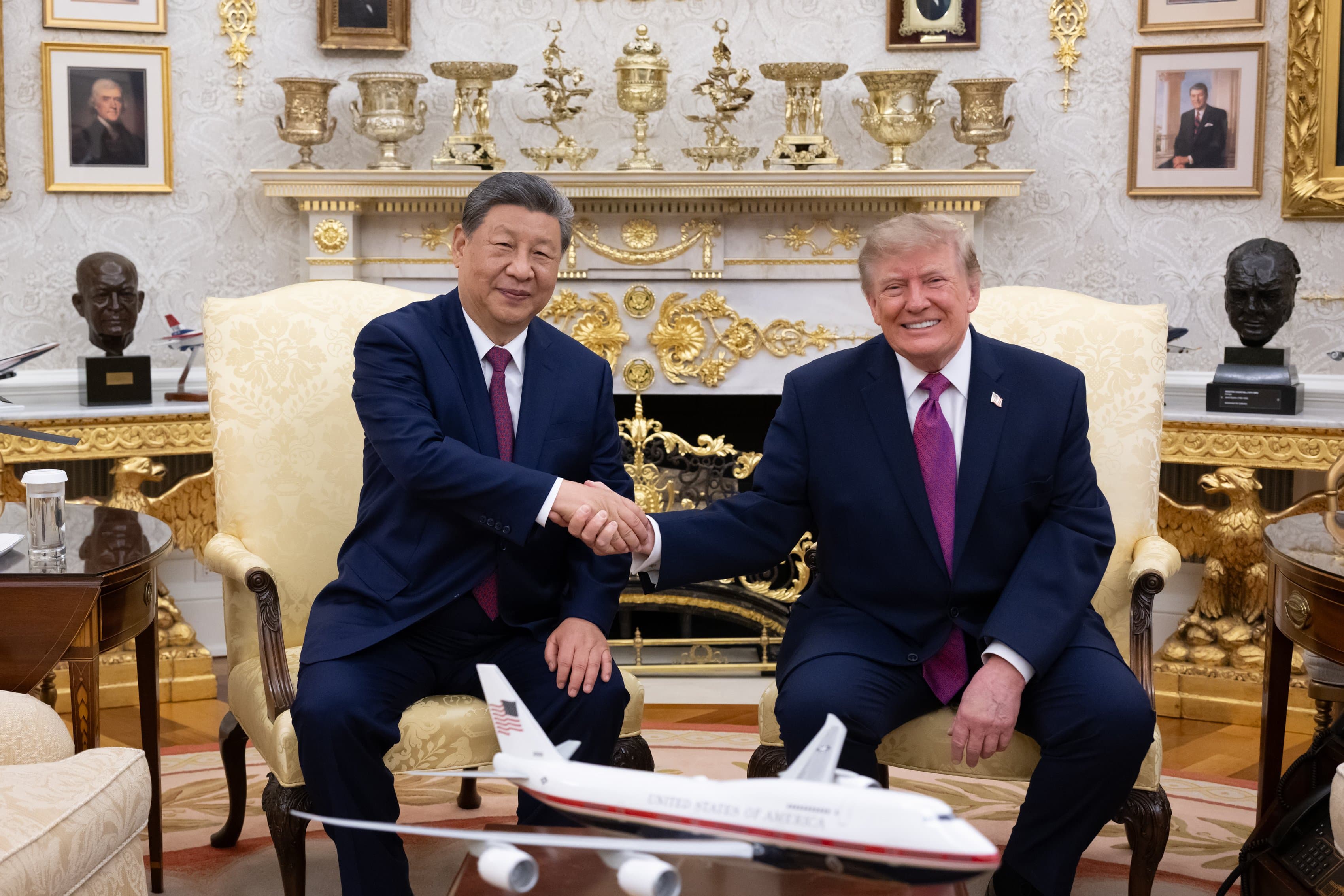
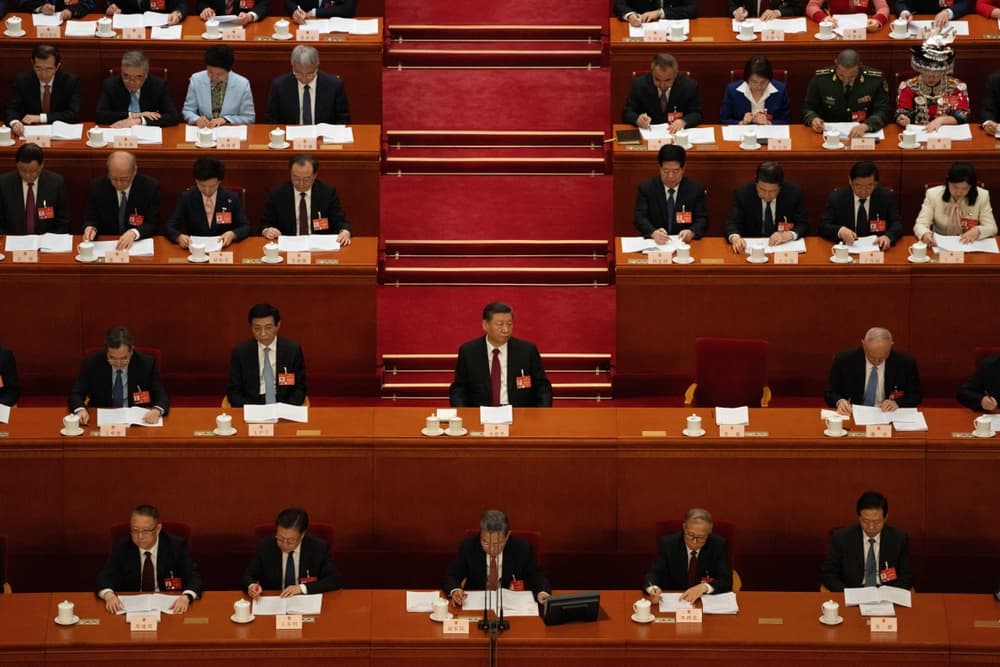
More than 370 Central Committee members and alternates will meet in Beijing about a month after Xi Jinping's planned trip to the United States and a year before the congress where the leader is expected to inaugurate his fourth term as party leader.
At first glance, this choice has a technical explanation. Over the past 30 years, all fifth plenums have typically been dedicated to preparing the Five-Year Plan, while the fourth plenums dealt with the party's ideology and development.
This time, this was reversed, as the delay accumulated with the third plenum, held only in July 2024 instead of the fall of 2023, likely due to internal disputes, delayed the entire schedule.
The fourth plenum in October 2025 therefore fulfilled ahead of schedule the task normally assigned to the fifth plenum, preparing the 15th five-year plan, which was due to be approved by March.
But the shift in the calendar is not enough to explain why the meeting scheduled for next October will focus on internal discipline. This year, the notion of Xi Jinping Thought on Party Building appeared in the official lexicon, a new branch of the leader's doctrine that will likely dictate the agenda of the fifth Plenum.
A first indication of what to expect came the day after the announcement, when the official party newspaper published a lengthy doctrinal text from the Central Commission for Discipline Inspection, the body that directs the fight against corruption.
The piece attributes every achievement of the disciplinary work of the last decade to Xi's personal leadership, celebrates his “political wisdom, brilliant thinking, and personal charisma”, and defines the so-called Two Institutions, the formula that enshrines the central role of the leader and his doctrine, as "the greatest certainty, the greatest source of trust, and the greatest guarantee" in a context marked by risks and instability.
In addition to the usual remarks, the text contains very concrete operational instructions.
Corruption is described as the most serious risk facing the party, and inspectors are urged to intervene against leaders who falsify data or remain inactive while awaiting changes at the top.
The barrel of the gun must always obey the party
The most delicate issue remains the military. On 31 July, on the eve of the 99th anniversary of the founding of the People's Liberation Army, Xi chaired a politburo study session dedicated to the armed forces, reiterating a long-standing principle that the barrel of the gun must always obey the command of the party.
He stressed the need to intensify the fight against corruption and build an "intelligent military system”, with more drones and more information systems, calling combat capability the sole standard for evaluating military modernisation.
Balancing these two priorities is difficult, because the disciplinary campaign has targeted the very leaders charged with leading the modernisation effort.
In January, Zhang Youxia, first vice president of the Central Military Commission and second in command of the uniformed hierarchy, came under investigation, along with Liu Zhenli, chairman of the Joint Chiefs of Staff.
In April, an investigation was opened against Ma Xingrui, then a politburo member and former party secretary in Xinjiang. He was then expelled from the party and civil service in July, losing his politburo seat, a decision that the October plenum will have to ratify.
After the last plenum session, the political leaders of Inner Mongolia, the Ministry of Emergency Management, Zhejiang, and the municipality of the megacity Chongqing were also removed, as was the head of the financial watchdog.
In total, more than a hundred senior officials have been removed since 2022. According to a report by the International Institute for Strategic Studies (IISS), purges have degraded the military's operational capacity and created gaps in the chain of command.
The most recent US intelligence assessments rule out the possibility of a Chinese invasion of Taiwan by 2027, a deadline long considered crucial. According to this view, China’s leaders are instead pursuing a takeover of the country primarily through non-military means.
The economy can wait
There is also the contrast with the difficult economic situation, which makes the choice of theme even clearer.
The statement scheduling the month for the plenum acknowledges that "great importance must be given to the difficulties and challenges" of the economy, an unusually frank language for a document of this kind.
GDP grew 4.3 per cent in the second quarter, below the annual target of 4.5 per cent to 5 per cent. Furthermore, in July, the PMI for industrial growth contracted again.
The announced response was vague: speed up public spending and adopt "incremental, pragmatic, and effective" policies, without specifying either timelines or figures.
Several analysts have linked this caution to the political calendar, because no one at the top wants to take risky moves on the eve of a delicate moment like the plenum. Thus, in the end, the party decided to convene a plenum focused on itself rather than on the economy.
This hierarchy of priorities reflects a deliberate political approach. Xi defined it starting in 2014 through the concept of "comprehensive national security”, with which he gradually expanded the idea of security from traditional domains to a list of 16, ranging from the economy to culture, biology, and space.
In this architecture, political security, i.e. the stability of the regime and its ruling core, comes first, while economic security is assigned a supporting role.
If the survival of the party is the prerequisite for every other objective, internal cohesion becomes the heart of the national strategy.
The October plenum will also undertake some practical tasks, like ratifying the expulsions decided in recent months and replacing those purged by the Central Committee – a final rectification of the organisational charts before the congress. It will, essentially, be a dress rehearsal for the 2027 turnover.
The selection of cadres who will attend the congress will depend on disciplinary scrutiny rather than competition between different factions. Personal loyalty to Xi and his doctrine is now an explicit criterion, enshrined in official documents with an unprecedented emphasis in the post-Mao era.
What remains to be seen is the output of a system that follows this line. The Disciplinary Commission itself, in the text published at the end of July, acknowledged that the problems to be corrected are always the same, from cadres' inertia to falsified data and embellished results, and its proposed response is to intensify the use of the tools already in existence.
According to some observers, the campaign essentially ends up fuelling the very behaviours it is supposed to correct, since officials, fearing mistakes, avoid making decisions, while those judged on their loyalty focus all their efforts on proving faithful to the leader.