Seoul (AsiaNews) – On 8 October, South Korea recalled its ambassador to Ukraine, Park Ki-chang, a move that caught many observers by surprise, given that, since the onset of the Russian invasion, Seoul has been one of the few in Asia to support Kyiv.
While never directly supplying military equipment to the Ukrainians, South Korea has sold weaponry to Poland, enabling Warsaw to replace the weapons it sent to Kyiv. Through a similar mechanism, it has also assisted the United States in replenishing its own stockpiles, which had been depleted by supplies sent to Ukraine.
The falling out between the two countries concerns two North Korean soldiers whom Kim Jong Un had sent to fight alongside the Russians, among thousands of other troops. Both were wounded and attempted suicide to avoid being taken prisoner, but were captured by Ukrainian forces in early 2025.
The two, the only North Koreans captured during the war, requested a transfer to South Korea, whose constitution grants full citizenship to residents of the North. Following months of negotiations, they were handed over to South Korea’s intelligence services in mid-September for questioning, with plans for them to join a social integration programme designed for defectors from the North.
On 23 September, while addressing the United Nations General Assembly, Ukrainian President Volodymyr Zelenskyy announced that the transfer had taken place, prompting protests from Seoul, which accused him of violating a confidentiality agreement. When Kyiv denied the existence of such agreement, the South Korean government demanded an official apology and summoned the Ukrainian chargé d’affaires.
According to South Korea’s intelligence services, Kyiv had requested discretion, so as not to jeopardise negotiations with Moscow regarding prisoner exchanges.
The current-affairs magazine The Diplomat suggests that Zelenskyy used the UN platform to draw international attention back to North Korea’s military support for Moscow, at a time when Ukrainian intelligence claimed that the Kremlin was seeking to secure the deployment of tens of thousands of additional North Korean soldiers.
The Ukrainian Foreign Minister later described the incident as a “diplomatic misunderstanding” and sent an apology, which Seoul deemed insufficient, responding with very harsh language.
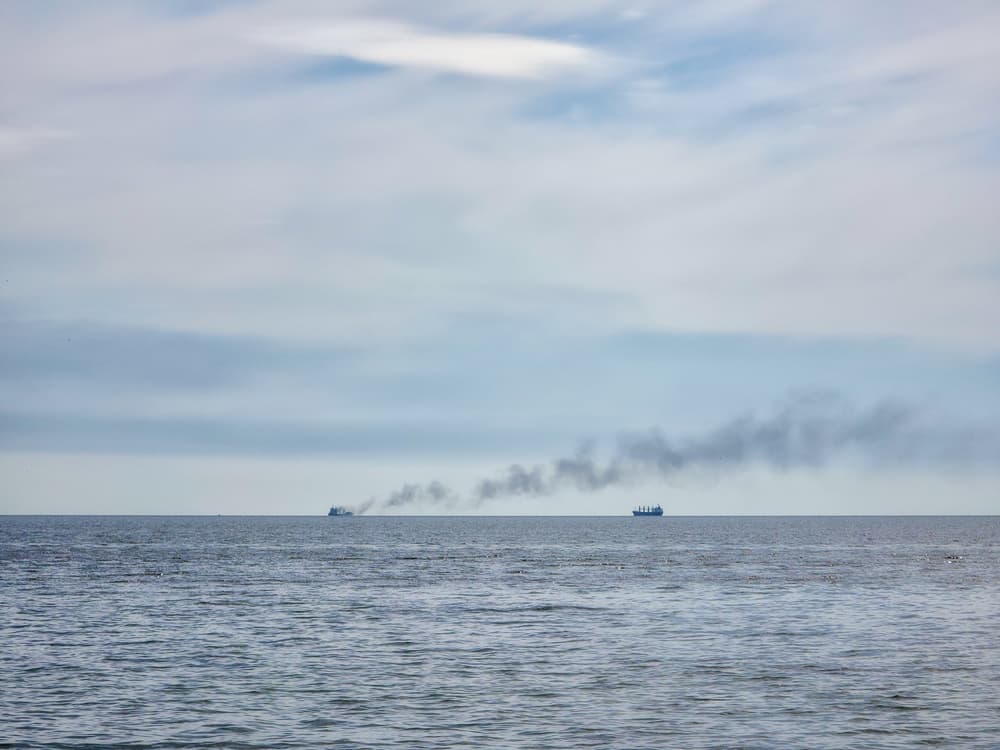
Further complicating relations was an investigation by the British newspaper The Guardian, which found that between July and August, seven oil tankers transported over 176,000 tonnes of fuel, primarily diesel, from South Korean ports to Vladivostok, while declaring false destinations.
Three of the vessels were subject to British and European sanctions, and the fuel had been bought by Russian companies. The shipments came at a time when Ukrainian drones were disabling parts of Russia’s refineries, forcing Moscow to boost imports of petroleum products.
The South Korean presidential office dismissed the allegations, though it promised to conduct an investigation.
The road to Pyongyang runs through Moscow
In Seoul, several observers do not consider the government’s reaction to the perceived affront to be proportionate. They suggest that President Lee Jae-myung’s firm stance is driven primarily by domestic political considerations, while reflecting a desire within certain government circles to move closer to Russia and China for economic and security reasons.
Some of the president’s advisors hope that Moscow will use its influence with Pyongyang to help revive talks between the two Koreas. Lee wants to usher in “a new era of peaceful coexistence” with the North, but Kim Jong Un has severed all contact and now views the South as a hostile, foreign state.
It is worth noting that, just before the crisis erupted, Lee had appointed Song Young-gil, the South Korean politician with the closest ties to the Kremlin, as a special advisor for “peace diplomacy”.
About a decade ago, then-President Moon Jae-in sent Song to Moscow as his special representative; during that visit, the envoy asked Vladimir Putin whether Russia would be willing to act as a mediator with Kim Jong Un.
Later, Song chaired the Presidential Committee on Northern Economic Cooperation (focusing on Russia and Eurasia). In July 2018, he travelled from Vladivostok aboard a special train provided by the Russian side, reaching the North Korean Rason Special Economic Zone, to promote a joint project between Russia, North Korea, and South Korea involving the railway line that leads to the port of Rajin.
Song has always viewed Russia as a crucial interlocutor for resolving the North Korean issue.
After getting embroiled in a scandal over illegal party funding, he spent about a year in pre-trial detention before being acquitted on appeal this past February. In June, he returned to parliament following a by-election.
South Korea also multiplied its contacts with Moscow in recent months through other channels.
In the first half of the year, the director of the Institute for National Security Strategy, a think tank linked to South Korean intelligence, travelled to the Russian capital. The director is a former high-ranking intelligence official with close ties to the current head of the intelligence services, Lee Jong-seok.
Both South Korea’s Ministry of Unification and the institute described the visit as a routine academic exchange, during which the South Korean representatives reportedly expressed concern regarding the transfer of Russian military technology to North Korea.
Many in Seoul, however, believe the purpose was to open an indirect channel of communication with Pyongyang. Lee Jong-seok and Unification Minister Chung Dong-young are the leading figures in the government’s so-called "autonomist" faction, which favours an international stance and a policy towards the North that are independent of Washington.
Officials from an office reporting directly to the Unification Minister, as well as former minister Kim Yeon-chul, have also travelled to Moscow. Exchanges between the South Korean and Russian capitals are, therefore, intense.
Distrust among allies
Washington views such contacts with suspicion, so much so that, in June, the US excluded South Korean intelligence services from a trilateral meeting with Japan focused on cyber threats originating from North Korea. Furthermore, the issuance of visas to certain South Korean officials has been suspended.
According to the South Korean newspaper JoongAng Ilbo, a senior member of the ruling party has acknowledged that difficulties in intelligence cooperation between the two countries currently represent the most serious issue in bilateral relations. In Washington, some interpret Seoul’s hardline stance towards Kyiv as an attempt to restore ties with Pyongyang by way of Moscow.
The deterioration of relations with Washington also threatens to jeopardise important ongoing negotiations between the United States and South Korea.
Last month, in New York, Lee and Trump agreed to follow up on discussions regarding the most sensitive issues within the alliance. Seoul seeks to acquire nuclear-powered submarines, which would require fuel supplied by the US, and is requesting permission to enrich uranium for its own power plants, an activity currently banned under its nuclear agreement with Washington.
The negotiations also cover how South Korea’s shipbuilding industry might contribute to revitalising the American shipbuilding sector, as well as the transfer of wartime operational control back to Seoul, a command currently held by an American general.
A month after that meeting, however, no schedule for these talks has been set.
Meanwhile, Washington continues to push for the implementation of last year’s trade agreement, which set tariffs on South Korean goods at 15 per cent, rather than the 25 per cent threatened by Trump, in exchange for US$ 350 billion in investments in the US.
According to the JoongAng Ilbo, some within South Korean intelligence circles doubt that the government’s chosen approach will yield results. Certain officials fear that efforts to re-establish contact with the North are destined to fail, given the increasingly close ties between Pyongyang, Beijing, and Moscow.
The recall of South Korea’s ambassador from Kyiv also risks straining relations with the European Union, precisely at a time when its defence industry is selling arms to several Eastern European governments and Seoul is seeking to bolster its international standing.
In the eyes of Europeans, the South Korean government’s conduct appears inconsistent, as the indirect support provided to Ukraine thus far stands in contrast to its fuel exports to Russia and its attempts to move closer to Moscow.
The Kremlin can exploit this controversy to claim that support for Kyiv is weakening, with the goal of encouraging other governments to reduce their own aid to Ukraine. Lee aims to reopen talks with Pyongyang, but so far, this has only led to a cooling of relations with Ukraine, Europe, and the US, all the while failing to elicit any response from Kim Jong Un.