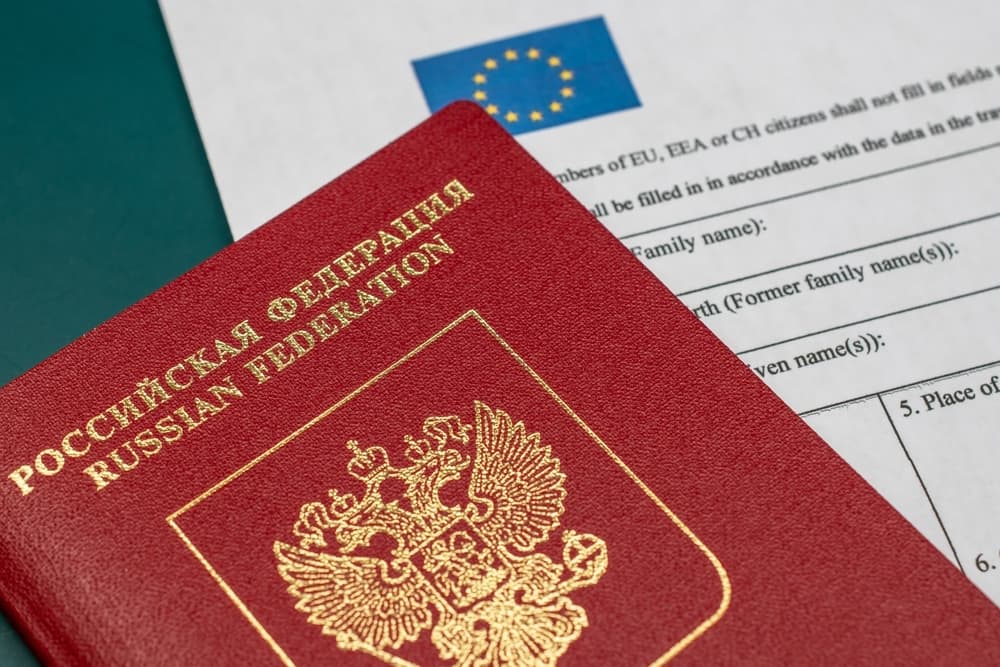
Moscow (AsiaNews) – In 2026, Russians are once again leaving the country in droves, and find themselves at the start of a long journey to rebuild a new life practically from scratch. Many emigrants had already moved to various countries in recent years and have not yet found a long-term home; some have found a proper new home, whilst others have even returned to Russia. The Meduza website interviewed political scientist Margarita Zavadskaya, a senior researcher at the Finnish Institute of International Affairs and one of the co-founders of the OutRush project, which studies Russian emigration, how emigrants adapt abroad, the conflict between “those who have left” and “those who have stayed”, and the differences between the various waves of migration.
In her view, “the stereotype of this conflict serves Russian propaganda and is deliberately promoted: those who have left are traitors, they say, but it also reflects the resentment of those who do not support the war and the regime, and unlike those who have left, are forced to remain in Russia, or cannot afford to emigrate… It is entirely possible that they feel abandoned by their compatriots, or perhaps they want to stay and believe it is the right decision’. The Levada Centre for Sociology asked questions about how people perceive those who have left, although the survey focused specifically on celebrities, starting, for example, with the famous singer Alla Pugacheva; a certain degree of negativity emerges, but this does not reflect the full picture. The number of people in Russia who have lost someone who has left the country is not very high, and it is difficult to feel sorry for someone you have never met.
It is not easy to assess how those who have left Russia experience this disconnection; the situation is changing very rapidly, amidst drones, fuel shortages and economic crises. If we look to the past – given that Russia has already experienced periods of upheaval – those who have left feel more empathy for those who have stayed behind, rather than the other way round, in a sort of ‘emotional asymmetry’. A recent study from 2026, in which Zavadskaja herself took part, found no hostility towards those who stayed behind; on the contrary, people miss them, want to communicate with them and maintain regular contact not only with family members but also with friends.
Among emigrants, there is a growing sense of irritation and weariness regarding news of what is happening inside Russia. As early as 2023, even before the death of Alexei Navalny, many complained of being tired of reading the news, but few are willing to abandon Russian-language media entirely. Everyone is tired of depressing news, and the media are responding to this need: more light-hearted content is emerging, such as the programme ‘Drama Queens’ on the Dožd television channel.
The waves of emigration are described using conventional terms, distinguishing between the ‘Septemberists’ – those who left at the start of the 2022 mobilisation – and the ‘Feverists’ – those who left Russia immediately after the invasion of Ukraine began. It is as if there were a moral to the story: we are the true emigrants, those who left before the state wanted to get rid of us, whilst those who left in September are somehow flawed. Today, there are certainly grounds for speaking of a greater propensity for emigration, and anxiety and the desire to leave have clearly increased, though not yet to the levels seen in 2022. At present, we are dealing with rumours of a possible mobilisation, which, however, has not yet been announced; indeed, so far it has always been denied by the Russian authorities. The conditions for a new migratory exodus have been created, but its scale will depend largely on the occurrence of a new, significant trigger.
As the expert explains, “a migration wave is not limited to the moment when everyone starts talking about emigration on social media; researchers must identify the convergence of several independent indicators”. The first indicator is intention: online searches, enquiries to organisations offering relocation assistance, demand for legal advice on immigration, and interest in renting accommodation and working abroad. The second is actual movement: border crossings, the number of Russians entering Armenia, Georgia, Kazakhstan and other countries, and sales of airline tickets. The third is permanent settlement in a new location: applications for residence permits and other legal statuses, enrolling children in school, registering businesses, job searches and long-term tenancy agreements. There are various ways people describe themselves: many call themselves ‘global citizens’ or ‘citizens of the world’, whilst others simply feel they are ‘people in exile’.