Riyadh (AsiaNews) – Almost two years (the measure dates back to January 2025) after Riyadh opened up Mecca and Medina, Islam’s holy cities, to foreign investment and capital, Indonesia has become the first foreign country to acquire property in Mecca.
The regulation authorises the entry of non-Saudi investors, but applies only to Muslim-majority nations, which may acquire equity stakes (up to 49 per cent), whilst direct ownership of property remains prohibited.
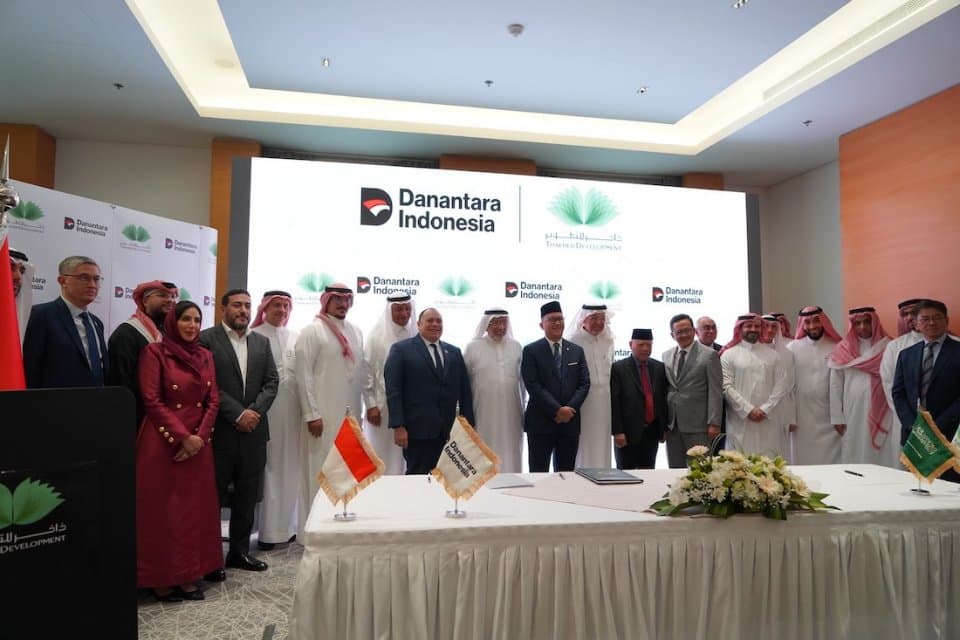
Jakarta has beaten other Arab-Muslim states to the punch, after the Danantara Indonesia sovereign wealth fund received the title deeds for an acquisition worth 2 billion riyals (equivalent to 531.4 million dollars).
‘Davos in the Desert’ postponed
The announcement of direct foreign investment in one of the two most important cities in the Muslim world comes at a critical juncture for the Wahhabi kingdom, which is the target of attacks by pro-Iranian Houthi rebel militias from Yemen.
This conflict has flared up again in recent weeks after three years of relative calm, causing severe damage to infrastructure through targeted attacks on the capital’s international airport and raids on the headquarters of Aramco, the state-owned oil company.
Hence the decision taken in the last few hours by government leaders to postpone the so-called ‘Davos of the Desert’: the ‘Future Investment Initiative’ (FII), originally scheduled for 26 to 29 October, will now take place in 2027, although the official date has not yet been announced; organisers have stated that it will be revealed ‘very soon’.
Now in its tenth edition, the conference has become an unmissable event for some of the leading figures in global finance.
It is an event strongly backed by the leadership in Riyadh, which in recent years has become the ideal showcase for presenting ambitious investment plans aimed at freeing the country – and its economy – from dependence on oil; however, these plans now appear to have been put on hold due to a lack of funds (and security).
At a time of difficulties and renewed tensions in the Gulf, the Indonesian government is looking with interest towards Saudi Arabia in search of resources and foreign investment, partly to address various internal challenges, ranging from political issues to environmental ones, such as the wildfire crisis.
The property assets were acquired by Danantara Indonesia – through its investment arm, Danantara Investment Management – within Thakher Makkah, a major urban development complex situated approximately 1.2 km north of the Grand Mosque, or Masjid al-Haram.
Jakarta: a strategic location for pilgrims
A statement from Thakher Development, the project’s lead developer, confirms that it has handed over the title deeds, finalising the acquisition of the Novotel Thakher Makkah hotel – comprising 1,461 rooms – and 14 adjacent plots of land.
“This is a historic moment for Thakher Makkah. Welcoming the first foreign state as a property owner in our destination,” explains Chief Executive Faisal Shaker, “reflects international confidence”, particularly at a time of difficulty due to the conflict’s repercussions on the economy and stability.
The acquisition brings Indonesia ever closer to its goal of creating a ‘Hajj village’ – that is, an accommodation complex dedicated to pilgrims from the world’s most populous Muslim-majority country and from other locations.
“The aim,” explains Rosan Roeslani, head of Danantara, “is to manage these assets with rigorous investment discipline, whilst developing an integrated ecosystem that improves the quality of accommodation and services available to pilgrims from Indonesia and around the world.”
Indonesian President Prabowo Subianto himself has tasked the fund with overseeing the multi-billion mega-project, situated near the Grand Mosque.
The prospect of an agreement was first announced in December 2025, when Danantara Indonesia described the venture as a “first strategic step in the hospitality sector in Mecca”.
It was also part of a long-term strategy aimed at improving services for Indonesian Muslims travelling to Mecca for the Hajj and Umrah, the two pilgrimages considered pillars of the Islamic faith.
The acquisition follows the entry into force, in January 2026, of the law on property ownership by non-Saudi entities. The legislation aims to attract foreign investment and support Crown Prince Mohammad bin Salman’s Vision 2030 plan, which seeks to diversify the economy by reducing its dependence on oil.
A pillar of Vision 2030
Prior to the new legislation coming into force, foreign ownership of property in Saudi Arabia was governed by the 2000 legislation. Ownership rights were subject to significant restrictions, particularly in the two holy cities, and were generally limited to eligible foreign residents and certain companies operating within the Kingdom.
For non-resident foreigners, the acquisition of residential and commercial property was subject to even stricter restrictions, with exceptions permitted only in the case of specific investment agreements or special projects.
Mecca and Medina are increasingly important drivers of the Saudi property market, even during this critical phase. Data from the Real Estate General Authority indicate that, in September, Mecca accounted for 21 per cent of property transactions across the entire kingdom, ranking second after Riyadh, which recorded a 29 per cent share.
As part of Vision 2030, Saudi Arabia aims to welcome 30 million pilgrims a year for the Umrah by 2030, a substantial increase on the 8.5 million recorded in 2019 before the suspension imposed by the Covid-19 health emergency.
Indonesia, the world’s most populous Muslim-majority country, is home to over 242 million Muslims and holds the highest national quota for the Hajj. For 2026, it has been allocated 203,320 places for the Hajj, whilst around 1.5 million Indonesians undertake the Umrah, the lesser pilgrimage, each year.