Baghdad (AsiaNews) – Churches opening or being inaugurated following restoration work, a street named after a martyr, and ancient manuscripts returning to their rightful owners. Recently, Iraqi Christians have had more than one reason to celebrate their connection to their homeland, setting aside for a moment long-standing problems and unresolved issues that remain open: citizenship, equal rights, ethnic tensions and sectarian persecution, compounded by conflicts in the region and a mass exodus which have, in effect, reduced the population to little more than a third of the approximately two million who lived there prior to the US invasion of 2003.
Churches and cathedrals
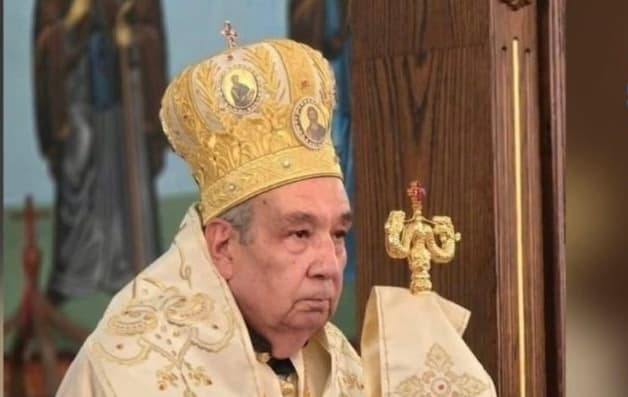
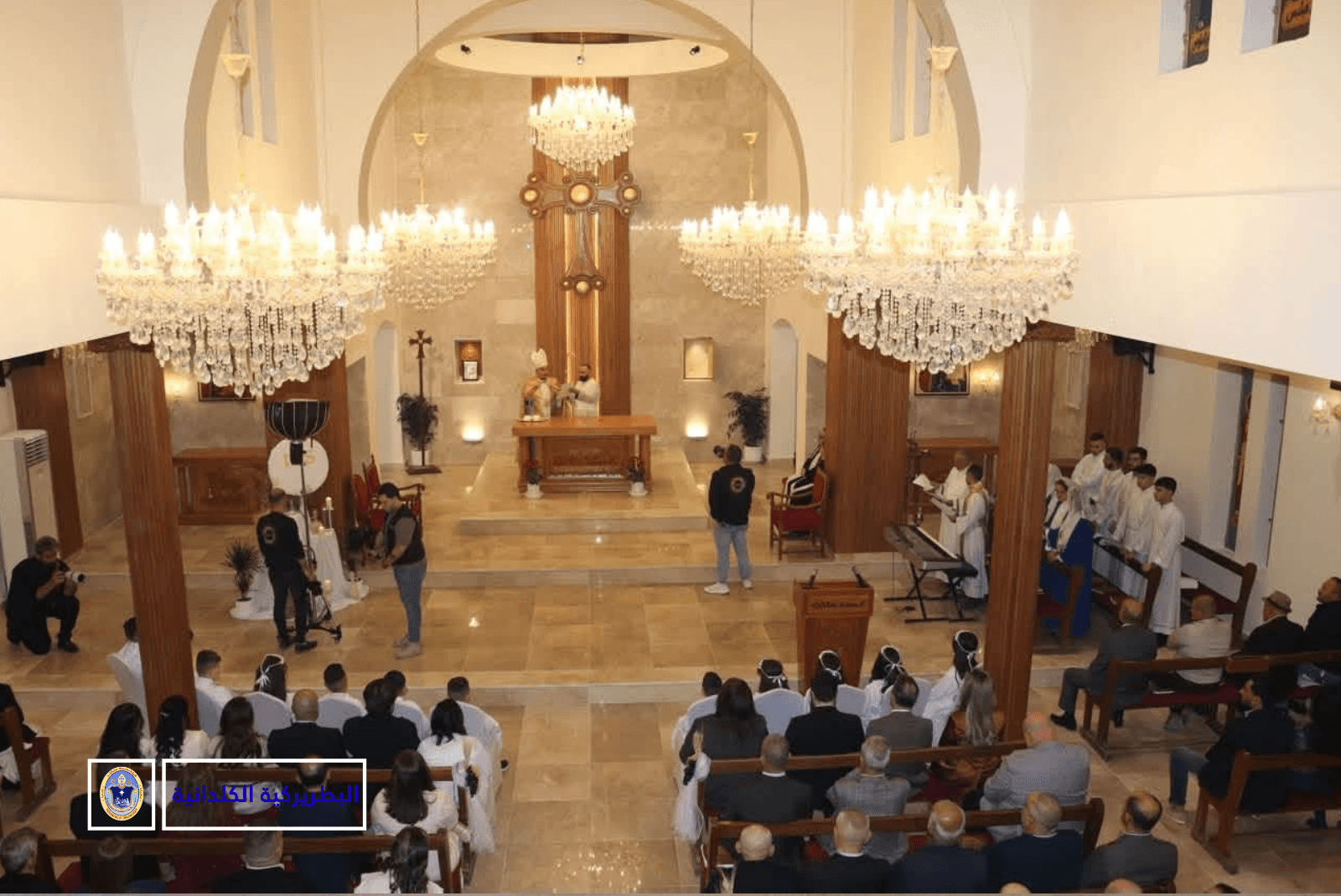
Last weekend, the Chaldean community in the capital turned out in large numbers for the rededication ceremony following the restoration of the Church of St Thomas the Apostle in Baghdad (pictured). The Eucharistic celebration was presided over by the Archbishop of Basra (the southern oil hub), Monsignor Habib Al Naufali, representing Patriarch Paulos III Nona, who was on a visit to Jordan. Assisted during the service by the church’s parish priest, Fr Hanna Qallo, the prelate also celebrated the sacrament of First Communion for 13 girls and boys. Addressing the faithful in his homily, Archbishop Al Naufali congratulated the parishioners, praising all the efforts made to “present the house of God in such a fitting manner”, before turning to the new communicants and their families, urging them “to follow in the footsteps of the Lord Jesus”.
Last week, also in Baghdad, the inauguration ceremony was held for the Cathedral of the Virgin Mary and Saints Abba Paul and Abba Anthony, the first Coptic Orthodox cathedral in the whole of Iraq. The service was attended by Prime Minister Ali Falih Kadhim al-Zaidi and Bishop Antonios, Metropolitan of Jerusalem and the Near East, representing Pope Tawadros II, together with numerous civil and ecclesiastical authorities. Also present were Rami Joseph, chairman of the Office for the Endowments of Christian, Yazidi and Sabean-Mandaean Communities, and Fr Mina al-Orsholimi, parish priest of the Coptic Orthodox community in Iraq. Construction of the cathedral began in 2012 with the laying of the foundation stone, but the project had suffered several delays before being completed and officially inaugurated 14 years later.
Rami Joseph described the opening as a cause for great joy, highlighting its architectural significance and calling it “the largest church in Baghdad since the founding of the Iraqi state”. It also represents “an encouragement for Christians who have emigrated to return to Iraq” and bears witness to “the improvement in security and stability in the country”. The inauguration is also part of a wider programme to restore and redevelop other church buildings, in coordination with the government. In his speech, Prime Minister al-Zaidi emphasised how the cathedral enriches Iraq’s spiritual and cultural heritage, stressing once again that religious and cultural diversity is a source of wealth for society and a factor in national cohesion.
Mosul and its martyrs
Moving on to Mosul, in the north of the country – once an economic and commercial metropolis that later became the heart of the caliphate imposed by the Islamic State (IS, formerly ISIS) in Iraq between 2014 and 2017 – the community commemorated a Christian martyr. The road leading to the Syriac Orthodox Cathedral of Mar Ephrem has in fact been named after Fr Paul Iskandar, the priest whose abduction and subsequent murder in 2006 marked the beginning of one of the most tragic periods of bloodshed: the abductions and killings of priests, bishops and religious figures – including Bishop Paulos Faraj Rahho and Father Ragheed Ganni – which fuelled a sense of insecurity within the various communities and contributed to the exodus from the country and the abandonment of property which they are now struggling to reclaim.
Local sources, as reported by ACI Mena, state that the Syriac Orthodox priest has been honoured by having a street named after him “in commemoration of his sacrifices in the service of the Church and our people”. Bishop Nicodemus Daoud Sharaf stated that this was “in response to a request made some two years ago by the archdiocese, which had received an immediate reply from the then governor of Nineveh, Najm al-Jubouri, although its implementation has been delayed until now”. The bishop added, however, that this gesture “will not be enough to reassure Christians and encourage them to return unless it is accompanied by tangible stability”. Indeed, since the city of Mosul was recaptured in 2017 following three terrible years of ISIS rule, the hoped-for return of Christians has fallen far short of the number who were present in the city before 2014. The street named after Fr Iskandar is the second to bear the name of a martyr, following the one leading to the Chaldean Church of St Paul, which was dedicated in February 2013 to Monsignor Rahho, Archbishop of Mosul, who was abducted and killed two years after Fr Iskandar, as part of a long trail of bloodshed and martyrdom.
Ancient manuscripts
For Christians in Iraq, dark clouds still loom over their future, foremost among them the lack of work and economic prospects, albeit alongside a few glimmers of light that offer a ray of hope. Security has improved compared with the height of jihadist violence, but the conflict between the United States (and Israel) and Iran is fuelling new fears and unresolved anxieties, as recently confirmed by the executive director of Caritas Iraq, Nabil Nissan. The most tangible impact of the crisis is felt in families’ household budgets. The exchange rate between the Iraqi dinar and the dollar remains unfavourable, and it is becoming increasingly expensive for families to meet their daily needs, fuelling an exodus which has now turned into a veritable haemorrhage of the Christian population. To restore life and dignity to the community, it is necessary to rebuild homes, churches and economic activities, and to rediscover the flourishing artistic and cultural heritage, once described by Patriarch Emeritus and Cardinal Louis Raphael Sako as the true ‘black gold’ of Iraq and of Christians.
In this context, the return of ancient historical manuscripts to the Archdiocese of Akra by the monks of the Chaldean Antonine Order of St Ormisda – who have safeguarded them for over half a century – takes on even greater significance. The official handover ceremony took place in recent days at the monastery dedicated to the Servant of God and martyr Gabriel Danbo in Ankawa, Iraq, a predominantly Christian district of Erbil in Iraqi Kurdistan. The event was attended by the Archbishop of Mosul and Akra, Monsignor Najeeb Michaeel, Abbot Samer Soreshow, Superior General of the Order, and several monks. The manuscripts were entrusted to the monks in the 1960s, during a period marked by difficult circumstances and large-scale population displacement in the region. Over the decades, the Order has regarded the manuscripts not only as priceless treasures, but as “an essential part of the historical and spiritual memory of the Chaldean Church”, a legacy that “preserves its identity”.
The manuscripts were transferred from the Monastery of Our Lady of the Seeds in Alqosh to the Monastery of St George in Mosul, and subsequently to the Monastery of St Anthony in Baghdad. Their journey finally led them, in 2021, to the Order’s headquarters in Ankawa, where the “Scriptorium Syriacum” is located – a cultural centre dedicated to the preservation of Syriac manuscripts. The repeated transfers meant that the Akra manuscripts became intermingled with other collections held by the Order, requiring considerable effort to identify and separate them. However, the work went beyond the simple identification and classification of the manuscripts; it also involved cleaning them, recovering scattered pages, digitising and numbering them, reassembling them into complete volumes, and compiling detailed catalogues. According to Soreshow, the Akra diocese’s collection originally comprised 97 manuscripts, 93 of which were handed over to the Archbishop of Mosul. Of the remaining four, three have been identified in the digitised archives of the Chaldean Patriarchate, whilst the fourth remains missing.