Rome (AsiaNews) – Before speaking with Father Boulos Baqain, we must wait for yet another prayer service to end, this one for the victims of the Hmoud attack, which, last Friday, shook the Christian community in Karak and across Jordan.
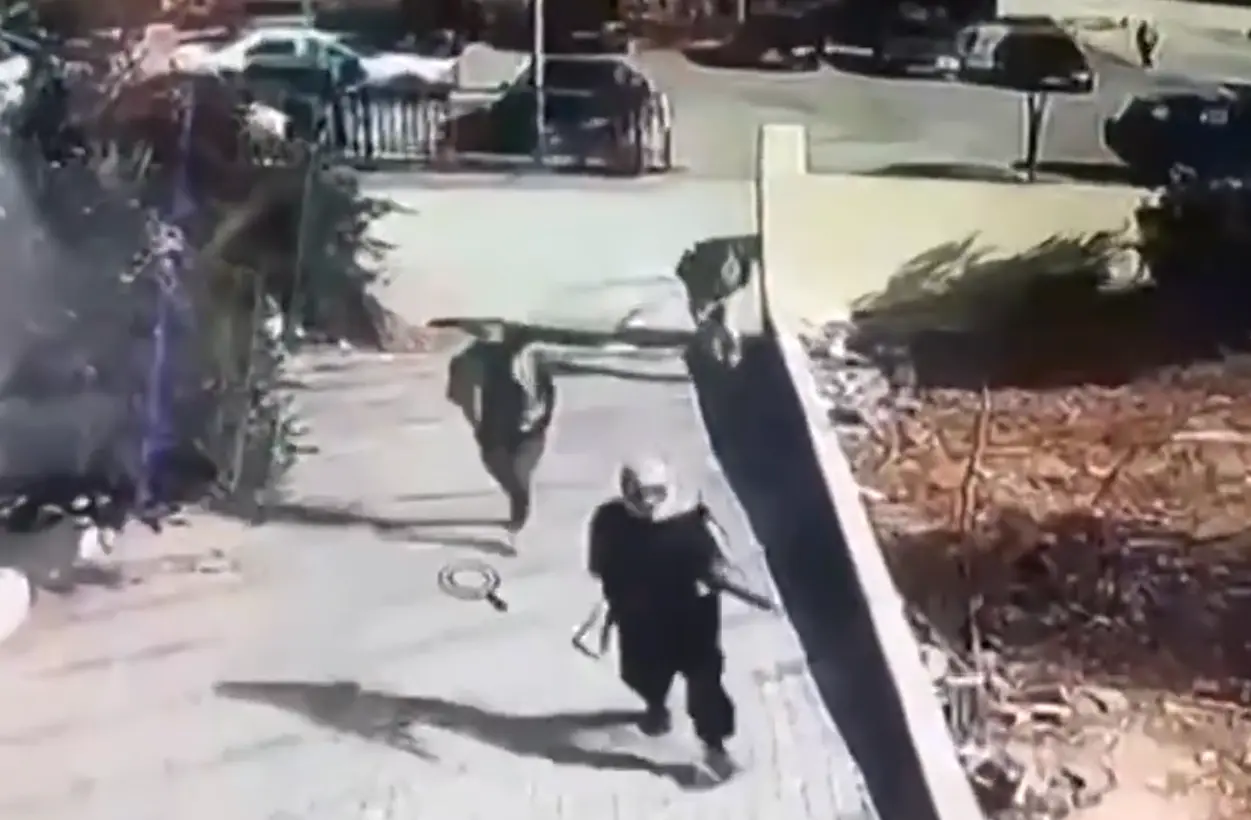
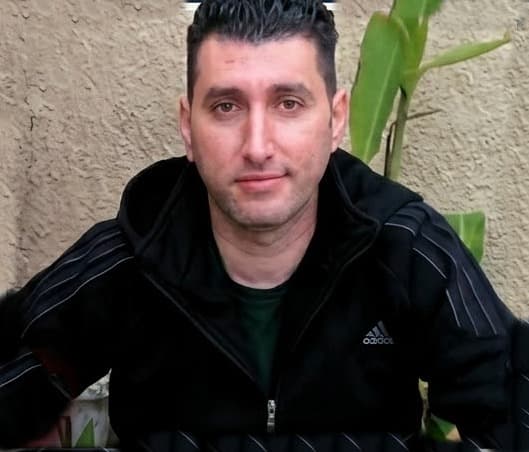
When he answers the video call, two children appear in the frame. “Salam aleikum”. They smile, polite and gentle. They are the children of Alaa Masarweh, a Melkite, who was one of the nine people killed by three gunmen. The attackers opened fire on a group gathered for a funeral in front of St George’s Greek Orthodox Church, a tragedy within a tragedy.
“They don’t fully grasp what happened,” Father Boulos Baqain told AsiaNews, after the children stepped away. “There is a deep wound in their hearts because their father is gone. Now they ask: ‘Why our father? Why did he die like that? What did he do?’”
The children’s questions are the same as those of the adults, members of a Christian community in Jordan that, while representing a minority of barely 2 per cent, has long lived side-by-side with Muslims, as neighbours, schoolmates, and friends.
Karak, a region in central-southern Jordan, stands as a model of the peaceful coexistence found in Jordan, a quality noted by Pope Leo XIV in his Angelus prayer, in which he expressed his closeness to the people.
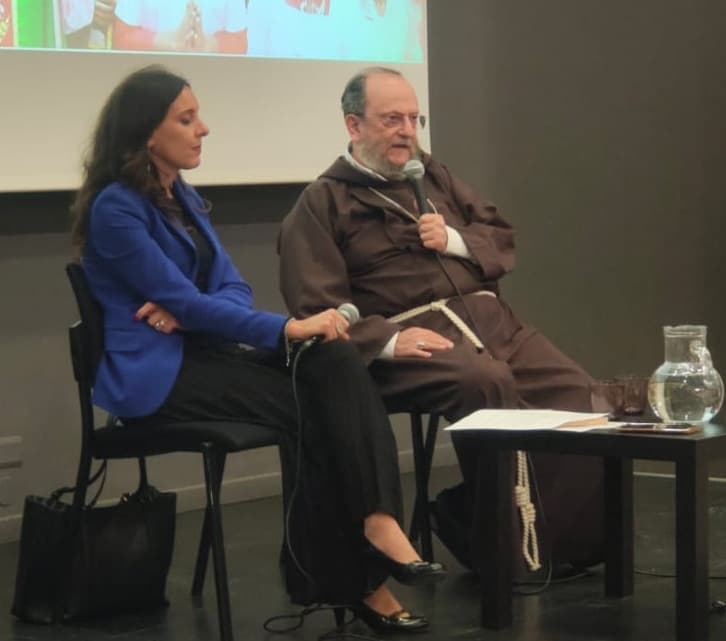
Father Boulos Baqain, 72, the parish priest of the Melkite church in Karak and Adir, has served there for 30 years.
An attack against Christians
The attack left those who have lived in Karak for decades in a state of shock, now suddenly overwhelmed by a sense of grief that pierces the heart and remains etched upon the bodies of the more than 30 people who were wounded.
“Things are bad, but we must accept it. There are always difficulties; that is our life,” the parish priest said.
On Monday, Jordanian authorities announced the capture of the three attackers, who are reportedly from the same family and acted out of ideological extremism.
Jordan’s retaliation was swift: raids were carried out in southern Syria against “terrorist hideouts,” resulting in the deaths of “20 Islamic State fighters”, according to reports. In its response, Syria reported the death of civilians and the violation of its sovereignty. As a result, it closed its southern border.
Ten years ago, on 18 December 2016, Karak was the scene of another attack that claimed the lives of 10 people, leaving Jordanians terrified.
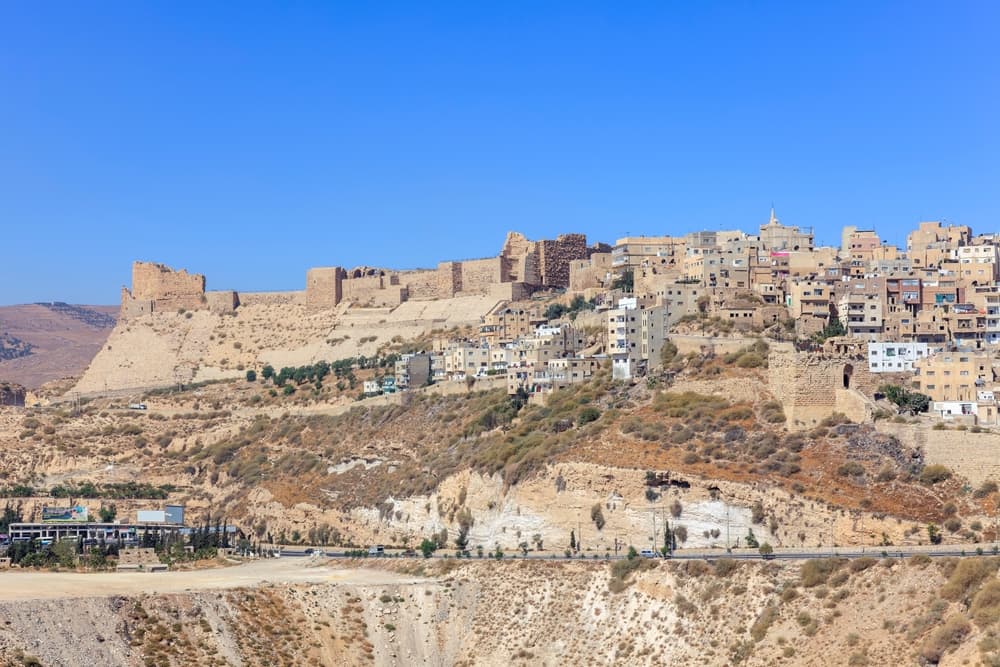
An armed group took several hostages, holing themselves up inside the city’s 12th-century Crusader fortress, after which the governorate is named. That attack, too, was jihadi-inspired.
“That attack was directed at the entire population, Muslims and Christians alike, with no distinction,” Father Baqain explained. “Today’s attack is different: it is aimed solely at Christians. They went to the church, where most Christian were concentrated, and opened fire.”
Hmoud, a village north of Karak, has a significant Christian presence that preserves its history and traditions, a fact to which the St George’s Greek Orthodox Church bears witness.
Jordanian unity under attack
Following the attack last Friday, the city of Karak, which, by virtue of its history and location, is far from a vibrant Amman, found itself at the centre of intense media and political attention.
King Abdullah II travelled to the city immediately, dressed in military attire, to meet the wounded and the families of the dead. He slammed the attack as an affront to the unity of the Hashemite kingdom, a country with different religions and social groups, including hundreds of thousands of refugees, who have long enjoyed a state of relative stability.
“All Jordanians, from north to south, are partners in land and fate, and nothing stands between them,” King Abdullah said on his social media account.
On Sunday, a large crowd gathered in front of St George’s Greek Orthodox Church in Hmoud for the funeral service, a holy site that still bears the chilling traces of gunfire and bloodshed.
The ceremony was attended by the Latin Patriarch, Cardinal Pierbattista Pizzaballa, and the Greek Orthodox Patriarch of Jerusalem, Theophilos III, as well as Patriarchal Vicar Bishop Iyad Twal and the Apostolic Nuncio to Jordan, Archbishop Giovanni Pietro Dal Toso.
It was a meaningful and heartfelt show of solidarity for the Christian community in Karak at a time of deep sorrow.
Interdependence between Christians and Muslims
The attack on St George’s Greek Orthodox Church has raised questions about the future of Jordan’s vibrant Christian community.
“It confronts us with the dilemma of what the future will hold for us. A major issue has emerged. We must now ensure that Christians can continue to live in this part of Jordan,” Father Boulos Baqain told AsiaNews. “Right now, there is a lot of fear in people. We want a form of Christianity that is free from living in fear, free from the fear of the future.”
Father Baqain is a witness to the friendship between Muslims and Christians that defines daily life in Karak, a relationship rooted in mutual respect and a genuine sense of “interdependence”.
“We are always doing things for them, and they for us; this has always been a constant,” he said.
Many people, regardless of their background, are sharing the grief of the past few days. This, he noted, “serves as a call to unity, togetherness, and sharing moments with one another.”
One of the victims in Hmoud is Mohammad Al-Qassous, a Christian dentist who chose to keep the name of Islam’s greatest prophet as a way to honour Muslim and Arab roots. Far from being isolated, this reflects a genuine reality.
Social challenges in Karak
The local reality is also marked by shared difficulties that affect every community in Karak, which is located in one of the more rural parts of Jordan.
As Father Boulos Baqain points out, “The biggest social issue here is employment, because we lack resources and there are no opportunities. Poverty is widespread, and, as often happens, some take advantage of the situation by exploiting and abusing vulnerable people.”
Consequently, many Christians are leaving Karak to seek fortune in Amman, often young people who go away for various reasons, like studies, medical treatment, or work.
“Life in Amman is better than here,” Father Baqain explained. At the Melkite parish in Karak, he hosts the ‘Drama Centre’ project, supported by Caritas Jordan and the association Non Dalla Guerra (Not From War), which focuses on art, music, and theatre, in order to create a space where young Jordanians and Syrians can meet and share experiences.
Despite the exodus, those who remain, as Father Boulos Baqain knows well, often dedicate themselves to improving conditions for their local communities, people like Alaa Masarweh, a father killed last Friday, who left his children with many unanswered and painful questions.
This is also the case of 23-year-old Fadi al-Halsa, who was also killed. “He always attended Mass,” the parish priest noted. “He was a good person, he and his entire family. He finished his medical studies just two months ago, and now he is gone . . . ”.
In Karak, people long for a tangible peace, one built on opportunity and coexistence. “When there is peace, economic, political, free from war, life remains manageable. We hope for peace for the orphaned children and for these families gripped by grief.”