Baghdad (AsiaNews) – The airstrikes carried out last night by the United States and Saudi Arabia in Iraq in response to attacks by pro-Iranian militias are having repercussions on the delicate balance of power in Baghdad.
Iraqi Shia leader Moqtada al-Sadr has explicitly called on the Iranian Revolutionary Guards and their allied militias to cease launching attacks from Iraqi territory, warning that such actions risk dragging the country into a new conflict.
In a message on X, al-Sadr urged the Iraqi government to reassert its control, warning that “rogue militias” must not offer Gulf countries “a pretext to target our sacred land.”
He also called on all parties not to “be drawn into the schemes of the Zionist-American enemy to incite brothers to fight and kill one another”. He reiterated that "Iraq and its people need peace" and called for a region free of foreign military bases and any form of colonial domination.
The statement came as Iraqi Prime Minister Ali al-Zaydi convened an urgent security meeting following the raids in which, according to sources from the Popular Mobilisation Forces (PMFs), the targeted militia, at least 20 fighters died.
Meanwhile, an Iranian military official denied any Iranian involvement in launching missiles from other countries against Saudi targets.
Despite working with Iran in the past, al-Sadr maintains an independent position and prioritises Iraqi national interests over regional politics.
Still scarred by the consequences of the 2003 US invasion and sectarian tensions, Iraq is home to many Shia factions, not all of which are aligned with Iranian foreign policy.
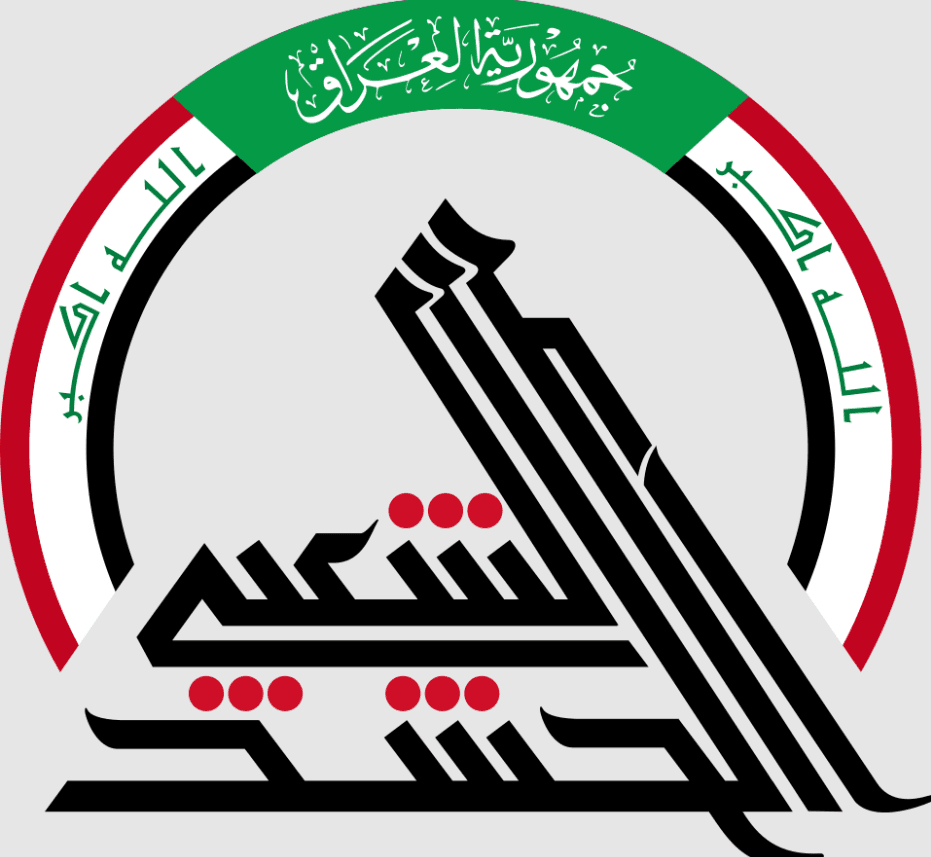
The PMFs and other Iraqi Shia groups have their roots in the Sufficiency Jihad fatwa issued on 13 June 2014 by Grand Ayatollah Ali al-Sistani, the country's highest Shia religious authority, following the fall of Mosul and vast swathes of Iraq to the Islamic State (IS) group.
The appeal prompted tens of thousands of Shias to volunteer, along with members of other religious and ethnic communities, and take up arms against the Sunni jihadi advance.
In 2016, the Iraqi Parliament passed Law No. 40 on the Popular Mobilisation Forces Commission, formally recognising the PMF as an official military force under the overall command of the Iraqi Armed Forces.
However, the Commission continued to maintain significant autonomy in strategic decisions and the chain of command, remaining only partially subordinate to the regular army.
According to data contained in the Iraqi budget bill, the PMFs currently number between 200,000 and 238,000 men, organised into more than 67-70 brigades across the country.
The PMFs, however, do not constitute a homogeneous group, but rather bring together entities with different political and religious orientations.
The first and most influential strand includes factions close to Iran and the doctrine of the Guardianship of the Islamic Jurist (Velâyat-e Faqih in Persian; Wilāyat al-Faqīh in Arabic), who recognise the al-Quds Force of the Revolutionary Guards as their main point of reference.
This bloc controls much of the Commission's decision-making centres, including organisations like Badr, led by Hadi al-Amiri; Asaib Ahl al-Haq of Qais al-Khazali; Kataib Hezbollah, considered the most powerful and radical group; the Nujaba Movement; Kataib Sayyid al-Shuhada; and Kataib Imam Ali.
A second bloc includes groups loyal to Ali al-Sistani, who consider themselves the direct expression of the 2014 fatwa and deny any links to Iran. Since 2020, they have distanced themselves from the PMF command structure and operate under the direct command of the Ministry of Defence. They include the Ali al-Akbar Brigade, the Abbas Division, the Ansar al-Marjaiya Brigade, and the Forsan al-Taf Brigade.
The third strand is represented by forces linked to Moqtada al-Sadr's movement. The main Sadrist formation, Saraya al-Salam, which controlled Brigades 313 and 314, was recently disbanded and its members are being integrated into the regular security forces.
Finally, a fourth grouping covers units representing Iraqi minorities – Sunnis, Christians, Shabak, Yazidis, and Turkmen – who work with the government in their respective regions.
They include Sunni tribal forces, estimated at between 40,000 and 50,000 fighters, the Babylon Brigade (Brigade 50) for the Christian community, Brigade 30 for the Shabak in the Nineveh Plain, the Turkmen Brigades 52 and 53, and the Yazidi units of Lalish and Sinjar.
The PMF Commission is currently chaired by Falih al-Fayyadh, while the Chief of Staff is Abdul Aziz al-Mohammedawi, former commander of Kataib Hezbollah and successor to Abu Mahdi al-Muhandis, who was killed in a US raid in January 2020 along with Iranian General Qassem Soleimani.
Thanks to a large number of trained fighters, a substantial arsenal, sources of funding that do not depend exclusively on the state budget, and strong influence in parliament and the government, the PMFs have become one of the most powerful players in Iraqi politics.
Despite pressure from the United States and other Western countries to disband them or fully integrate them into the army, the PMFs have consolidated their presence within state institutions, making them indispensable to Iraq's key political and security alignments.







.webp&w=3840&q=75)