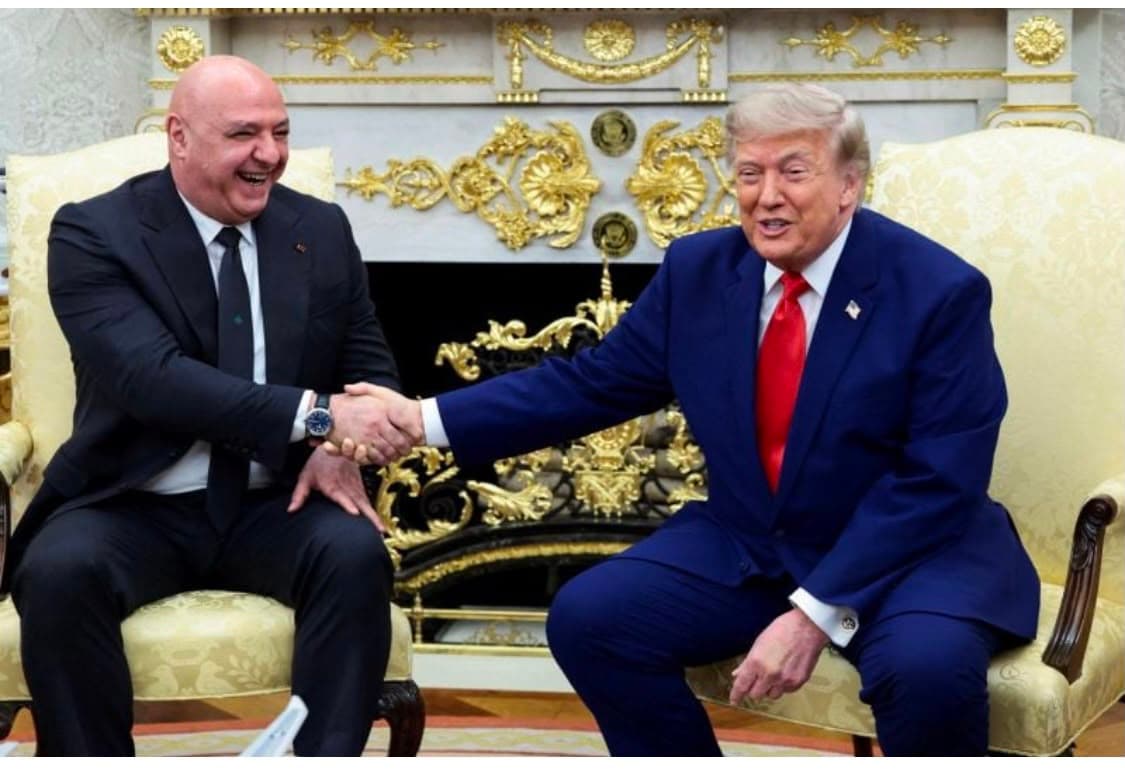
Beirut (AsiaNews) – In a particularly cordial atmosphere, US President Donald Trump received his Lebanese counterpart Joseph Aoun at the White House on 21 July. This was the first visit by a Lebanese president to Washington since 2009. The meeting was even described as “historic” by Massad Boulos, Donald Trump’s special adviser on African and Arab affairs, who assured that “there was an immediate rapport between the two”.
All the key phrases typically uttered at such a meeting appear to have been spoken. But which of the promises made can actually be kept, at a time when the war between Iran and the United States is escalating once again and Hezbollah categorically rejects any solution that does not originate from Tehran?
Thus, the US president did not take a clear and unequivocal stance on an Israeli withdrawal from Lebanon, merely stating that he expects it to take place. Instead, he insisted on Hezbollah’s withdrawal from southern Lebanon and on control of what he termed “pilot safe zones”. This line of argument aligns with the current electoral interests of Israeli Prime Minister Benjamin Netanyahu.
Speaking to journalists, Donald Trump emphasised that “relations with Lebanon are very good”, as are those with President Aoun, stating that “the Lebanese people are very talented”. “Lebanon has been mistreated for many decades. And we will help it – we will help it a great deal,” he assured.
The Lebanese head of state arrived in Washington with an unexpected last-minute trump card: the blessing of his initiative by the Saudi Crown Prince Mohammed bin Salman. The latter rang him on the eve of the trip and officially invited him to Saudi Arabia. This valuable support from the Sunni Arab world compensates for the relatively timid reaction of Lebanon’s Sunni Muslim community, which remains hesitant about the prospect of peace with Israel.
Deployment in the ‘pilot zones’ amid a tense atmosphere
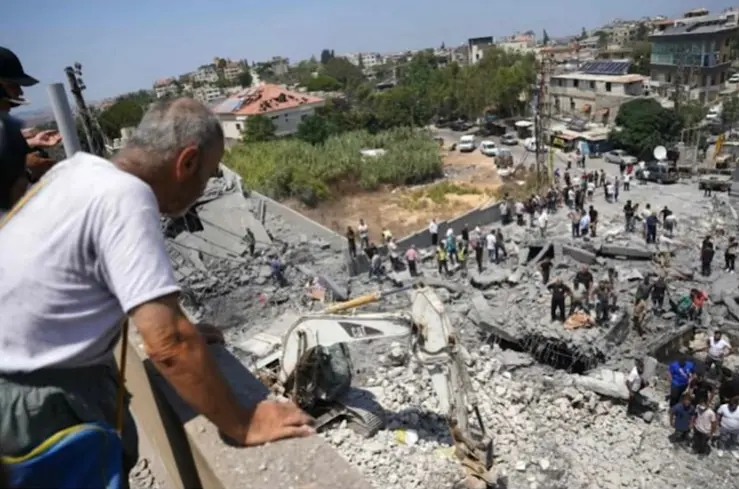
The Washington meeting took place whilst the Lebanese army had begun a trial deployment in the first ‘pilot zone’ agreed between Israel and Lebanon, an area of which the Israeli army had, until then, controlled only the surrounding areas.
However, the first Israeli withdrawal did not take place without an ‘unfriendly’ gesture on Israel’s part: a warning shot to signal to the Lebanese army that it was advancing beyond the agreed zone. This hostile gesture illustrates the extent of the mistrust between the two armies.
In a statement issued yesterday evening, the Lebanese Army Command called on Israel “to carry out the necessary coordination with the Military Coordination Group for Lebanon (MCG4L) and to use the established coordination and communication channels, rather than resorting to acts of aggression”.
According to the security annex signed alongside the framework agreement of 26 June between Lebanon and Israel, the MCG4L is a trilateral coordination body “tasked with ensuring round-the-clock operation to manage the disengagement, verification and overall implementation” of the agreement. “This cell will report to the respective political authorities in Israel and Lebanon via indirect military channels between the two countries”.
The body is under the command of General Joseph Clearfield, a senior officer with Centcom (the US Central Command – ed.), who is expected to take up his post in Lebanon.
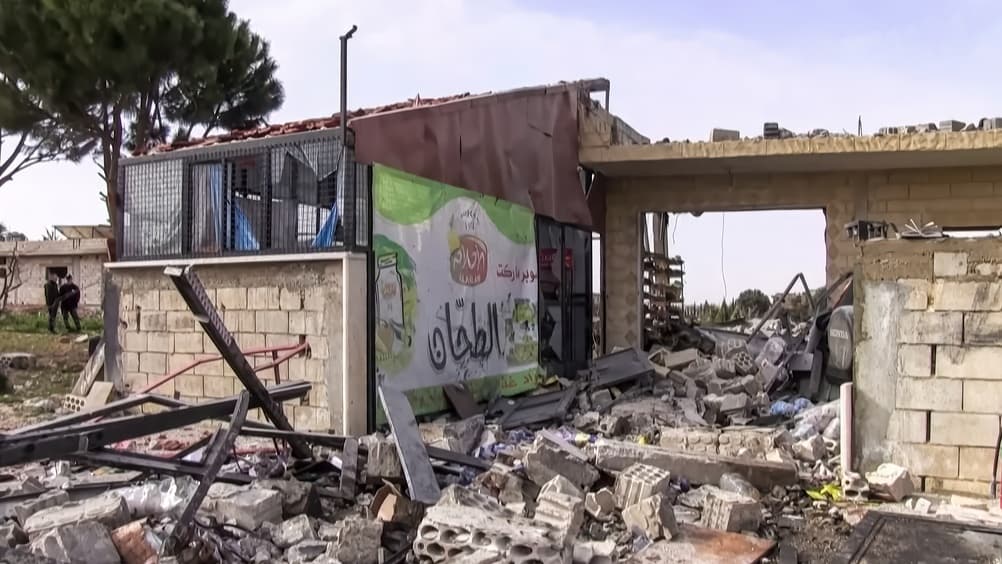
The Lebanese deployment had been preceded by warnings from the Lebanese army and the municipality of Zaoutar el-Gharbiyé, urging citizens not to travel to or enter the village until security measures had been completed and the area had been declared safe. Previously, the Israeli army, which had occupied the village, had blown up a number of houses, operations accompanied by heavy artillery fire.
No journalists were allowed to accompany the Lebanese army’s deployment, for security reasons. Yesterday, a landmine exploded as a Lebanese Red Cross (LRC) ambulance was passing through the Zaoutar el-Charqiyé area. According to correspondents, two paramedics were slightly injured in the explosion, which severely damaged the vehicle. The LRC was carrying out an authorised mission to locate a missing person.
Nabih Berry’s stance and support for the Lebanese Army
Having arrived in Washington over the weekend, Joseph Aoun had already met with US Secretary of State Marco Rubio on Sunday. Mr Rubio had stated at the time that “as long as the Hezbollah problem persists, Lebanon will never know true peace”.
He had praised “the courage of the Lebanese government” and “its determined efforts to re-establish sovereignty, disarm Hezbollah and dismantle its terrorist infrastructure”. Following the example of his Secretary of State a few days earlier, Donald Trump also referred to “the problem of Hezbollah”. “But we have done some things that I think the world will take note of,” he said.
For his part, Joseph Aoun thanked Donald Trump and his team “for this historic visit and for the achievement we have accomplished together, by signing the framework agreement, with the ultimate aim of putting a definitive end to the state of hostility between Lebanon and Israel”. “I believe, Mr President, that this should be your legacy. Together we will be able to achieve this goal and make the region more stable and safer,” he continued.
When asked about the Speaker of Parliament, Nabih Berry’s, rejection of the framework agreement with Israel, Joseph Aoun paid tribute to the head of the legislature, whom he described as “a statesman”. “He supports what we are doing and supports ending the state of hostility once and for all,” he said, whilst pointing out, however, that the framework agreement does not require parliamentary approval.
“I’ve heard he’s a good man, a good person. And when he sees the progress that’s been made, I’m sure he’ll come on board,” added Donald Trump. Speaking to the press, the US President also said he was ready to hold talks with Hezbollah: “I can talk to anyone,” he assured. “I’ve done so before, and if the President (Aoun) wants me to talk to Hezbollah, I will.”
When asked about the timetable for Israel’s withdrawal from Lebanese territory, the US President stated that “the Israelis are in the process of doing so” and of “redeploying their forces to other sectors”. He also indicated that the United States has “very concrete plans” to support the Lebanese army, a matter to be discussed with Joseph Aoun.
His adviser on Middle Eastern affairs is reported to have mentioned an initial aid package of 38 million dollars. For his part, the Lebanese president emphasised the central role of the army: “Without the army, the country would collapse, and we do not want that to happen.”
Syria’s role and the resumption of direct flights
When asked by a journalist about a possible intervention by the Syrian army in Lebanon against Hezbollah, Trump replied: “We get on very well with the President of Syria. He is doing a great job and would like to take action against Hezbollah; I think that would be very effective.”
It should be noted that Ahmad al-Sharaa had already given assurances that he had no intention of intervening in Lebanon or reopening the wounds of the past.
After a meeting lasting over half an hour with President Trump, President Aoun left the White House, stating that the meeting “went very well”.
According to Massad Boulos, “the meeting was excellent and fruitful, particularly with regard to support for the Lebanese Army”. He also pointed out that “the two presidents discussed the issue of resuming direct flights between Lebanon and the United States” (suspended since 1985 – ed.), adding that “certain administrative procedures still need to be examined in this regard” and expressing the hope that they “will not take long”.