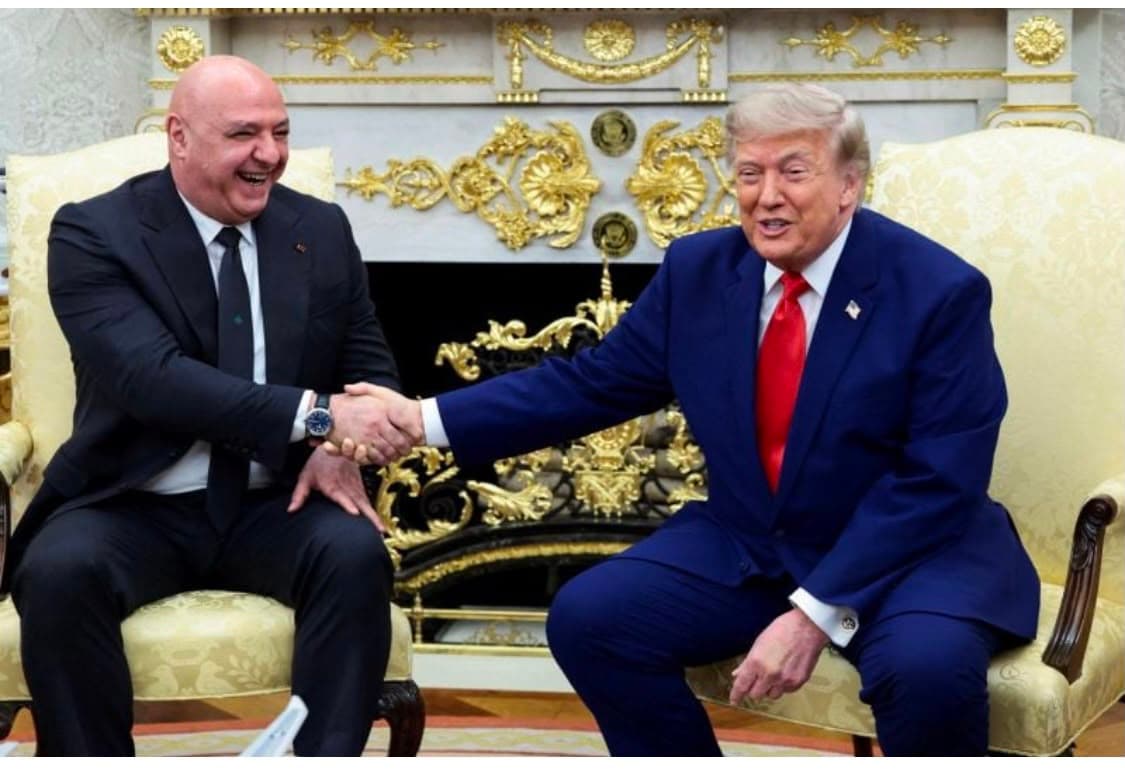
Beirut (AsiaNews) – With Saudi Arabia’s possible entry into the war – having been attacked and bombed by pro-Iranian Yemen – and the joint Saudi-US bombing of Iraq – described as defensive – a significant shift in the situation in the Middle East is taking shape. For Lebanon, this is bad news, insofar as regional instability risks spilling over into the country, where the situation had more or less stabilised following the Lebanese head of state’s peace initiative, the signing of a framework agreement between Lebanon and Israel under US supervision, and the meeting between Donald Trump and Joseph Aoun in Washington on 21 July.
The framework agreement, which helped to stabilise the situation and, amongst other things, put an end to air raids – particularly in Beirut – has set in motion a process that is proving to be a real ‘laborious task’. An upcoming Lebanese-Israeli technical meeting, scheduled to take place in Rome from 4 to 6 August, will assess the Lebanese army’s initial steps in the first pilot zone provided for in the framework agreement, namely Zaoutar-West, Srifa and Froun (near Nabatyeh). Three main points will be discussed: the continuation of house demolitions by Israel; searches of private property requested by the State of Israel; and, finally, the absence of a supervisory force on the ground to oversee the combined process of “Israeli withdrawal and Hezbollah disarmament”.
A drone attack on an Israeli bulldozer on Monday risks reigniting tensions in the absence of immediate trilateral contact between Lebanon, Israel and the United States.
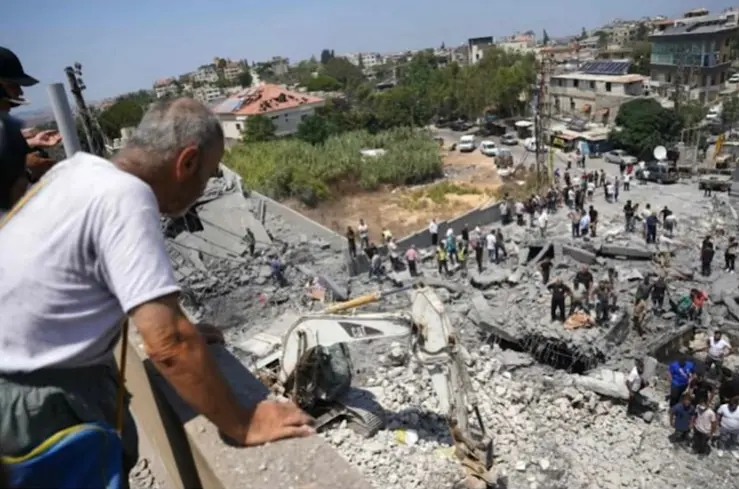
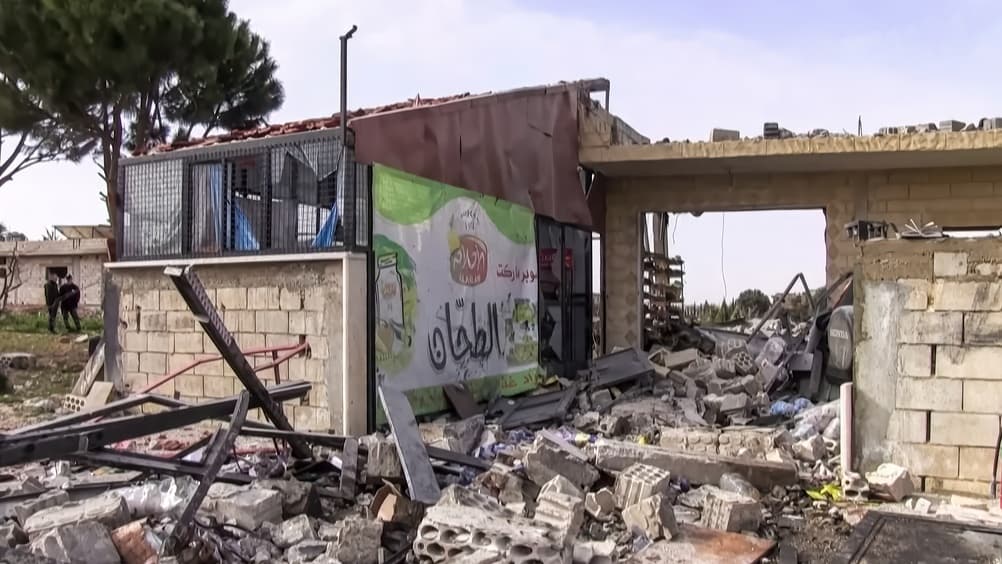
The first point to be discussed in Rome will be the sharp increase in demolitions in all villages under Israeli control. According to Mohannad Hage Ali, a researcher at the Carnegie Centre for Observers, “Israel wants to destroy every house, every school, every hospital – everything that enables this region to function – and is taking advantage of the ceasefire to implement this plan”. In his view, Israel wants it to take decades to rebuild the settlements along the border, in order to ward off the spectre of the inhabitants’ return as far as possible.
On the other hand, in an effort to avoid any clashes between the army and the population – according to a source at the Ministry of Defence, “the risk is very real” – the Lebanese authorities have decided to take into account the fact that private homes are protected by the constitutional principle of the inviolability of the home (Article 14 of the Constitution and provisions of the Ministry of the Interior’s regulations). The Attorney General at the Court of Cassation, Ahmad el-Hajj, told the daily L’Orient Le Jour that he had not yet granted any authorisation for a search.
“I am awaiting the information to be provided by the army. If a search is requested, it will require prior authorisation from the Public Prosecutor’s Office, granted exclusively on the basis of serious evidence attesting to the alleged presence of weapons. The information must be substantiated,” explains the prosecutor.
“During every search, both the mukhtar (the village head, ed.) and the owner of the premises must be present,” agrees constitutional expert and former minister Adnane Sayyed Hussein. In practice, authorisations would therefore be issued on a case-by-case basis rather than in the form of a general warrant covering the entire area, which further slows down the return to normality in the current pilot zone.
This further complicates the already difficult mission of the troops, who are operating under the sceptical gaze of the Israelis and in the absence of a neutral supervisory and observation force, as provided for in the framework agreement. The United States has in fact refused to take on this role, which would expose it to the risk of becoming an easy target for Hezbollah, and no consensus has yet been reached on a possible multinational force to take over from UNIFIL and fulfil this function.
Support for the war is waning
Adnane Sayyed Hussein, who hails from southern Lebanon, remains relatively optimistic, however. “The vast majority of people in the south believe that it is the army that guarantees their protection, and they now wish to turn the page on the conflict and return to a normal life,” he says.
In fact, support for the war amongst the Shia community is waning. According to a recent poll conducted by Rabih Habre of Lebanon Files, 40 per cent of Lebanese Shias support President Joseph Aoun’s plan to end the war, and his popularity is rapidly gaining ground, even within the Shia community. The presidential entourage continues to emphasise that “it is up to the civilian population, and them alone, to decide whom to be loyal to and to free themselves from the perverse role played by propaganda and weapons”.
As if to confirm this line, the Speaker of the House, Nabih Berry – the “elder brother” of the Shi’a Hezbollah-Amal alliance – visited the presidential palace on Tuesday for the first time in four months. He made no statements on his departure, but is believed to be “more open” to the Joseph Aoun option, fearing, like many, the collapse of the memorandum of understanding between Iran and the United States signed in Geneva on 19 June 2026. He is also doing so on the eve of a visit by the Head of State to Turkey, a US ally that plays a very active role on the regional stage, particularly in Syria.
In many political circles, moreover, it is being said that “the war will resume and that this time there will be a winner and a loser”. It is also known that, faced with the blockade of the Strait of Hormuz and threats of a blockade by the Houthis at the Strait of Bab el-Mandeb, the Gulf states and their allies are accelerating the development of overland infrastructure to ensure the transport of crude oil to the Red Sea, the Sea of Oman and the Mediterranean. This is a strategy from which, amongst other things, the disused IPC oil terminal in Tripoli – the restoration of which is currently being assessed – could benefit.
The temporary situation that drags on
Meanwhile, the human impact of the war is no less severe than its military and economic consequences. Many fear that its effects are irreversible. According to the World Bank, the first conflict of 2023–2024 resulted in an estimated economic cost of $14 billion, of which $7 billion were direct losses, whilst around 166,000 jobs are thought to have been jeopardised or lost. What of the current losses, which are still being estimated?
One of the major dangers threatening southern Lebanon is the exodus of young university students and graduates. “The temporary relocation of families out of the war zone is gradually becoming permanent as the conflict drags on,” Katia Kahil, a teacher in Marjeyoun and local correspondent for the website Ici-Liban, tells AsiaNews.
“The term ‘sacrificed’ is perhaps too strong,” explains the journalist, “but how else can one describe a generation deprived of its years of learning, experimentation and self-discovery? The temporary nature of their situation is evident in abandoned plans, departures that have become one-way journeys, interrupted studies and decisions that are constantly put off. The risk is that of a brain drain driven not by ambition, but by a lack of alternatives”.
From a purely educational perspective, the damage is limited and compensation is possible. Whilst the Evangelical College (1,200 pupils) is about to close its doors, the Antonine Sisters of Nabatiyeh have instead decided to carry on with their mission and to rebuild, as best they can, the wings of their large school damaged by the bombing.
“But the war, which has destroyed homes, interrupted studies and reduced job opportunities,” comments Katia Kahil, “has struck at something far more difficult to rebuild. It is teaching a generation never to start over again. At an age when one chooses a course of study, finds one’s first job, settles down and gets married – when one’s future takes shape – thousands of young people are learning, above all, to wait: for the fighting to end, for a road to reopen, for a job, to return home or for the academic year to resume.”
“Some take jobs far below their qualifications; others move from one temporary post to another or rely on their parents. For many, emigration is no longer just one option among many, but the only prospect,” adds the journalist. In the districts of Nabatiyeh and Marjeyoun, the closed shops also tell of interrupted plans, postponed weddings, home purchases or investments.
“We’d set our wedding for the autumn,” a couple confide to the journalist. “Then the war broke out. Today we’re still waiting. We watch with bitterness what is happening in Gaza and the West Bank. We don’t even know where we’ll be living in a few months’ time. This temporary situation is no longer a transitional phase. It’s becoming a way of life.”