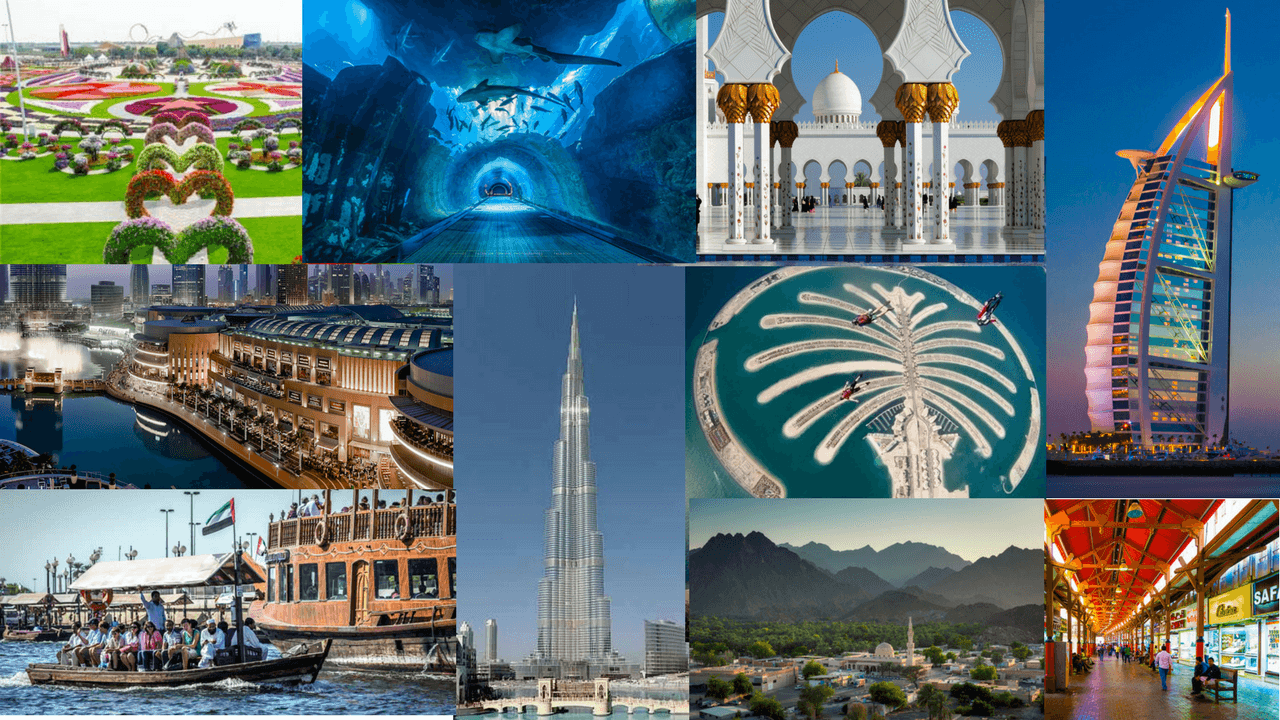
Milan (AsiaNews) – Of course, oil is the first priority for Abu Dhabi, but museums, exhibitions, architecture, and major events are also increasingly important. In fact, the capital of the United Arab Emirates (UAE) is pursuing a strategy meant to redefine its international image, turning itself into a world-class tourist destination that can compete with other leading cities of culture.
Such a strategy is now confronted with serious geopolitical challenges in the Middle East and the Gulf, which have inevitably reduced tourist flows and accentuated a perception of instability; yet, it does not appear to have changed the emirate's long-term plans.
The numbers continue to point to robust growth. According to the local Department of Culture and Tourism (DCT Abu Dhabi), the emirate welcomed a record 26.6 million visitors in 2025, with 5.9 million hotel guests and hotel revenues of 9.1 billion dirhams (approximately US$ 2.5 billion), a 19.5 per cent increase over the previous year.
Conference tourism exceeded 2.2 million visitors, while cultural and entertainment events attracted more than 4.2 million people.
In 2026, despite regional wars inevitably affecting the UAE, Abu Dhabi continues to invest in the sector, focusing on new openings and boosting its cultural offerings.
The challenge is as simple as it is ambitious: no longer just to be a luxury or business destination, but become a place where historical heritage, contemporary art, nature, and sporting events coexist in a single tourist ecosystem.
On one hand, the emirate offers deserts, mangroves, islands, beaches, and the mountains of Jebel Hafeet; on the other, its calendar of events includes the Yas Marina Formula 1 Grand Prix, the Abu Dhabi Golf Championship, Sustainability Week, the International Book Fair, and numerous food and music festivals.
At the heart of this transformation is Saadiyat Island, the island of culture, destined to become one of the largest museum districts on the planet.
Here, the UAE has chosen a different path than traditional real estate investments, forging partnerships with some of the most prestigious international cultural institutions, importing expertise, collections, and globally recognised brands.
Architecture is becoming a tool of global communication with buildings designed by some of the most famous “starchitects”, with each museum, an attraction on its own, even before its content.
Frenchman Jean Nouvel, Canadian-American Frank Gehry, British-Ghanaian David Adjaye, and the Dutch studio Mecanoo have helped build an urban identity making Abu Dhabi recognisable through buildings that become its symbol, like Bilbao’s Guggenheim.
The first is the Louvre Abu Dhabi, probably the most evocative project in the emirate's cultural strategy.
Created in partnership with France, it houses works spanning the entire history of humanity, from antiquity to contemporary art, following a universal path that brings different cultures into dialogue.
The large perforated roof designed by Jean Nouvel, with its famous "rain of light" effect, has become one of the UAE’s iconic images.
A major new development is the Guggenheim Abu Dhabi. After nearly 20 years, it will open on 11 December 2026.
Designed by Frank Gehry, it will be the largest museum in the Guggenheim network, with 30 galleries dedicated to international modern and contemporary art, thus consolidating Abu Dhabi's place as a global art hub.
Named after its founder, Sheikh Zayed bin Sultan Al Nahyan, the first president of the United Arab Emirates, the Zayed Museum is devoted to the Arab world, with the story of the Arabian Peninsula told through installations that immerse visitors in a sensory universe of sounds and scents.
The Natural History Museum is a must-see. Designed by the Mecanoo studio, it takes visitors on a 13.8-billion-year journey, from the Big Bang to contemporary biodiversity. Among its most spectacular exhibits are a Tyrannosaurus rex fossil and an authentic fragment of the Moon.
The most innovative museum in the complex is undoubtedly the teamLab Phenomena. Created by the Japanese art collective teamLab, it offers interactive digital installations that continually change based on the presence and movement of visitors, blurring the lines between art and technology.
The Bassam Freiha Art Foundation, on the other hand, offers a more intimate space, with private collections, a centre that promotes regional artistic heritage, with particular attention to the dialogue between Arab culture and international production.
More than a word should be said about the Abrahamic Family House. It is not a museum in the strictest sense, but rather a religious, political, and cultural symbol.
Designed by David Adjaye, it includes a mosque, a church, and a synagogue of identical dimensions, as a manifesto of the coexistence of the three Abrahamic religions.
The project was inspired by the principles expressed in the Document on Human Fraternity, signed in 2019 by Pope Francis and the Grand Imam of Al-Azhar Ahmed El-Tayeb.
Within the compound stands the church dedicated to Saint Francis of Assisi, entrusted to the Apostolic Vicariate of Southern Arabia headed by Bishop Paolo Martinelli.
The entire structure, a jewel of contemporary architecture, has been closed to visitors since February 2026 following escalating regional tensions.
Behind these investments lies not only a cultural policy, but a precise economic strategy.
The UAE wants to progressively reduce its dependence on oil and gas, turning culture into a tool for economic diversification and international soft power. Tourism is thus conceived as an industry capable of generating jobs, attracting foreign investment, and strengthening the country's prestige.
Of course, geopolitical uncertainty remains. The war that engulfed the Middle East in 2026 also had repercussions on the UAE's tourism industry.
But the message is clear: The future also rests on the symbolic value of culture, international partnerships, and an artistic heritage capable of attracting visitors from around the world.
In a region often depicted through crises and conflicts, Abu Dhabi is attempting to broaden its horizons through the "weapons" of cultural diplomacy and international tourism.