Abu Dhabi (AsiaNews) - Unable to win the war with Iran on the military battlefield, US President Donald Trump has declared an "economic D-Day" against the Islamic Republic: beyond and more than sanctions, the Tycoon's idea is to isolate Iran by blocking every transaction that channels money to Tehran and freezing its trade, but several unresolved questions remain. Beijing says it is ready to "defend" its own interests in the area despite the White House's proclamations, albeit without entering into a head-on clash with Washington; in a statement, the Chinese Foreign Ministry opposes what it defines as "illegal unilateral sanctions" and announces "all necessary measures" to safeguard its rights. More low-key is Moscow's approach, which yesterday received on a "secret" mission - whose contents remain confidential - CIA Director Ratcliffe.
The real game of the economic and commercial confrontation, however, more than on the axis connecting China and Russia, seems to be played a few kilometers from the ayatollahs' backyard: according to the most attentive analysts and observers, in fact, the most serious repercussions for the Iranian economy would be linked to the decision last week by the United Arab Emirates to turn off the taps with Tehran in response to the launch of ballistic missiles towards its territory. A volume of business worth billions of dollars that could have a "paralyzing" effect for the Islamic Republic, which has already announced "retaliation" against those who intend to comply with US policies.
Iran-Emirates Axis
The Emirates have long been a financing center - including illicit financing - for the Islamic Republic, breaking away from the axis that links Saudis, Turks and Pakistanis recently materialized in the so-called "Mecca pact". Over the years, the Washington Institute explains, the United States has sanctioned 353 UAE-linked entities for illicit financial conduct related to Iran, almost a quarter of the total US government designations related to Tehran worldwide. Only China surpasses Abu Dhabi with 469 sanctioned entities, although the two numbers are closely intertwined since many UAE-linked entities provide shadow banking services to Beijing.
The two nations strengthened their economic cooperation in 2024, with Abu Dhabi overtaking Beijing as Iran's vital trading partner. Tehran imported about $14.8 billion worth of goods from the Emirates during the first 10 months of fiscal year 2025, equal to 30% of the total. The ports of Dubai are the main hub through which Iran obtains goods such as mobile phones, computers, tobacco and nuts. At the same time, the ayatollahs exported about $6.5 billion worth of goods to the Emirates during the same period, almost 15% of non-oil products. Moreover, the Islamic Republic depended on the Gulf country for 70% of its fuel oil exports, making the Emirates the largest market.
In the last year the US Treasury Department has sanctioned at least 154 entities based in the emirate for trade and exchange activities with Iran. In March, in the first phase of the war, the links between the two countries emerged in all their magnitude, so much so that President Donald Trump defined the Gulf nation as "like the banker of Iran". Today, however, after months of military operations and cascading effects, the Emirates seem ready to do something that no previous threat of sanctions or diplomatic commitment has been able to achieve: sever financial ties with Tehran.
The United Arab Emirates, in fact, has been hit by more attacks during this conflict than any other country in the Middle East region: in total, more than 530 ballistic missiles, 26 cruise missiles and 2,200 drones. Around twenty ships affiliated with the Abu Dhabi National Oil Company have also been targeted. Furthermore, in recent days the Emirati authorities have detected two missiles fired towards their borders that targeted "maritime traffic", the first targeted raid since the attack on May 4th on the port of Fujairah. These elements have led to a change of course in relations between Abu Dhabi and Tehran, as senior advisor Anwar Gargash emphasizes. "This brutal and pre-planned aggression - he says - represents a vital threat for decades to come" and "our containment policies have failed".
Dubai and the "shadow" network
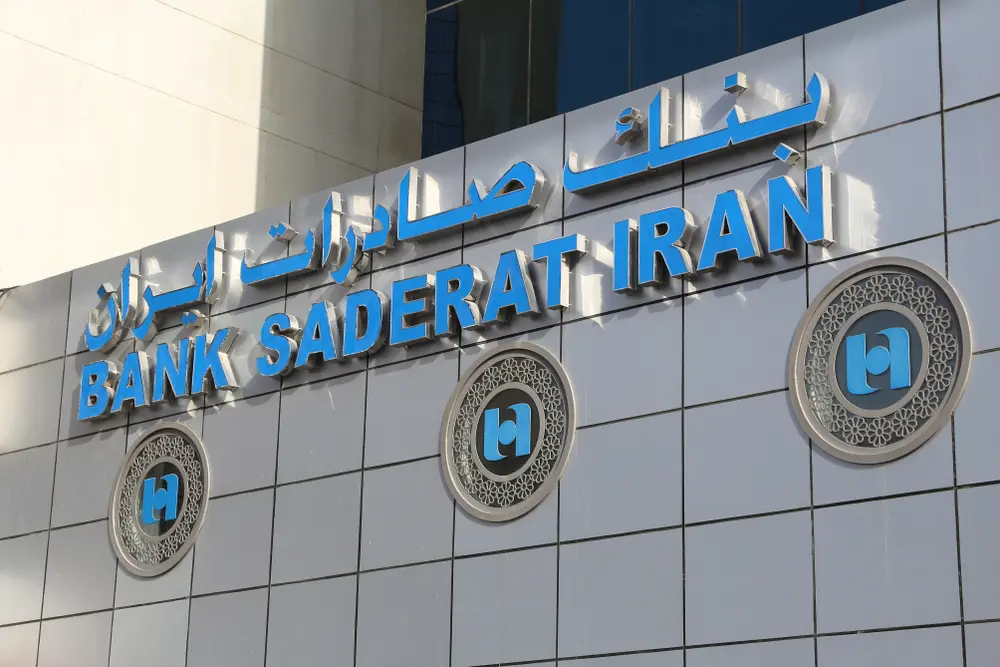
In the aftermath of the latest missile attack from Iran, and well before Trump's announcement of the "economic D-Day", Abu Dhabi therefore blocked "all" trade with Iran, although at the moment there is no official news on the effects of the measure. Certainly, a decision that remains significant, considering how much Tehran depends on the Emirates as a transshipment and re-export point for legitimate goods and a non-oil trade between the two countries that exceeded $27 billion in the two-year period 2023-24. However, for experts, blocks on trade channeled through official channels will not be sufficient considering the ayatollahs' use of the Emirates as a hub for "illicit trafficking and shadow banks".
Underlining this reality, US Treasury officials have targeted a smuggling network that had moved hundreds of millions of dollars into the coffers of the IRGC, Qods Forces and Hezbollah on commercial airline flights between Lebanon and many other nations, including the Emirates. Iranian front companies owned by or based in the Emirates play a primary role in the regime's shadow banking network and illicit oil sales. A trend analysis found that, in 2024 alone, the Emirates as a whole - and Dubai in particular - conducted more transactions to "potential shadow banking funds" linked to Iran than any other jurisdiction. A total volume of about $6.4 billion, equal to 71% of the total. The Emirates also received more funds than any other entity: about $5.6 billion (62% of the total).
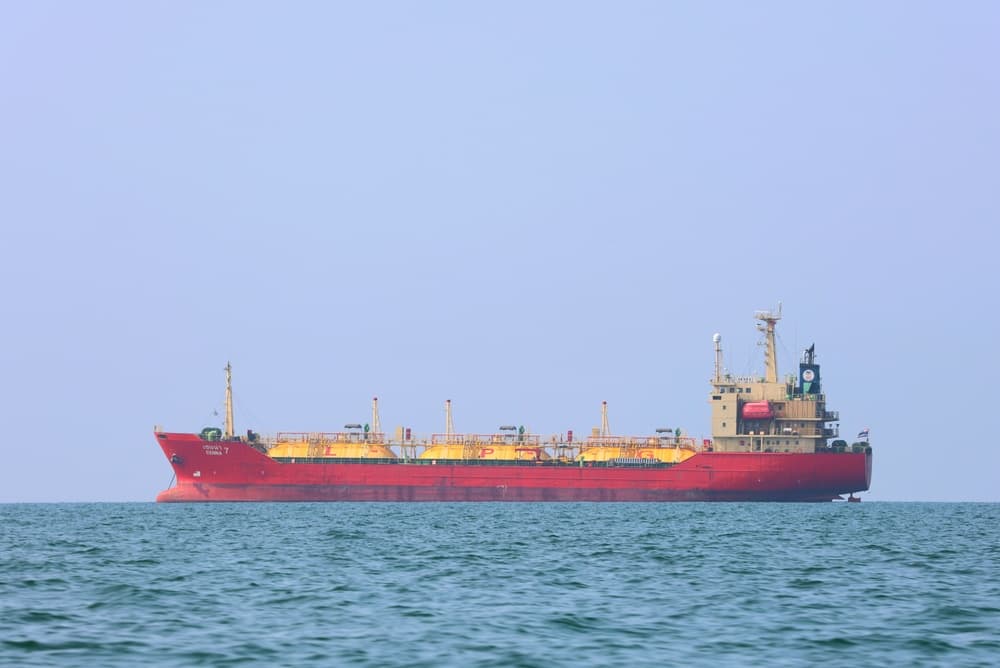
In addition, 42% of the funds transferred through the Emirates transited through free trade zones, while another 40% used the Dubai Multi Commodities Centre (DMCC). Moreover, 58% of such funds flowed through on-shore companies based in Dubai, 95% of which are registered as limited liability companies and 86% likely "shell companies". Tehran exploits a series of front-line companies, including oil, maritime and investment companies, to obscure financial transactions, supply ships for its oil shipments and operational support. Iranian exchange houses are typically used to manage multiple companies in the UAE and elsewhere, so much so that in Washington the Emirates (with Oman and Iraq) are publicly considered countries "known for obscuring cargo of Iranian origin". Added to this is the role of crude brokers and oil tankers based in the Emirates that facilitate sales of sanctioned crude, mainly to China. Finally, Emirati entities would facilitate Tehran's use of oil proceeds to finance allied militias in the region, including the Houthis in Yemen, guaranteeing billion-dollar payments.
The Iraqi model
In a delicate framework of relations and alliances, according to an analysis by Reuters, the "Iraqi model" would emerge as an example of how the United States can carry forward the threat of sanctions towards potentially hostile nations and outside the dollar-based system. Washington has already sanctioned a series of banks accused of doing business with Tehran, however avoiding measures that would have devastated the economy of a strategic ally. Since the 2003 invasion, the United States has held effective control over oil revenues mainly through the Federal Reserve Bank of New York, guaranteeing Washington extraordinary leverage over Baghdad's affairs.
Tehran has long considered its Iraqi neighbor and ally as an economic "lung" and exercises considerable military and political influence through the Shiite militias and political parties it supports. In this framework, energy plays a role of primary importance, where Iraq pays Iran up to five billion dollars a year for natural gas to generate electricity, with the new US measures that could jeopardize payments. Baghdad has long been an "effective" sanctions "evasion" route for Iran, emphasizes Tom Keatinge, director of the Centre for Finance and Security at the Royal United Services Institute. However, he adds, an "approach based on incentives rather than punitive measures could be more effective". The United States could provide "technical assistance for the Iraqi central bank and the broader Iraqi government - he concludes - using more the carrot strategy than the stick".







.webp&w=3840&q=75)