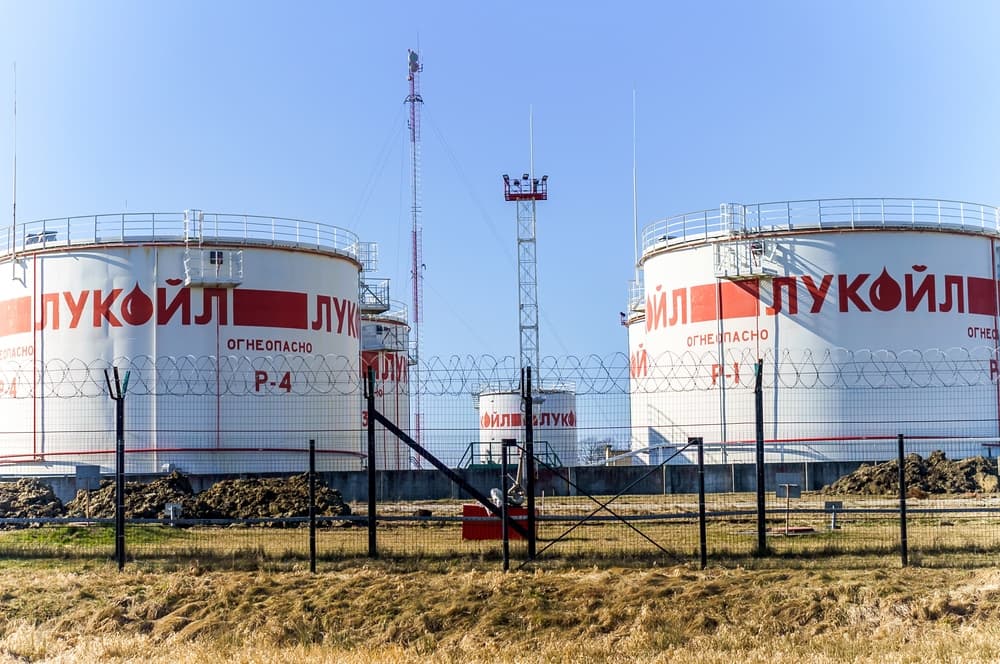
Moscow (AsiaNews) - The Kremlin is facing increasing difficulties in replenishing its reserves, and oil revenues are disappointing. Three of Russia’s six largest refineries are reducing or halting production due to Ukrainian drone attacks, according to Reuters. The Kremlin is actively stockpiling fuel: the cost of state purchases of petrol and diesel has already reached nearly 300 billion roubles (a 30 per cent increase year-on-year), according to Vedomosti.
The government is aware that Vladimir Putin has no intention of ending the war, so Deputy Prime Minister Aleksandr Novak has asked the relevant agencies and oil companies to prepare for possible scenarios should the fuel situation in Russia deteriorate further. Independent oil and gas analyst Boris Aronstein believes that Russia will not be able to overcome the systemic shortage of petroleum products by the end of autumn, which means the situation will worsen.
Russia is facing problems not only with oil refining but also with oil production. The Kremlin has lowered its oil production forecasts for 2026 to their lowest level in over a decade. Furthermore, as reported by Reuters, Russia has already revised its fuel export plans for the period 2026–2027 due to the war.
The conflict is demanding ever more money, and Finance Minister Anton Siluanov acknowledges this: “Our priorities at the moment are defence tasks, tasks for the front.” Moscow is actively drawing down its National Welfare Fund: since 2019, Russia has spent 15,000 billion roubles from this fund. This “reserve”, as the Finance Minister calls it, is necessary to meet obligations during periods of fluctuating oil prices. The budget for 2027 and the following two years is based on a price of $50 per barrel, says Siluanov, and all revenue from oil and gas above the benchmark level calculated at this price will flow directly into the “reserve”.
According to Deputy Finance Minister Aleksey Sazanov, Russian companies could benefit from tax breaks for expenditure on drone defence and for the restoration of infrastructure following attacks. Legislative amendments are due to be introduced in the autumn; “amendments are being drafted,” adds Sazanov, “which will allow for the inclusion of expenditure on the defence of infrastructure and its restoration following attacks”.
In August, Vladimir Putin signed a decree allowing companies to be temporarily placed under state control if their infrastructure is not adequately protected against drones or is not restored promptly following attacks. Economist Igor Lipsits has analysed whether the tax breaks will help companies defend themselves against Ukrainian attacks without state assistance, and what the consequences of such costs will be.
The public will have to foot the bill for all this air defence provided by businesses. The state is obliged to ensure the protection of the territory, but is failing to do so. Consequently, private companies are now passing this burden on to other private companies; they must defend their own infrastructure and install surveillance and defence systems themselves. These are high costs and, until now, when declaring their revenues, they did not know whether or not to include military expenditure, which was not listed as a deductible expense.
This will lead to a legitimate and recognised increase in business costs, and if costs rise, businesses will have to increase the prices of their products, because these costs must be recouped in some way. Consequently, the public will end up footing the bill for all this air defence through the companies. The end result is that, on the one hand, the public pays taxes to the state to protect the country, but the state is failing to fulfil this duty: Russia will have to pay twice for the defence of the economy – to the state and to private companies. Russians will thus pay for all these air defence systems through the companies whenever they purchase Russian-made goods.