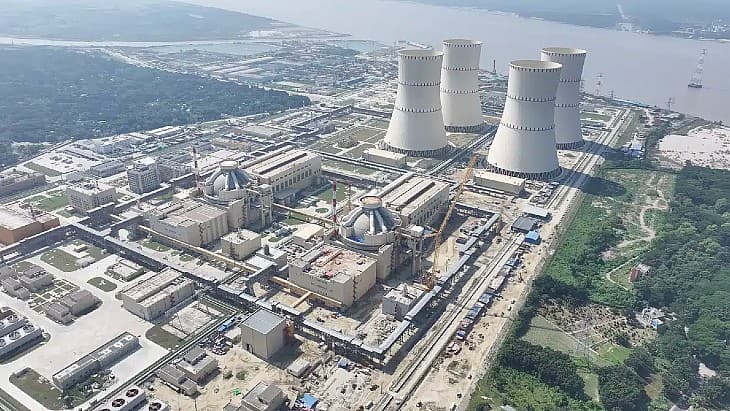
Milan (AsiaNews) – On 17 November, the first reactor of the Rooppur Nuclear Power Plant, located on the banks of the Padma River, about 160 kilometres northwest of Dhaka, was connected to Bangladesh’s electrical grid.
The facility was built by Russia’s state-owned company Rosatom, which is also responsible for supplying nuclear fuel through its subsidiary, TVEL.
The Russian firm will also provide technical support during the initial phase of operation, prior to the gradual transfer of responsibilities to the Bangladesh Atomic Energy Commission.
The site has begun supplying energy on a trial basis, marking the start of the country’s first nuclear power production.
Following an initial round of testing, further checks resumed on 23 November to evaluate the stability of the national power grid. The government aims to bring the reactor to full operational capacity within the first few months of next year.
With this milestone, Bangladesh becomes the 33rd country in the world to produce nuclear energy. The plant features two Russian-designed reactors, with a total capacity of 2,400 MW.
Construction on the first unit began in November 2017, with the original plan scheduling it to become operational in December 2022. Its launch was delayed by several years, due in part to technical issues and safety inspections.
The commissioning of Rooppur comes at a difficult time for the country: the government of Tarique Rahman is grappling with an energy crisis fuelled by price hikes linked to conflicts in the Middle East, as well as a fire at one of the nation’s two regasification terminals, which has reduced gas availability and led to power supply cuts.
Debt to Moscow
Rooppur represents the largest infrastructure investment in the history of Bangladesh. The total cost of the project is estimated at US$ 12.65 billion, with approximately US$ 11.38 billion covered by a Russian state loan.
Moscow is financing nearly 90 per cent of the project, cementing an economic tie with Dhaka that is set to endure even after the power plant becomes operational.
For Bangladesh, which is contending with strained foreign exchange reserves and a complex economic situation, this financing represents a significant long-term commitment.
Other nuclear projects in Asia
According to the World Nuclear Association, approximately 55 reactors are currently under construction in Asia, most in China and India.
Beyond these two major powers, Russia plays a significant role through its state corporation Rosatom, which is involved in various nuclear projects in countries that are either developing or reviving their existing atomic energy programmes.
In Turkey, on the Mediterranean coast, Rosatom is building the Akkuyu nuclear power plant, which will consist of four reactors.
The project, whose price tag has exceeded the initial estimate of US$ 20 billion, is expected to meet about 10 per cent of the country’s electricity demand once fully operational. Power generation is slated to begin in 2027, following a series of delays.
Countries in Central Asia have also turned to the Russian company for the construction of nuclear facilities.
In June 2026, Uzbekistan began construction on its first nuclear power plant in the Jizzakh region, entrusting the project to Rosatom. The design features a hybrid configuration, comprising two small modular reactors and two higher-capacity units.
Kazakhstan, the world’s leading uranium producer, has also selected the Russian firm to build its first modern nuclear power plant, located in the Almaty region.
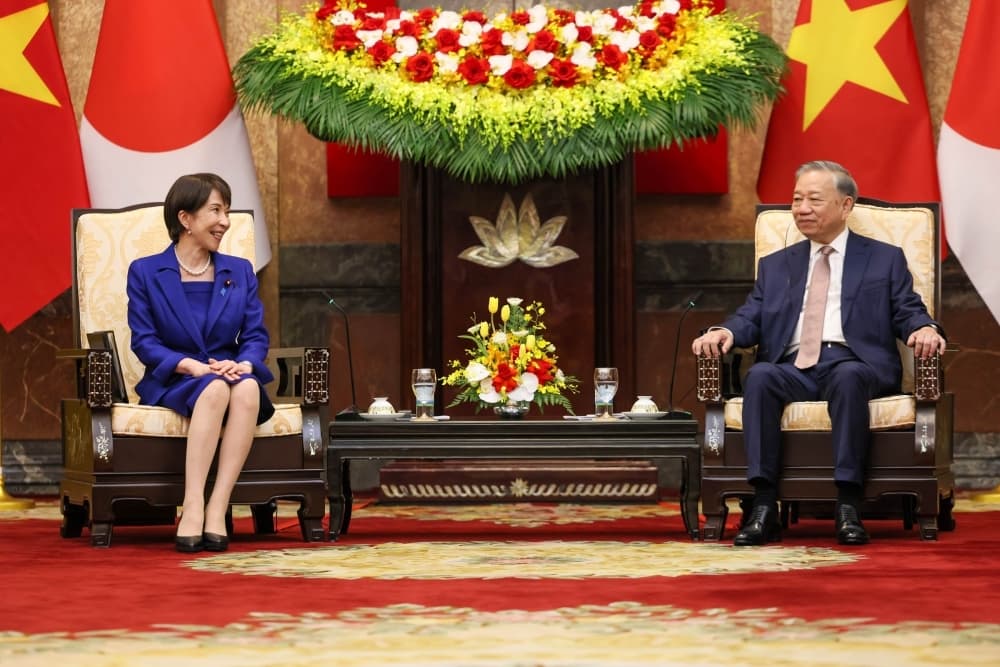
Looking towards Southeast Asia, Vietnam and Russia signed an intergovernmental agreement on 23 March to build the Ninh Thuan 1 power plant.
The agreement provides for the construction of two VVER-1200 reactors and revives Vietnam’s nuclear programme, which had been put on hold in 2016 due to economic and safety concerns.
In Myanmar, too, the military junta inked an agreement with Moscow in March 2025 for the development of a small nuclear power plant based on Russian modular reactors.
For its part, Pakistan relies on Chinese manufacturers, who have built the six reactors currently in operation in the country.
At Chashma, in Pakistan’s Punjab province, the China National Nuclear Corporation is building a fifth reactor at the nuclear power plant (Chashma 5). The project is part of a US$ 4.8 billion agreement signed in 2023.
Power plants are also under construction in South Korea, where four reactors are currently being built, developed through the country’s own domestic technological supply chain.
In Japan, the World Nuclear Association lists two projects, though construction on these sites remains suspended following the Fukushima accident.