Tokyo (AsiaNews) – Japan and Vietnam are strengthening cooperation in the fields of energy, nuclear power, and technology to address Vietnam’s growing demand for electricity.
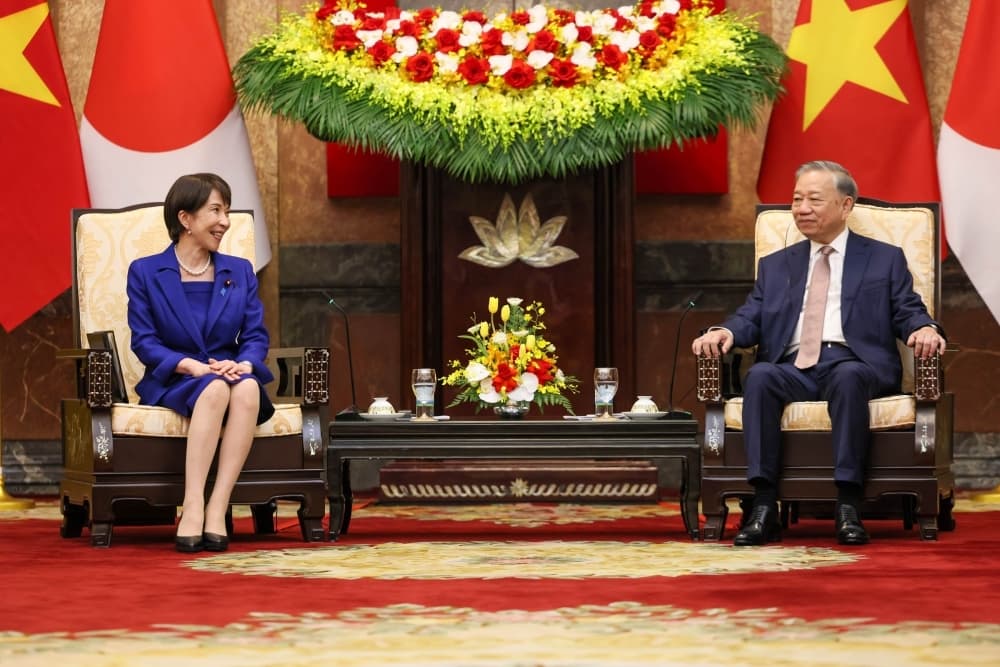
Today, the two countries signed a series of agreements during the visit to Japan by Tô Lâm, General Secretary of the Communist Party of Vietnam (CPV) and President of the country. This is the first visit to Japan by a sitting CPV leader in 11 years.
The cooperation plans, which also cover artificial intelligence and other sectors currently deemed strategic, involve various businesses, government agencies, and ministries.
In his address to the Japanese Parliament, Tô Lâm highlighted the role of science, technology, innovation, and digital transformation in Vietnam’s new phase of development.
He added that, to strengthen its autonomy, the country must develop robust internal capabilities while simultaneously becoming more deeply integrated into the international community.
In this endeavour, Japan holds an “extremely important” position, he stressed.
In recent years, Vietnam has sought to establish itself as a manufacturing hub for semiconductors and electronics, attracting investment from major international technology companies.
The diversification of supply chains, accelerated and fostered by trade tensions between the United States and China, is driving rapid economic growth, so much so that, the International Monetary Fund expects Vietnam’s nominal GDP per capita to surpass that of Indonesia as early as this year.
Following a meeting with Tô Lâm, Japanese Prime Minister Sanae Takaichi identified economic security as a priority for bilateral cooperation, and announced plans to accelerate public-private initiatives in the sectors of rare earth elements and gas production for energy.
During the visit, the Japanese trading firm Sojitz signed a memorandum of understanding to acquire a 5 per cent stake in the Vietnamese tungsten producer Masan High-Tech Materials. Additionally, the Japanese airline ANA and Vietnam Airlines announced a revenue-sharing agreement.
In a speech in Tokyo, Tô Lâm highlighted several future priorities: improving energy efficiency, developing renewable energy sources, upgrading transmission infrastructure, and reducing emissions.
However, Vietnam’s impressive growth is placing significant strain on the country’s power grid, particularly in the northern regions, where a large portion of the country’s industrial activity is concentrated.
The country has traditionally relied on hydroelectric power and its own national reserves of coal and natural gas.
However, a decline in domestic production has increased dependence on fossil fuel imports, leaving Vietnam vulnerable to disruptions and price volatility in the international energy market.
According to the latest national energy development plan, electricity demand is projected to double by 2030 and increase fivefold by 2050, exceeding 1,200 terawatt-hours.
Consequently, in addition to reducing emissions, Hanoi is seeking to diversify its electricity generation sources, with plans to have a nuclear power plant operational by 2035.
Japan and Vietnam also intend to collaborate on the introduction of Small Modular Reactors (SMRs), which could potentially be deployed in the country starting around 2040.
These facilities are smaller than conventional nuclear plants, designed to reduce both construction time and initial investment costs.
Tô Lâm’s visit also comes at a time when economic relations between the two countries are undergoing a transformation.
While Japan remains one of Vietnam’s primary trading partners and a major source of foreign direct investment, its influence has waned in recent years, surpassed by that of China and the United States, with Washington now serving as the top destination for Vietnamese exports.
Energy cooperation aligns with the priorities of the government led by Takaichi.
Last April, following energy supply disruptions in the region caused by the war in the Middle East, the Japanese leader announced POWERR Asia, a collaborative framework aimed at Southeast Asia.
The Japanese government has also added SMR development among the goals of its US$ 2.6 trillion growth strategy, while targeting foreign markets to sustain and strengthen its nuclear industry.