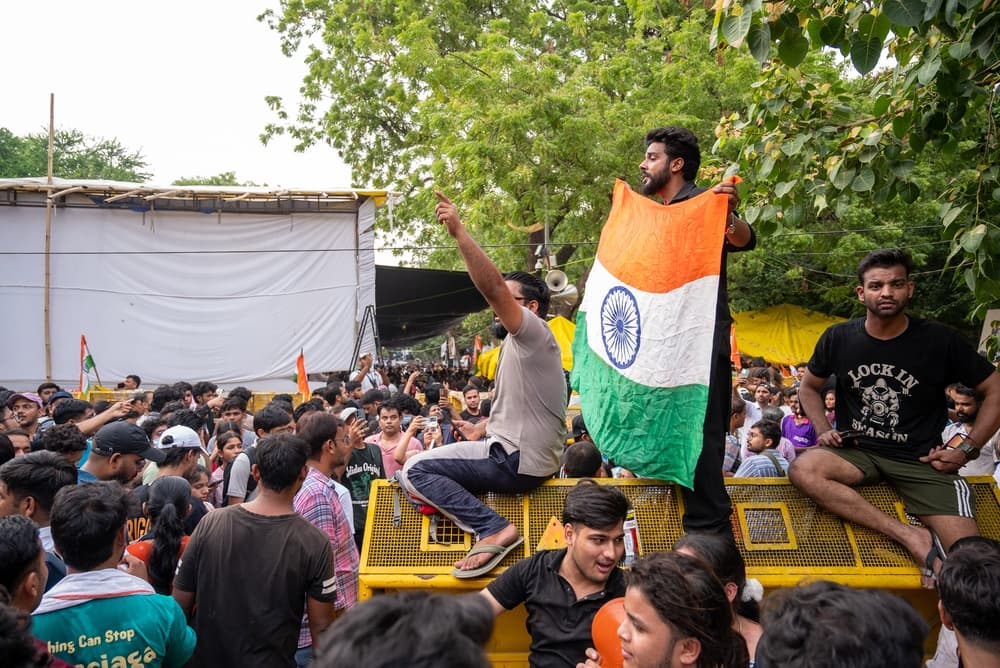
In New Delhi, thousands of young supporters of the Cockroach Janta Party (CJP) movement continue to occupy Jantar Mantar, a traditional site for protests, despite the rain and police crackdown.
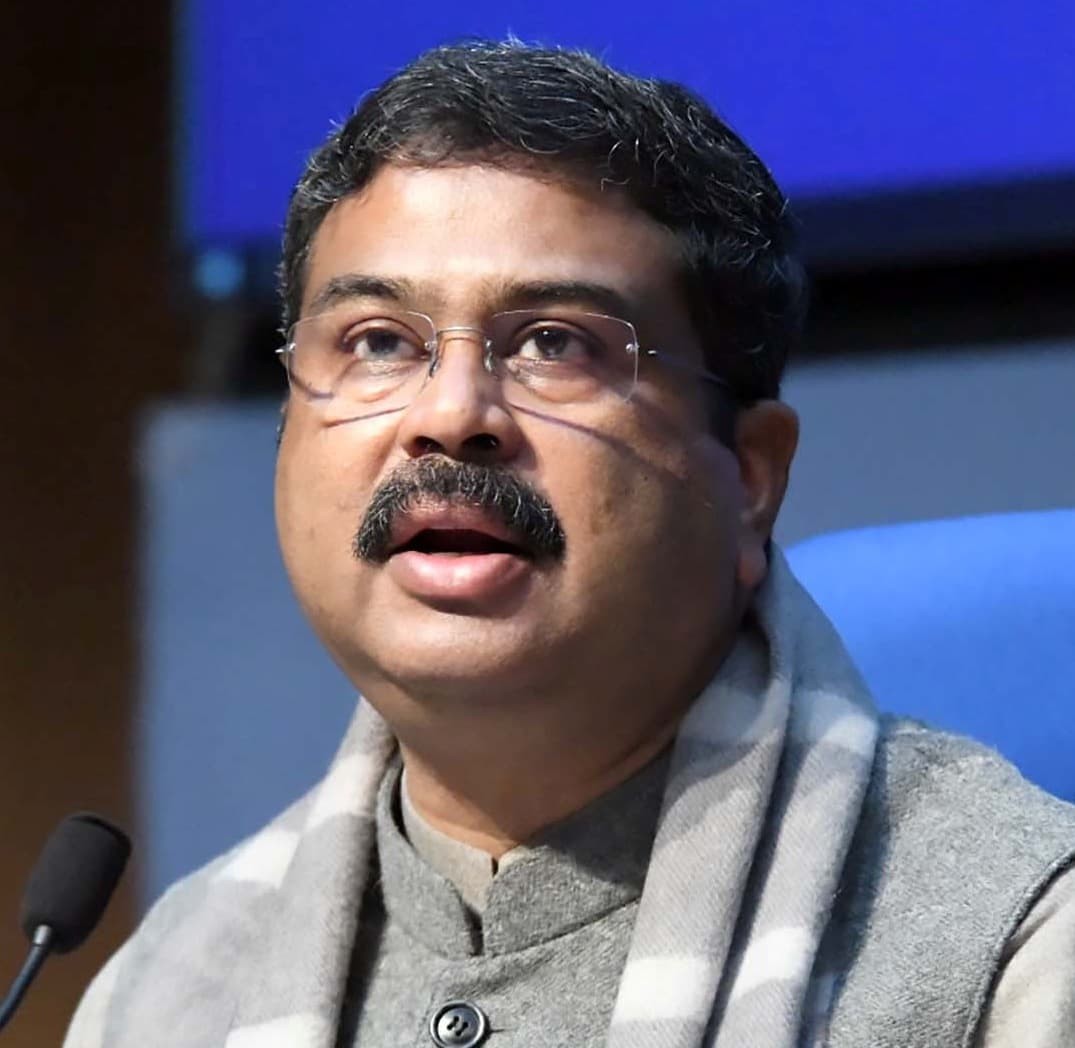
Yesterday, leaders of the Indian National Congress, the country’s main opposition party, led by Rahul Gandhi and Mallikarjun Kharge, also demonstrated outside Prime Minister Narendra Modi's residence, demanding the resignation of Education Minister Dharmendra Pradhan, Home Minister Amit Shah, and the prime minister himself.
Gandhi and other lawmakers were detained by police and released a few hours later. Meanwhile, protests are spreading to other cities, from Mumbai and Bengaluru to Hyderabad and Ahmedabad.
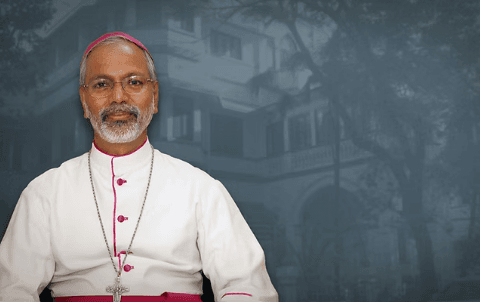
In light of these events, we publish in full a reflection sent to AsiaNews by Mgr Savio Fernandes, auxiliary bishop of the Archdiocese of Bombay.
Jantar Mantar Lathi-charge: A Black Day for Democracy
The events that unfolded at Jantar Mantar on Monday, July 20, 2026, should trouble the conscience of every Indian who believes in democracy. They cast a disturbing shadow over the very democratic values that India holds dear. Videos circulating from the protest site appear to show police using force against young people who, in those recordings, seem to have been participating in a peaceful, Gandhian-style demonstration. If those videos accurately reflect the events in their full context, they raise serious questions about the proportionality of the police response and the protection of constitutional rights.
These protesters were citizens exercising what they believed to be their constitutional right to assemble peacefully and express their grievances over what they perceived as flaws in the education system requiring urgent rectification. The protest reflected the frustration of many students who claimed that they endured prolonged uncertainty, anxiety and emotional strain arising from reported examination irregularities and paper leaks. Based on the videos and reports available in the public domain, the police response appeared, to many observers, to involve the use of force rather than dialogue.
Behind this protest lies a deeper human tragedy. Alleged examination irregularities and repeated reports of paper leaks have disrupted the aspirations of many hardworking students who spent years preparing for competitive examinations. Reports of students taking their own lives amid the crushing stress, uncertainty, and despair associated with repeated disruptions to their futures have shaken the conscience of the nation. Whether every such tragedy can be directly attributed to paper leaks is a matter for careful investigation, but few would dispute that repeated controversies surrounding examinations have caused significant psychological and emotional distress for many students. To many observers, the response at Jantar Mantar appeared likely to deepen rather than alleviate that sense of anguish.
A confident democracy does not fear peaceful protest. It engages with it. It listens, answers difficult questions, and accepts responsibility when institutions fail. If peaceful demonstrators were subjected to disproportionate force, it would send the opposite message that dissent is to be suppressed rather than heard.
Equally disturbing are reports and allegations that attempts may have been made to provoke sections of the gathering or disrupt the peaceful nature of the demonstration. Such allegations deserve an independent and impartial investigation. Any individual found responsible for violence or provocation, regardless of political affiliation, should be held accountable. The rule of law must apply equally to everyone.
Among the most distressing images were those showing Sonam Wangchuk being detained and carried away by police personnel while white sheets reportedly appeared to obstruct public view. Whether this was done for operational crowd-management reasons or for some other purpose cannot be determined from the publicly available footage alone. Nevertheless, those images have left many citizens asking why transparency appeared to give way to secrecy at a moment when public accountability was most needed.
The government's response to this crisis should have been one of humility rather than defensiveness. Public trust is rebuilt not through favourable media narratives but through honest engagement with citizens. A government secure in its democratic mandate should have invited representatives of the protesters for dialogue instead of allowing events to escalate into scenes that have shocked the nation.
This is not merely about one protest. It is about a pattern that many citizens perceive with growing concern: institutional failures followed by inadequate accountability. When examination systems fail, students pay the price. When recruitment is delayed, young people lose precious years of their lives. When peaceful protests are perceived to be met with force, confidence in democratic institutions may be weakened.
The Government owes the nation more than explanations. If excessive force was used against peaceful protesters, those responsible must be identified and held accountable. There should be an independent inquiry into the events, and any violations of law or established policing standards should be addressed transparently. Most importantly, the Government should acknowledge the pain and anguish of the students, apologise if wrongful force was used, and commit itself to ensuring that peaceful democratic protest is respected rather than suppressed.
No government is above accountability. Electoral victory is not a licence to ignore criticism or to treat dissent as disloyalty. Governments exist to serve the people, not the other way around. The strength of a democracy is measured not by how loudly it celebrates itself but by how it responds when its citizens peacefully question those in power.
History teaches us that democracies are not weakened by peaceful dissent; they are weakened when governments become intolerant of it. Every generation inherits the responsibility of protecting constitutional freedoms. Silence in the face of perceived injustice only emboldens the erosion of those freedoms.
The youth of India deserve better. They deserve an education system that is fair and credible. They deserve institutions that inspire confidence rather than anxiety. Above all, they deserve a government that sees them not as a threat to be subdued but as citizens whose voices matter.
The events at Jantar Mantar should serve as a wake-up call to those entrusted with public office and the responsibility of safeguarding our democracy. Those who exercise public power must also accept the highest standards of responsibility and accountability for the actions taken in their name.
Accountability is not a sign of weakness; it is the hallmark of democratic leadership. What is needed now is an honest reckoning, a transparent and impartial inquiry, and a clear commitment from those in authority to uphold and protect constitutional rights. Those entrusted with power must have the courage to acknowledge failures, accept responsibility where it is due, and ensure that such incidents are neither dismissed nor minimised. Such accountability would do far more to restore and strengthen public confidence than any attempt to deflect attention from the legitimate concerns that brought these young people to the streets.
Bishop Savio Fernandes
Auxiliary Bishop, Archdiocese of Bombay