Delhi (AsiaNews) – Among the hundreds of victims and missing persons from the devastating flood that struck the border regions between (Chinese) Tibet and Nepal yesterday, devastating the districts of Rasuwa and Nuwakot, there are reportedly also numerous Indian pilgrims who were undertaking the Kailash Mansarovar Yatra.
This is a ‘purification’ pilgrimage to Mount Kailash, considered sacred by Hindus – as well as by Buddhists, Jains and Bon followers – because it is believed to be the abode of Lord Shiva, the god of destruction and one of the principal deities of Hinduism, and of the goddess Parvati.
Furthermore, Lake Mansarovar is considered sacred and is believed to cleanse devotees of their sins and help them attain moksha, one of the cornerstones of the doctrine, meaning ‘liberation, deliverance or emancipation’.
The Kailash-Mansarovar Yatra has recently returned to the headlines due to the flooding in Tibet and Nepal, which is reported to have affected at least 400 pilgrims – including at least 108 Indians – who are now missing whilst in the Rasuwa district, near the border.
The wall of water coming from the Tibetan side swept away people and infrastructure, including roads, bridges and railways, causing extensive damage and wiping out several villages in Nepal. The mudslide also struck one of the key routes used by pilgrims heading for Mount Kailash and Lake Mansarovar.
The 2026 yatra has resumed on a large scale after years of interruption, with thousands of Indians taking part through government programmes or private initiatives, facing a challenge fraught with difficulties due to altitudes exceeding 4,500 metres and low oxygen levels.
Local sources report that search and rescue operations for the missing are currently under way, with the Indian government having already extended aid and assistance to Nepal in the face of this dramatic emergency.
The pilgrimage, one of the holiest events for Hindus, Buddhists, Jains and followers of the Bon faith, takes in Mount Kailash, with its total height of 6,638 metres, and Lake Mansarovar in Tibet, on Chinese territory.
It is deeply rooted in the history and tradition of the faith and has been practised for thousands of years, to the extent that it is mentioned in the Hindu Puranas, Buddhist texts and Jain traditions.
Following the 1962 war between India and China, the Kailash-Mansarovar Yatra was suspended for nearly 20 years, resuming in 1981 following an agreement between Beijing and Delhi. A further interruption occurred in 2020 due to the Covid-19 pandemic and renewed border clashes, leaving pilgrims unable to travel for nearly six years, before resuming in 2025 and continuing to this day with significant numbers taking part.
The mountain is said to possess a sacred character, so much so that it is regarded as an eternal manifestation of faith: nestled in the heart of the mighty Himalayan range, this sacred peak has withstood the passage of time through the centuries. Hindus believe it to be the celestial abode of Lord Shiva, the destroyer according to the Trimurti tradition.
Also regarded as the ‘Stairway to Heaven’, Mount Kailash unites multiple faiths in its very essence, to the extent that it is also venerated by Tibetan Buddhists and Jains. There are said to be various legends and mythological tales surrounding it, each containing a message of ‘divine connection’ within its existence.
Furthermore, in Tibetan tradition, the mountain—also known as ‘Mount Meru’—is the cosmic axis linking heaven and earth, as well as being the abode of Demchock (a mystical saint).
In addition, many Buddhist saints and yogis have meditated on Mount Kailash. According to Jainism, the first Tirthankara (spiritual teacher of the Jains) – Rishabhanathana – attained salvation on Mount Kailash. As stated in Jain literature, Mount Kailash is referred to as ‘Ashtapada’ or ‘the eight steps’, symbolising the path to enlightenment and spiritual progress.
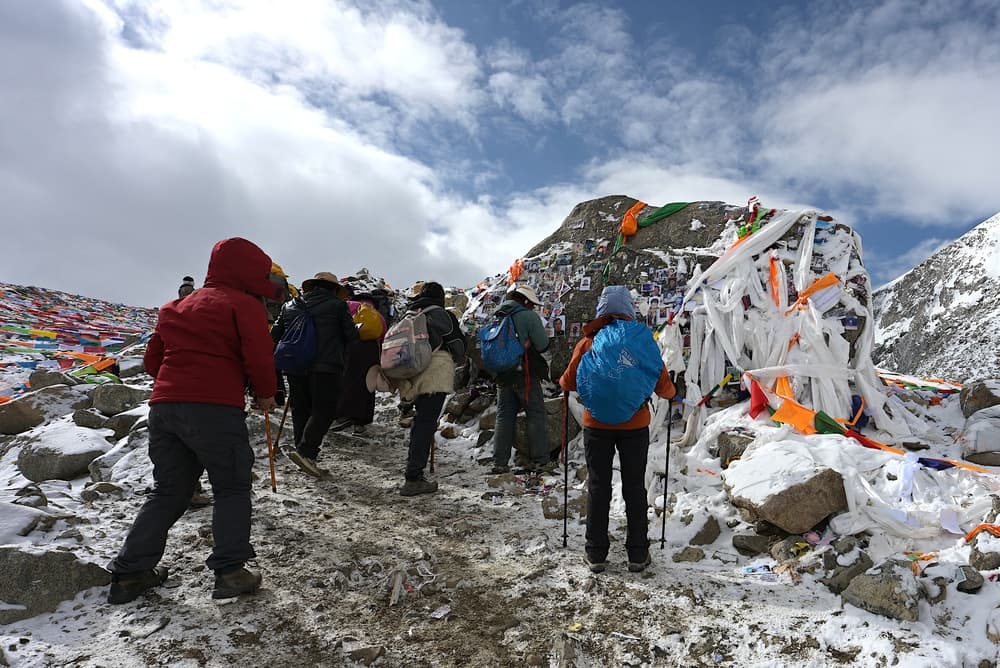
The pilgrimage takes place at altitudes exceeding 4,500 metres, where oxygen levels are low. Pilgrims face freezing temperatures, unpredictable weather conditions, landslides and difficult terrain. The most challenging part is the 52-km parikrama (kora) around Mount Kailash, which includes crossing the Dolma La Pass at almost 5,630 metres. For this reason, the Kailash Mansarovar Yatra is much more than a simple spiritual journey; it represents an essential journey of faith for millions of devotees of Shiva.
Indian pilgrims can reach it via three main routes. The first is the Lipulekh Pass Route (Uttarakhand): this route begins in Delhi and passes through Almora and Dharchula before continuing as a trek via Gunji and the Lipulekh Pass (5,200 metres) into Tibet.
It is officially organised by the Indian Ministry of External Affairs in collaboration with the Kumaon Mandal Vikas Nigam. The second route is via the Nathu La Pass (Sikkim): the route runs from Delhi to Gangtok, crosses the Nathu La Pass and continues into Tibet by vehicle. Organised through government channels, it involves less trekking and more travelling by vehicle, making it relatively easier for the elderly, although it still takes over 20 days.
Finally, there is the route known as Kathmandu (Nepal): pilgrims fly or drive from Kathmandu to Nepalgunj or Simikot and then travel via Hilsa or overland into Tibet. Unlike the government-organised routes, this one is managed by private tour operators.
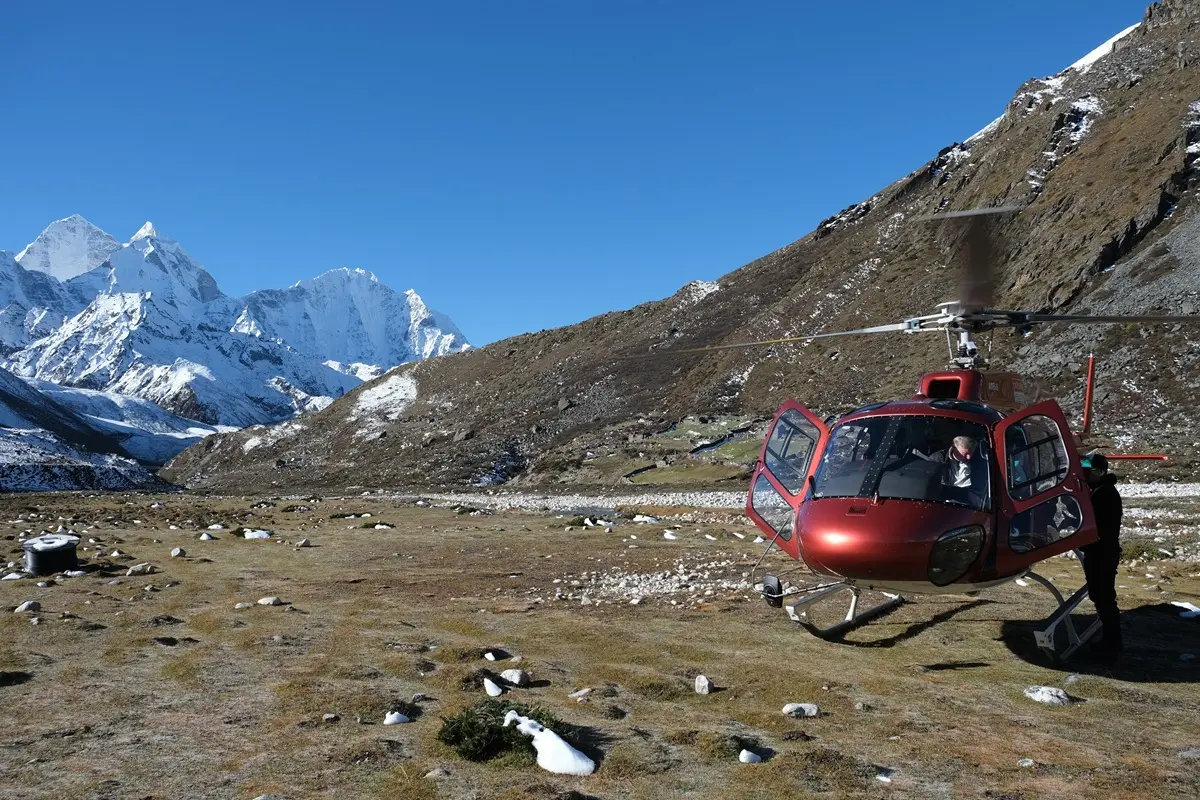
It is very flexible and popular, with helicopter options available to avoid arduous treks. And it is precisely this route that has been hardest hit by yesterday’s floods, with the Nepalese tourism office reporting that at least 179 pilgrims from India are missing.
The Indian spiritual guru Jaggi Vasudev, also known as Sadhguru, wrote in a post on X that 77 people returning from the mountain with groups organised by his Isha Foundation were at an immigration centre in Gyirong, Tibet, when the floods struck.