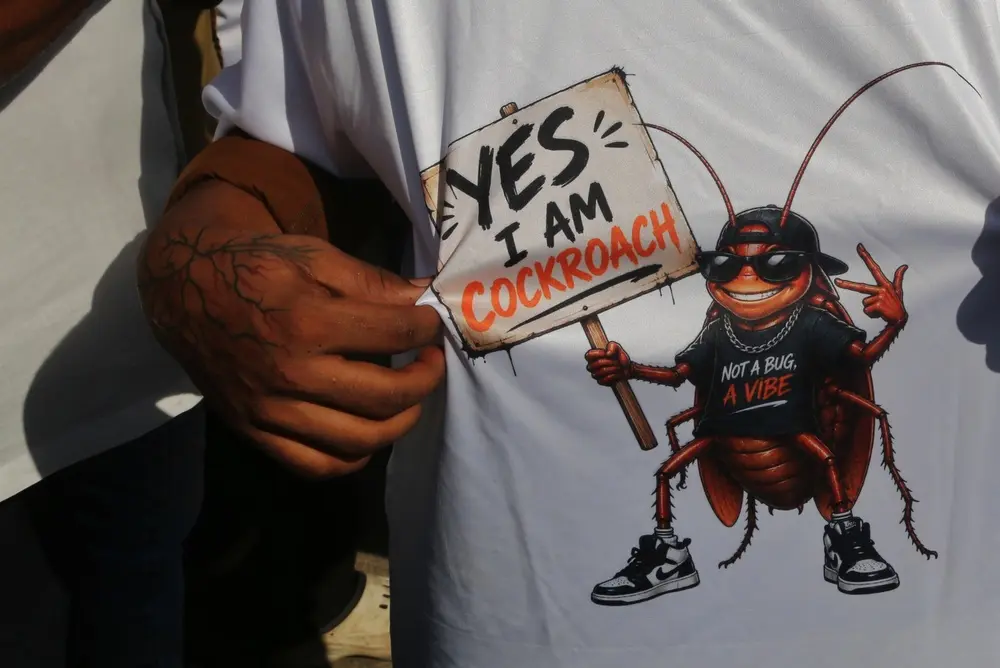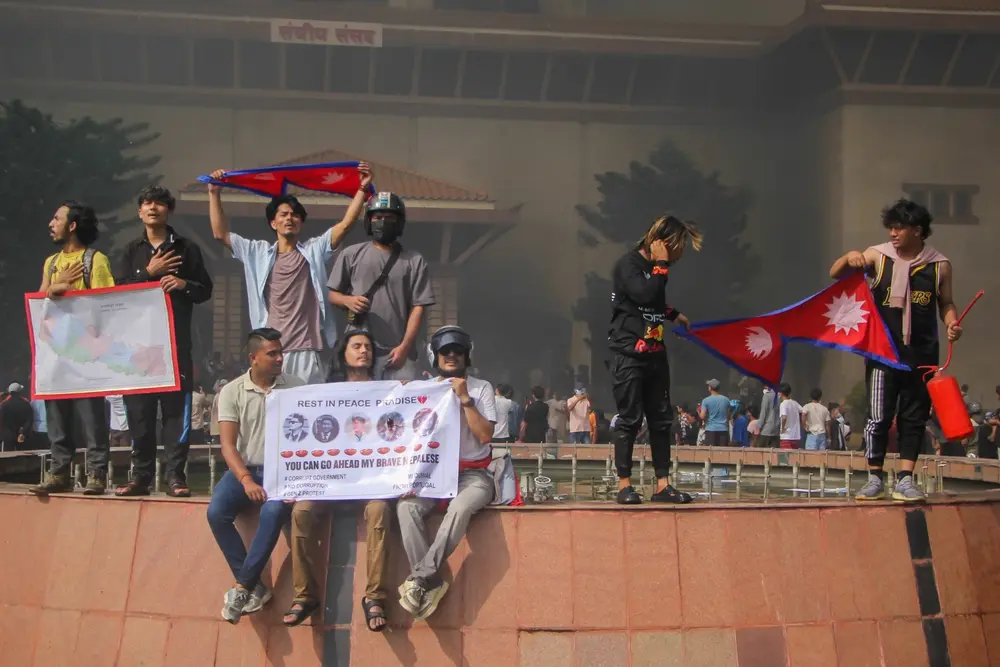
Kathmandu (AsiaNews/Agencies) – A year after protests rocked Nepal and brought down the government led by Khadga Prasad Sharma Oli, the wounds of the uprising carried out by Gen Z, young people who took to the streets to demonstrate, have not yet healed, while the country is struggling with the loss of thousands of lives in devastating floods two weeks ago.
A year ago, an entire generation of young people succeeded in bringing about a shift in government leadership, first with the formation of a caretaker government led by former Justice Sushila Karki and, a few months later, with the election as prime minister of Balendra Shah, 35, former mayor of Kathmandu and the face of the new politics.
But for the injured protesters, the families of those killed, and those still awaiting compensation, the promised change has not yet arrived.
Today, the first anniversary of the Gen Z demonstrations, dozens of young people gathered in front of the former parliament building in Kathmandu, which was set on fire during last year's protests, to commemorate the victims.
The demonstrations began on 8 September 2025, against the government's ban on several social media. But behind the anger over censorship, there was a built up over the years of frustration over the corruption and nepotism of a political class perceived as distant from the lives of young people, burdened by economic hardships.
With the intervention of security forces, the demonstrations escalated into violence. On 8 and 9 September 2025, 76 people died and 2,638 were injured. Parliament and other public buildings, including the Prime Minister's Office, were set on fire.
Facing street pressure, Oli resigned, and on 12 September, a caretaker government led by Sushila Karki was formed.
Six months later, parliamentary elections saw the Rastriya Swatantra Party, which had emerged from protests against the old ruling class, win a nearly two-thirds majority.
Back to the past?
However, an independent review found that only 38 of the first 100 commitments made by the Shah government had been implemented in the first 100 days.
The government has also been criticised for some appointments to top public bodies, deemed opaque and still tied to clientelistic logic.
These include appointments to organisations like the Bagmati Civilisation Committee, the Nepal Scouts, and Tribhuvan University, which, according to the Kathmandu Post, have drawn criticism for failing to meet sufficiently inclusive and meritocratic criteria.
The way informal settlements along Kathmandu's rivers have been evicted has drawn criticism for allegedly failing to engage in consultations and legally required procedures.
Added to this is a growing concentration of executive power. Some policies are announced directly through Facebook before they are finalised in the cabinet or parliament.
This method of communication has contributed to Shah's popularity, but it also risks weakening parliamentary oversight and the role of institutions.
This centralisation of authority has also fuelled questions about the government’s commitment to federalism. One of the promises made by the new leaders was not to focus on the capital region.
The reorganisation of the public administration is also cited as an issue. Actions to clean up the civil service deemed too aggressive risk producing bureaucratic paralysis rather than lasting reform.
At the same time, the government has kept a certain distance from the press and independent critics.
Waiting for Justice
Still, the most delicate issue remains accountability for the violence of September 2025.
The promotion of some police commanders who had led the operations during which protesters were killed has further fuelled the sense of betrayal among victims and their families.
This is the case, for example, of Rakesh Mahato, 25, originally from the Sarlahi District. A university student and aspiring civil servant, he took to the streets with his brother on 8 September 2025.
During the demonstration in front of Parliament, the police opened fire. Another protester, Dipendra Basnet, was shot in the head. Mahato tried to help him, but was also hit in the abdomen.
After being unconscious for three days, when he awoke, he was unable to move his legs. A year later, he continues to undergo physiotherapy and has spent most of his time in a hospital.
But what saddens him most isn't just his disability – it's the feeling that no one has yet determined whom and why police fired.
“They haven’t even investigated who shot us and why,” he told the Kathmandu Post. “No one has been punished. Sometimes it feels like this government is no different from the previous ones.”
An investigation led by former Supreme Court Chief Justice Gauri Bahadur Karki concluded that the police used excessive and indiscriminate force.
According to the report, security forces continued firing for about four hours, while political leaders failed to stop the guns.
The affair led to the arrest of former Prime Minister Oli and former Interior Minister Ramesh Lekhak, charged in connection with the deaths during the crackdown. However, both were later released by the Supreme Court, and a year later, they have yet to be formally tried.
According to the commission's report, 51 of the 76 victims were killed by gunshots, many of them to the head or chest.
Although the protesters succeeded in changing the face of Nepali politics, today many of those who paid the highest price have no place in the new system they helped create.
Prakash Bohora, 29, for example, became one of the symbols of the uprising after a photograph of his bloody white shoes went viral. After being wounded in the leg, he attempted to transform his experience as a protester into a political role.
He ran for parliament on the Rastriya Swatantra Party's ticket, but was not elected, and later unsuccessfully sought membership in the party's central committee. Today, he walks on crutches and is still waiting to undergo four operations.
Steps to move forward
The government now led by Shah rejects accusations of abandoning the protesters.
Justice Minister Sobita Gautam says the government maintains regular contact with the injured and the victims’ families and is working to establish a Gen Z Council, intended to become an institutional channel through which their concerns can be brought to the attention of the authorities.
“It’s not that we have stopped talking to them,” she said. “But it can sometimes be difficult to speak to everyone individually. That is why we want the Gen Z Council to serve as a channel through which their concerns can reach the government.”
Gautam acknowledged that those directly affected are frustrated by the slow pace of the process, but noted that the authorities needed time to establish the mechanisms necessary to implement the agreements.
For Shah, the challenge now is to turn the popularity he gained during the uprisings into stronger institutions.
Stricter rules are needed in the areas of party financing, transparency and conflicts of interest; anti-corruption investigations must be conducted in a politically neutral manner, and a genuine transfer of administrative and financial powers to the provinces must be fully implemented to achieve federalism.