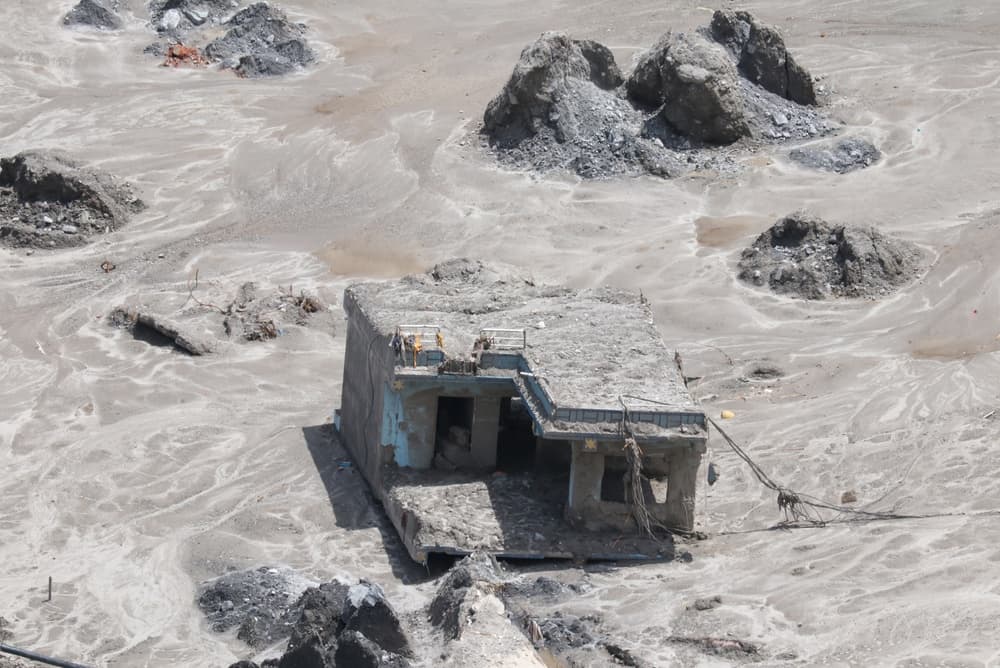
Kathmandu (AsiaNews) – Bhim Chand is a Nepalese tour operator who, after many years as a guide, decided some time ago to dedicate his skills to environmental protection (and to the scientific expeditions from various countries operating in the Nepalese Himalayas). On the morning of 26 August, when the devastating flood struck the Bhotekoshi basin in the Lantang region bordering Tibet – spreading further to split the country in two along an east-west axis – he was in the vicinity and decided to assess the situation for himself.
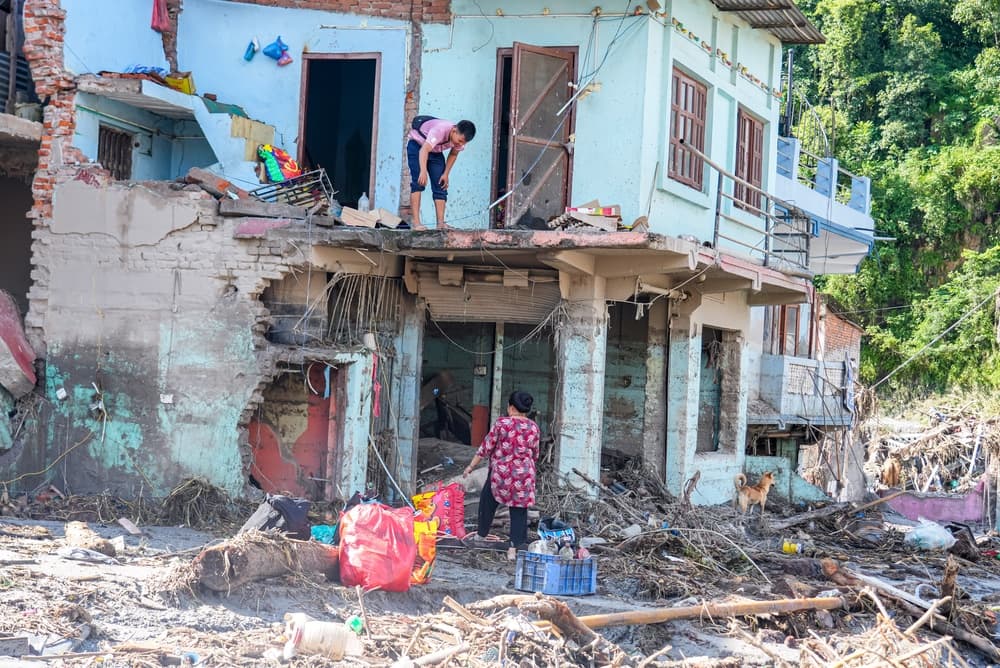
“I began following the terrible breaking news… Our team of scientists, including seismologists and hydrometeorologists, suggested travelling down the valley towards the area hit by the flood, but I proposed avoiding the valley floor; we therefore followed a high-altitude route to stay safe. What we saw was beyond anything I could have imagined. I had never in my life seen such a devastating flash flood – a torrent of mud, sand and boulders racing at bullet speed. The local population had absolutely no chance of escape. The narrow valley further upstream (stretching for around 50 kilometres, near the border with Tibet) is at high risk. The speed of the flood and the layout of the upper valley – narrow and flanked by steep rock faces – made it impossible to seek refuge at higher ground. Further down, however, the heavy loss of life was caused by negligence: the inhabitants could have reached safe places, but they ignored the warnings issued by the police and helicopters 15–20 minutes in advance.” .
Today, two weeks after the event, the death toll and number of missing persons are far from final. Even assessing the damage – however immense – makes it impossible to identify a short- or medium-term outlook. What is the Nepalese government doing?
“The entire local infrastructure has collapsed (no electricity, no internet, no food, no shelters, roads cut off, not a single bridge left standing...). It is difficult to quantify the losses suffered. At present, the priorities are tackling hunger, providing shelter, delivering healthcare and distributing essential supplies. The government is trying to organise relief efforts in collaboration with national and international institutions and organisations. Some services have resumed, but hydroelectric power generation – with a dozen power stations and thousands of employees, and central to both the local economy and the relief effort – has now come to a standstill. There were settlements equipped with schools, banks and financial institutions, health centres and government offices, as well as tourist destinations and accommodation facilities along the riverbanks, such as Syabrubesi. The valley had around sixty bridges, including road bridges and suspension bridges. Fertile farmland stretched along the river’s course, where the rice crops were nearing harvest.”
A series of unfortunate coincidences also exacerbated the situation and the toll of losses, both in terms of lives and economic damage…
“The valley is crossed by the road linking it to the border with China; at the time of the disaster, around 900 new vehicles (mostly small electric vehicles) were awaiting customs clearance. Many lorries were transporting essential goods to Kathmandu in preparation for Nepal’s most important festivals: Dashain and Tihar (Deepawali). Many pilgrims, coming from various parts of Nepal, India and many other countries, were travelling to take part in the celebrations and events linked to the full moon, scheduled to take place at numerous sacred Hindu and Buddhist sites in the Himalayas (including the sacred Lake Gosainkund, at an altitude of 4,380 metres, Mount Kailash, Betrawoti, and various temples dedicated to Shiva and the goddess Durga). Asian and Western tourists travelling to or from China were also present.”
Once this emergency – which may be prolonged – is over, it will be time for environmental assessments, which are, in fact, already beginning to feature in political statements and in the domestic debate within the country. In your experience, what is the primary cause of this disaster?
“For me, the main problem is human-induced climate change. The Himalayas (the ‘abode of snow’), the planet’s main water reservoir, are suffering the effects of human activity. In the Hindu Kush-Himalayan region, there are around 40 glacial lakes at risk of catastrophic flooding. The areas most at risk include the Koshi River valley (in the east), the valleys of the Trishuli, Budhigandaki and Marsyangdi rivers (in central-eastern Nepal), the valleys of the Mugu, Humla and Bheri rivers (in central-western Nepal) and the Mahakali River valley (in the far west of the country). Floods caused by the sudden bursting of glacial lakes (known as GLOFs – Glacial Lake Outburst Floods) represent a major critical issue in the Himalayan region. These are not ordinary floods: rising temperatures cause an increase in the volume of water in glacial lakes, significantly raising the risk of a sudden burst. Furthermore, when a huge mass of ice plunges into the glacial lake situated on an active glacier, the lake’s lower embankment gives way and the entire mass of water – a mixture of rock, mud and sediment – rushes out rapidly, hurtling at extremely high speed down the steep river valley, leaving no chance of escape.”