Srinagar/Islamabad (AsiaNews) – High tensions and growing instability continue to affect Kashmir on both sides of the Indo-Pakistani border. Protests and clashes have marked the election campaign in the Pakistan-controlled Azad Kashmir next Monday, resulting in dozens of deaths, while on the Indian-controlled side, the authorities have boosted security measures following the killing of a police officer.
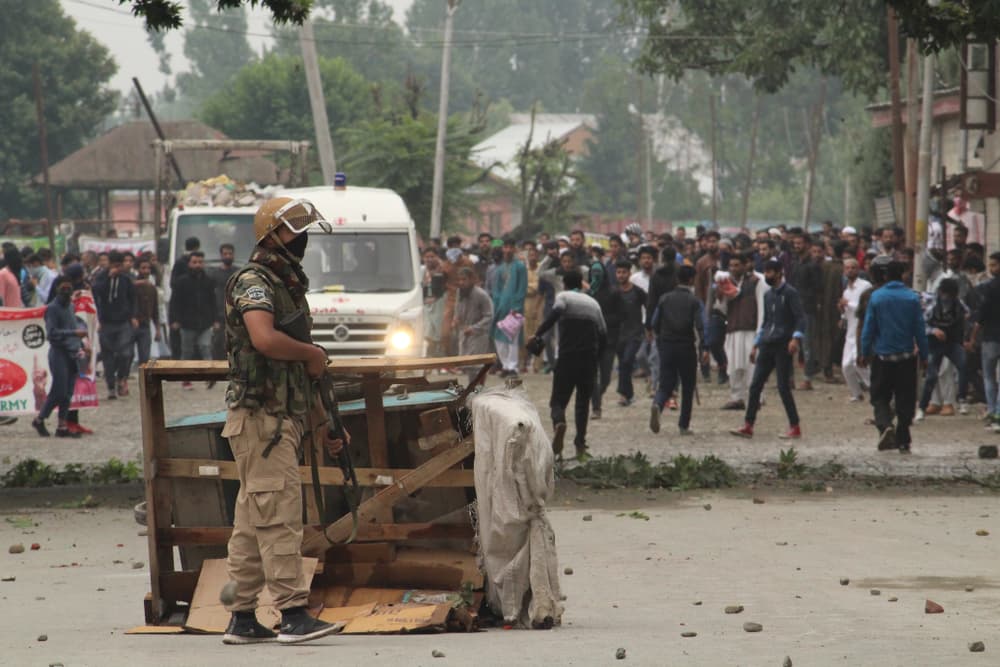
In Azad Kashmir at least 40 people have lost their lives during recent unrest; the victims include 34 protesters and six members of the security forces.
The most serious incidents occurred in the Rawalakot area, where thousands of people took part in protests organised by the Joint Awami Action Committee (JAAC), a coalition of groups and associations initially formed to protest rising living costs and energy costs but which quickly became a focal point for a broader political mobilisation.
Protests over the past month have focused on the 12 seats in the local legislative assembly reserved for refugees from Indian-administered Kashmir who moved to Pakistan after the 1947 partition.
The system, introduced in the 1970s, was designed to ensure representation for refugees with a view to a future resolution to the Kashmir dispute.
Currently, many of the refugees no longer reside in the territory; therefore, according to the JAAC, the existing rules skew democratic representation, allowing Pakistan's main parties to influence the balance of power in the region at the expense of candidates who represent local communities.
The authorities, on the contrary, maintain that the reserved seats constitute a constitutional guarantee for a population that continues to demand the right to return to territories currently controlled by India.
The Supreme Court recently ruled that these seats cannot be abolished without a constitutional amendment, further hardening positions and polarising the political debate.
Islamabad's response has been harsh so far. In early June, the JAAC was declared an illegal organisation under anti-terrorism laws, and security forces launched a large-scale clampdown against protest organisers, who have complained of the disproportionate use of force, particularly in the recent marches to Muzaffarabad, the regional capital.
The escalation has also prompted the intervention of the United Nations. UN Human Rights chief Volker Türk, who called for "prompt, thorough, and impartial investigations into all deaths that have occurred due to the unrest,” criticised the decision to outlaw the JAAC and the imposition of restrictions on freedom of expression, including a prolonged Internet and telephone blackout.
The situation is also particularly tense in areas under Indian control. On Wednesday, a Jammu and Kashmir police officer, Aashiq Hussain Qureshi, was killed in the Anantnag district while on duty for the Hindu pilgrimage of Amarnath, one of the country's most important religious events.
After the attack, Indian authorities detained, according to local sources, 3,500 alleged "Over Ground Workers," i.e. individuals suspected of providing support to armed groups.
The army also demolished the homes of two suspected Lashkar-e-Taiba militants (a terrorist group funded by Pakistan according to India), and additional security forces have been deployed to southern Kashmir.
These measures are part of the security setup for the Amarnath Yatra. For weeks, National Highway 44, the main road connecting Kashmir to the rest of India, has been closed to civilian traffic on several occasions to allow the passage of military convoys and pilgrims.
Lorry drivers, traders, and workers have reported significant economic losses during what should be one of the most profitable seasons of the year thanks to the influx of tourists.
The regional context makes the situation even more delicate. Kashmir still stands as the main point of contention between the two countries after they clashed in the wake of the Pahalgam attack in April 2025.
The crises currently affecting both sides of the Line of Control (LoC) demonstrate how, despite the absence of open conflict, the region remains one of the most volatile places in South Asia.