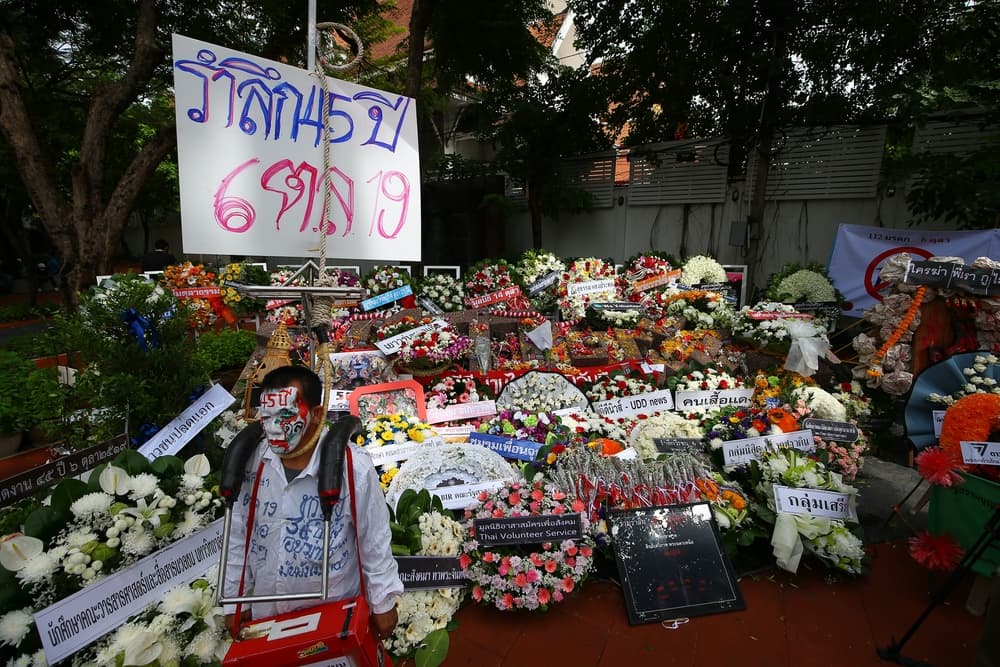
Bangkok (AsiaNews) – Yesterday, 6 October, marked the 50th anniversary of one of the darkest chapters in modern Thailand, namely the crackdown on student protests at Thammasat University in Bangkok, when dozens of students were brutally massacred after being accused of being pro-communist and anti-monarchist.
On the night of 5 October 1976, a crowd of nationalists besieged the university campus, where thousands of young people had gathered to commemorate two activists who had been lynched just weeks earlier.
According to eyewitness accounts, shots fired from within the university served as a pretext for the violence, which was effectively one-sided, reaching levels of brutality unprecedented even in a country under the control of the military and groups that used violence to suppress democratic forces of various ideological stripes.
Border police hurled devices at the main gates, while police officers fired through the campus railings. Amid the ensuing panic, armed men, both uniformed and plainclothes, began shooting, beating, and torturing students, and even lynching them.
Those detained were forced to strip to the waist and lie on the ground before being bound. Many, both men and women, were brutally beaten, and several suffered sexual abuse.
Some were hanged from trees in the nearby Sanam Luang park and mutilated. Their bodies, along with those of others ruthlessly killed, were piled up and burnt in public.
Official estimates put the death toll between 45 and 49, though many believe the actual figure is at least double that.
In addition to the dead and wounded, some 3,000 students were arrested, many of whom were beaten and tortured while in custody. An even larger number of young people went into hiding.
The events of 6 October 1976, can be considered a turning point in Thai political history, effectively bringing to an end a three-year period of democratic opening that followed the 1973 crackdown, a phase during which young people were led to believe that they could openly express their ideas and dissent, challenging the establishment, nationalists, and the military.
The exact death toll of the 1976 events will likely never be known, yet this detail perhaps pales in comparison to the manner in which the crackdown was carried out.
Officially, the death toll from political violence in the Thai capital was higher in 1973 (70 deaths), 1992 (52), and 2010 (91). However, the wealth of images and testimonies regarding that assault, much of which went unpunished, has made 6 October 1976, a moment that continues to weigh on the nation's conscience.
The consequences of that brutal episode persist to this day, affecting not only the lives of survivors but also the country's institutions and the various interpretations of its national history, which still fail to acknowledge youth protest movements.