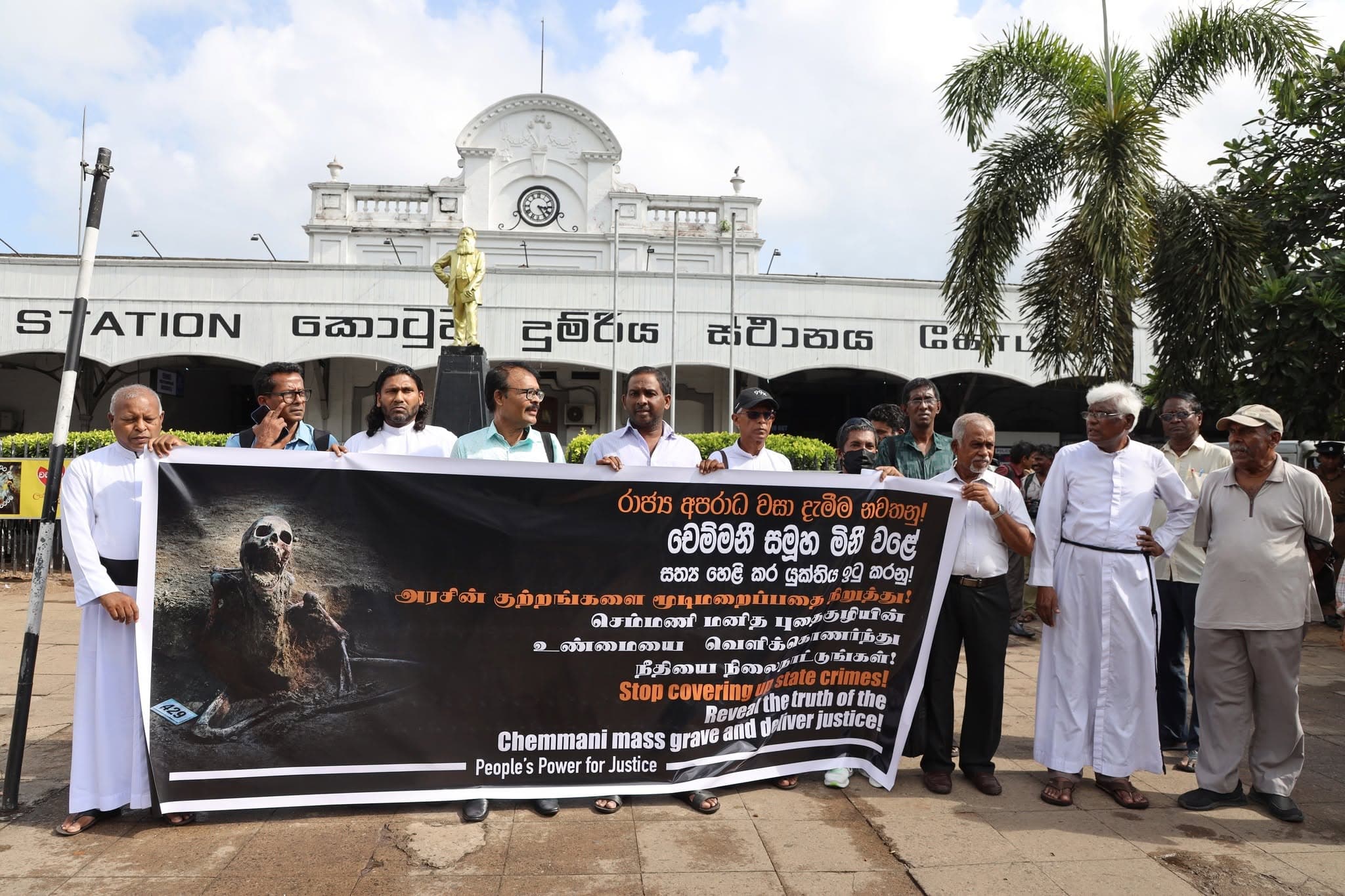
Colombo (AsiaNews) – Tamil Catholic leaders in Jaffna, including clergymen and nuns, took part in a large, peaceful protest on 30 July. Organised by the local Justice and Peace Commission, protesters demanded justice and the truth as well as an international inquiry into the Chemmani mass grave, the largest burial place in the north of the country for victims of the war between Sri Lanka’s military and rebels linked to the Tamil Tigers.
Another demonstration took place concurrently in the capital, Colombo. Organised by priests and civil society groups, participants urged the government to take appropriate measures and conduct a thorough investigation into the mass graves in Chemmani and Matale with the help of international organisations and agencies.
A group of about a hundred priests and nuns participated in last week's peaceful protest march, which began in front of the statue of Saint Jude Thaddeus in Ariyalai, led by Father Anthonipillai Augustine, president of the Justice and Peace Commission. A peaceful procession followed to the Chemmani intersection, where the mass grave is located, near the main road.
The protesters held up placards with their demands in Tamil and English, such as "Accountability brings Reconciliation”, “Justice for Chemmani is Justice for Humanity”, “Truth cannot be buried”, “The dead deserve Dignity, the Living deserve Truth”, “Let the Truth be unearthed”, “UN Protect Truth! Protect Witness!”
At the end of the silent and peaceful march, the leaders delivered to the media an urgent letter, drafted by the Justice and Peace Commission of the Diocese of Jaffna for the UN High Commissioner for Human Rights, Volker Turk.
Two priests read out the appeal in English and Tami, reporting the latest information, according to which 454 human remains, including those of children and infants, had been recovered from the site as of 21 July. They also called for an independent international investigation to establish the truth and ensure those responsible are held accountable.
One of the two who read the letter was Father Anthonipillai Augustine, president of the Justice and Peace Commission, who called for the excavation, identification, and preservation of human remains in accordance with the Minnesota Protocol and other international standards.
Independent DNA analysis is also needed, as well as the meaningful participation of families and the protection of witnesses and human rights defenders.
The letter also calls on UN human rights bodies to continue monitoring the Chemmani excavations and protect witnesses, particularly in the Jaffna area.
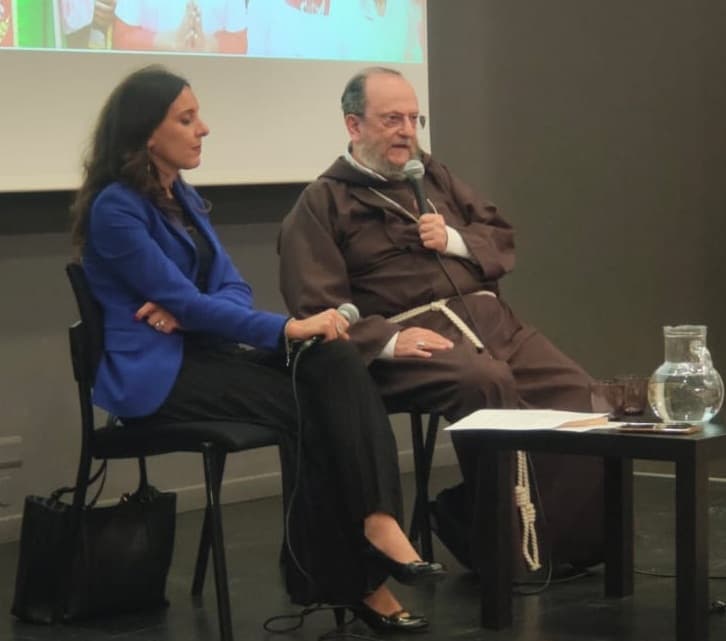
More than 100 people took part in the peaceful demonstration, including the vicar general of the diocese, Father Jebaratnam, Father Paul Jeyantham Pacheck, other members of the clergy, as well as men and women religious.
Coinciding with the march in Jaffna, another demonstration with the same objective and demands was held in the capital, organised by People's Power for Justice, attended by members of the clergy and representatives of civil society groups in Colombo.
“The government was helped by America and Britain to end the war in 2009. The European Union that helped is now coming to Chemmani and telling us justice should be established. At this time, the European Union does not need to come to Sri Lanka as a saviour,” said Father Jeevantha.
Justice risks being "delayed" due to skeletons in the closet of some of the individuals involved. “This is why we tell this NPP government” that it “cannot cover up the crimes committed by the government (any government)."
“About 154 bones were found at the Matale mass grave, but still no justice for them. At Chemmani about 480 full skeletons were found,” making it “the largest mass grave in Sri Lanka,” said Father Jeevantha Peiris, a well-known human rights activist, addressing the media at the rally.
For this reason, “this largest burial pit filled with unknown humans cannot be closed,” he added. “We should know what happened through a detailed investigation conducted immediately with international attention”.
Finally, for Father Peiris, “Justice should be served for their families! We, the people of the south and north, will not give up; we just want to say that our voice will be heard.”
The mass grave near the Chemmani Sitthupattu cemetery in Jaffna was first discovered in 1998, following revelations made by an army officer during a trial for the gang rape and murder of several schoolgirls.
Excavations began in 1999, and the remains of 15 bodies were discovered in the first phase. The remains of 480 people have been recovered after six phases, including children and schoolchildren, making it the largest mass grave ever discovered in Sri Lanka.
Some 429 skeletons were found in a sitting position.