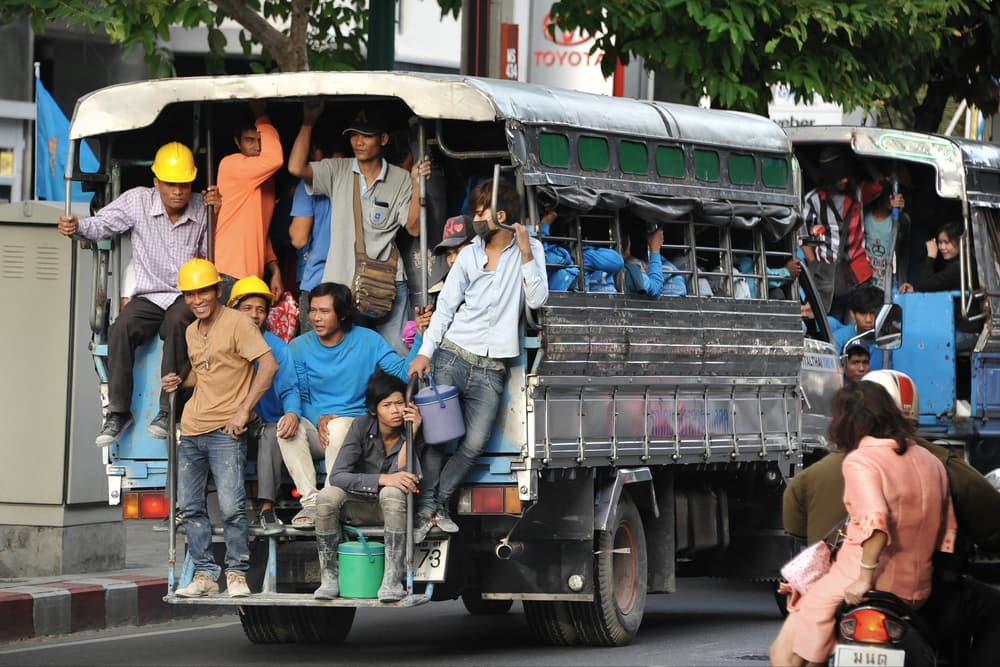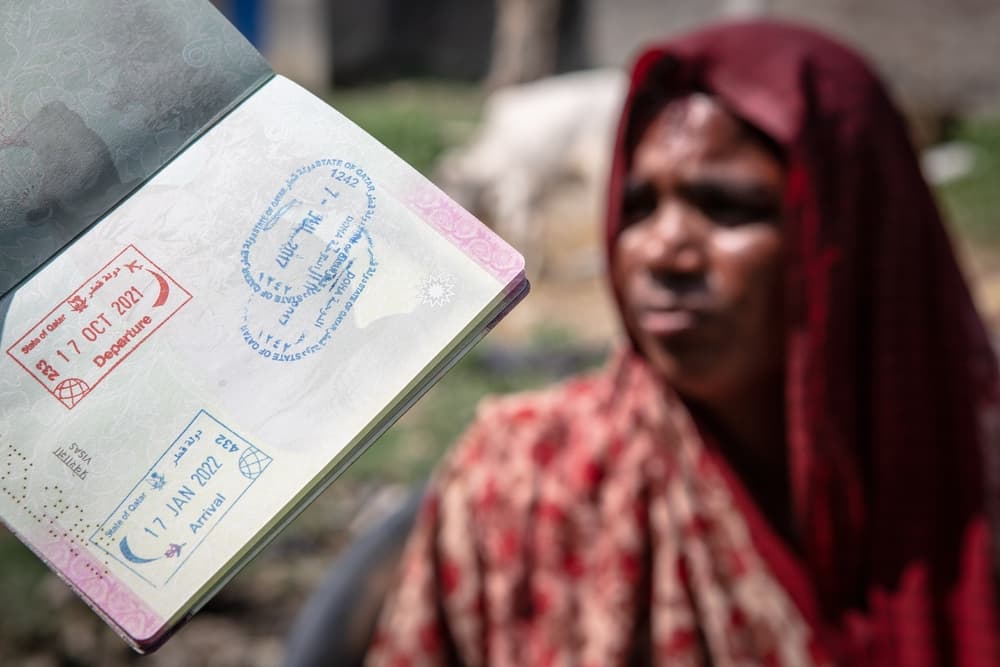
Colombo (AsiaNews) - A study conducted by the Institute of Policy Studies (IPS) has revealed that the number of Sri Lankan women seeking employment abroad has increased by 2 percent since 2023. In fact, the figure rose to 46 percent in 2023, while it was about 40 percent in the pre-Covid-19 pandemic period.
Since 2022, the Colombo government has promoted overseas employment as a response to the worst economic crisis the island nation faced during the post-independence era.
However, the decision has proven to be a double-edged sword: since most women who leave for overseas employment are under the age of 45, the choice to expatriate has proven to be one of the key factors in contributing to declining fertility rates.
According to data provided by the United Nations International Migrant Stock, there are currently “about 214 million international migrants in the world, representing 3.1 percent of the global population.”
A large proportion of these, the study continues, “come from Sri Lanka and are employed as domestic workers in Middle Eastern countries such as the U.A.E., Qatar, Jordan, Saudi Arabia, Kuwait and Lebanon.”
The island is also one of three Asian countries, along with the Philippines and Indonesia, where women seeking work abroad make up between 60 and 70 percent of legal migrants. Most of these women are employed across the border as domestic workers.
Since the 1980s, Sri Lankan women choosing to migrate in search of work have surpassed those of men, and the main destination has been the Middle East.
Medical counselors Samantha Jayatissa and Nilanthi Gamage explain to Asia News that “most of these women are married and have at least one child. They have left their children with elderly parents or their husbands, while some women are newly married and childless. Sometimes, some female workers are not married.” Among the reasons for migration, the experts continue, are “poverty, domestic violence or alcohol and drug addiction of the spouse” resulting in their choice to leave the country. They “work for several years abroad and by the time they return home, their childbearing age has dropped. This situation is widespread in both urban and rural areas.”
Domestic policy experts and scholars agree that “most Sri Lankan women seek work abroad as a source of income that would help them shed debt burdens and alleviate financial difficulties at home.”
Their hope is to “return as soon as possible,” but often behind this decision to return are “almost no plans as far as their long-term economic sustainability is concerned. In fact, they rarely see the need to reintegrate as they do not understand the economic and labor market conditions until they try to reintegrate into their usual life back home. The most distressing situation occurs once they return home, when they lose hope of bearing children and starting a family, having reached the age of 50. Most families in urban and rural areas are disappointed by this situation. This has also affected the demographic condition of the country.”
According to senior officials of the Sri Lanka Bureau of Foreign Employment (Slbfe), unskilled and low-educated women have outnumbered men and other categories of skilled workers seeking work abroad in recent years. In addition, these migrant women-comprised largely of domestic workers-have taken on another percentage of inward remittances.
Recently, but extremely belatedly, the problem of women between the ages of 21 and 40 (of childbearing age) seeking work abroad has attracted the attention of policymakers. However, there is no immediate and viable solution to the problem, while the exodus continues with at least 1,000 to 1,200 female workers seeking work abroad each month as caregivers or domestic workers.