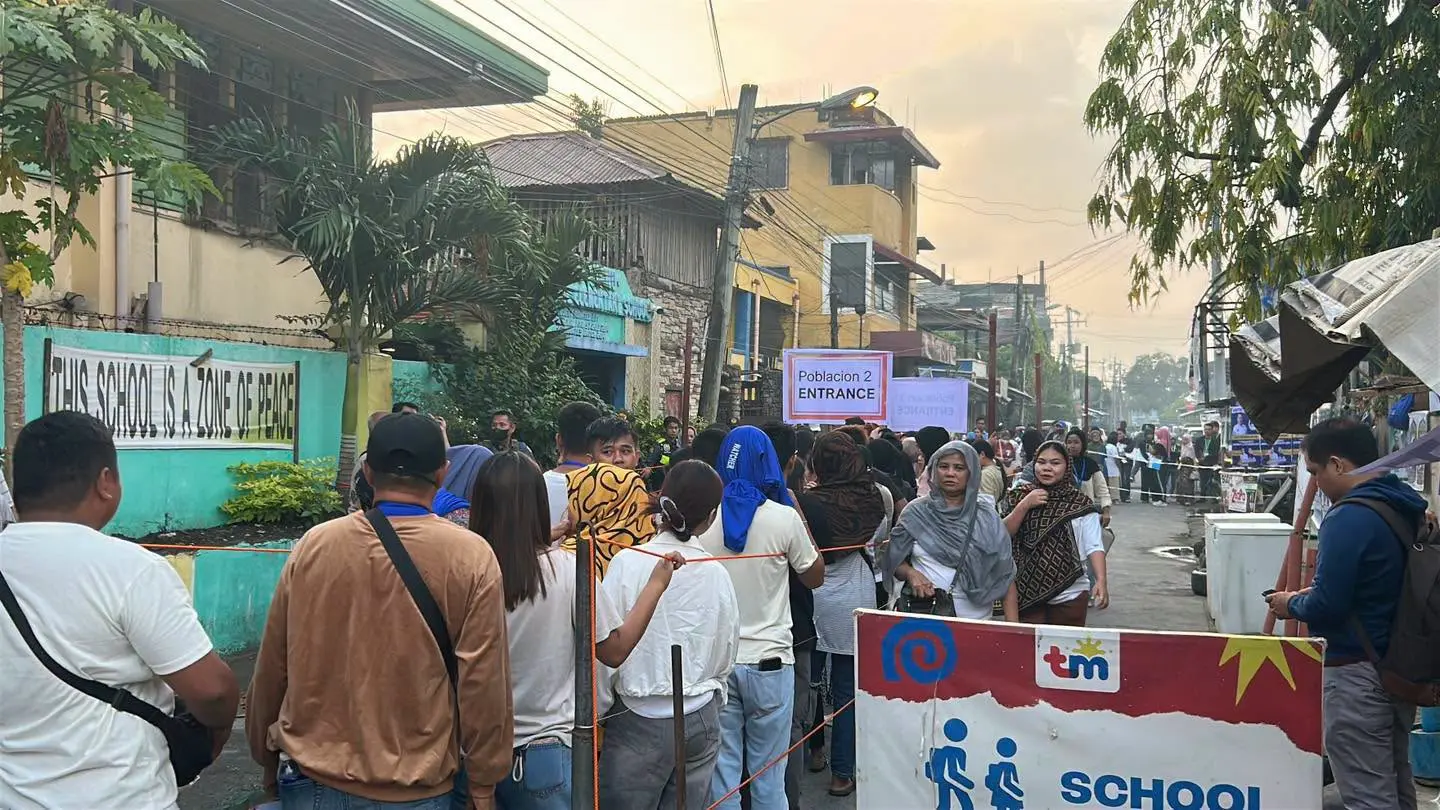
Manila (AsiaNews) – Early results from yesterday’s parliamentary elections in the Bangsamoro Autonomous Region in Muslim Mindanao (BARMM), southern Philippines, indicate no party has secured an absolute majority, paving the way for a coalition government.
The vote took place after several postponements, giving Bangsamoro voters a chance to bring to an end seven years of interim administration.
Mindanao’s cardinal, Orlando Quevedo, Archbishop Emeritus of the Archdiocese of Cotabato and a member of the BARMM Council of Elders, said that people have spoken with their ballots. Now, it is time to work for the common good and welfare of all peoples in the trouble-stricken region.
Before the elections, the cardinal prayed for free, fair, and peaceful elections. Despite some instances of violence and disruptions, the elections were peaceful, he said.
According to him, government authorities and agencies were all on heightened alert to curb old practices of vote-buying and other pressure tactics typical of elite and dynastic politics, which are common in the country, including in the south.
“I am happy that the first election in the BARMM was in general peaceful,” he said.
Another Church leader, Bishop Leo Magdugo Dalmao of the Territorial Prelature of Isabela of Basilan, also welcomed the results of the BARMM polls.
Prior to the elections, he issued a pastoral letter to all churches to pray for honest and credible elections.
“Now that polls are over and results are coming in, it is time for elected officials to work for people’s progress, peace and prosperity,” he said.
Thanking the voters, election officials, security forces, and candidates who contributed to the conduct of the vote, he went on to say that the people of BARMM deserve better governance after exercising their civic duty in the smooth transition from an interim government to its first elected parliament.
“Once this critical democratic transition takes place, people’s rights and needs are to be prioritised along with genuine peace, justice and the common good,” the bishop added.
A hung parliament
According to the latest reports, about 99 per cent of votes have been counted as of Wednesday. Results indicate that the Bangsamoro Federalist Party (BFP) won 16 seats in the BARMM parliament with most votes. The party is led by the BARMM's acting chief minister, Abdulraof Macacua, a former commander of the armed wing of the Moro Islamic Liberation Front (MILF).
Headed by MILF chief Ahod “Al Haj Murad” Ebrahim, the other main party with roots in the separatist movement, the United Bangsamoro Justice Party (UBJP), won 15 parliamentary seats after gaining 613,663 votes, or 32.16 per cent of valid votes.
Eight seats go to the BARMM Grand Coalition (BGC) after it received 391,266 votes, or 20.5 per cent of the total valid votes, while one seat will go to the Raayat Democratic Party for winning 68,839 votes, or 3.61 per cent.
No one, therefore, secured the 41 seats needed to obtain a majority in the 80-member assembly.
Of the 80 seats, 40 are allocated to party candidates elected with proportional representation; 32 are elected in single-member districts, six sectoral seats, and two are reserved for non-Moro indigenous peoples, selected by an assembly of six tribes on 25 August.
Coalition government
The absence of a majority now makes an agreement among multiple political forces necessary to form the next regional government. Once all results are announced, political parties will explore ways to build a coalition.
The newly elected lawmakers are set to take office on 30 October, ending the seven-year interim Bangsamoro Transition Authority (BTA) after voters democratically chose the region's first regular parliament as part of its quest for self-governance.
Last Sunday’s elections mark the transition to the first parliamentary body directly chosen by the electorate, the result of a process of self-government that followed decades of conflict between Moro separatist groups and the Philippine state.
A first step in the democratic process
Julio Cabral Teehankee, a political analyst and scientist, hailed as historic the first parliamentary elections held in the BARMM.
“While elections are not the be-all and end-all of democratic state-building, it is an essential first step in legitimation and institutionalisation of the rule of law,” he said. “That today’s vote is finally happening is already a milestone, despite several delays, judicial challenges, legislative amendments, and threats of violence.”
In his view, the trajectory of BARMM, with all its socio-political and cultural factors, has faced several problems and challenges. Nevertheless, “The success of autonomy and self-determination of BARMM is our collective success as well,” he noted.
Another political scientist, Cleve V. Arguelles, pointed out that the vote produced an assembly in which former combatants, traditional political clans, and regional parties will have to negotiate to form a government.
Such fragmentation is not unusual in societies emerging from conflict or undergoing a transition. The key question now will be whether political actors can manage their differences through coalition-building, parliamentary debate, and elections, rather than through the use of force.”
That said, “Big congrats to the people of Bangsamoro for the successful elections. Democracy and peace are always worth all the struggle,” he added.