Milan (AsiaNews) - Like many Palestinians, Samer Sinijlawi is very frustrated. As the leader of Masar Jadid (New Path), a political movement that seeks change in the West Bank and Gaza, he wants to end the Fatah-Hamas stranglehold on Palestinian politics.
“Let's do a comparison. A Palestinian Israeli who lives in Nazareth, Haifa or Umm al-Fahm, and who is 38 years old, has participated 11 times in national elections,” Samer Sinijlawi explained. “A Palestinian, 39-year-old, who lives in Nablus or Hebron, has never participated in a national election. He does not know what an election looks like or how to cast a vote. This is terrible.”
Samer Sinijlawi’s party, which is very oriented towards youth and women, is among the few that came out against the cancellation of Palestinian elections scheduled for next month, following a decision by long-term Palestinian President Abu Mazen in agreement with other traditional Palestinian parties.
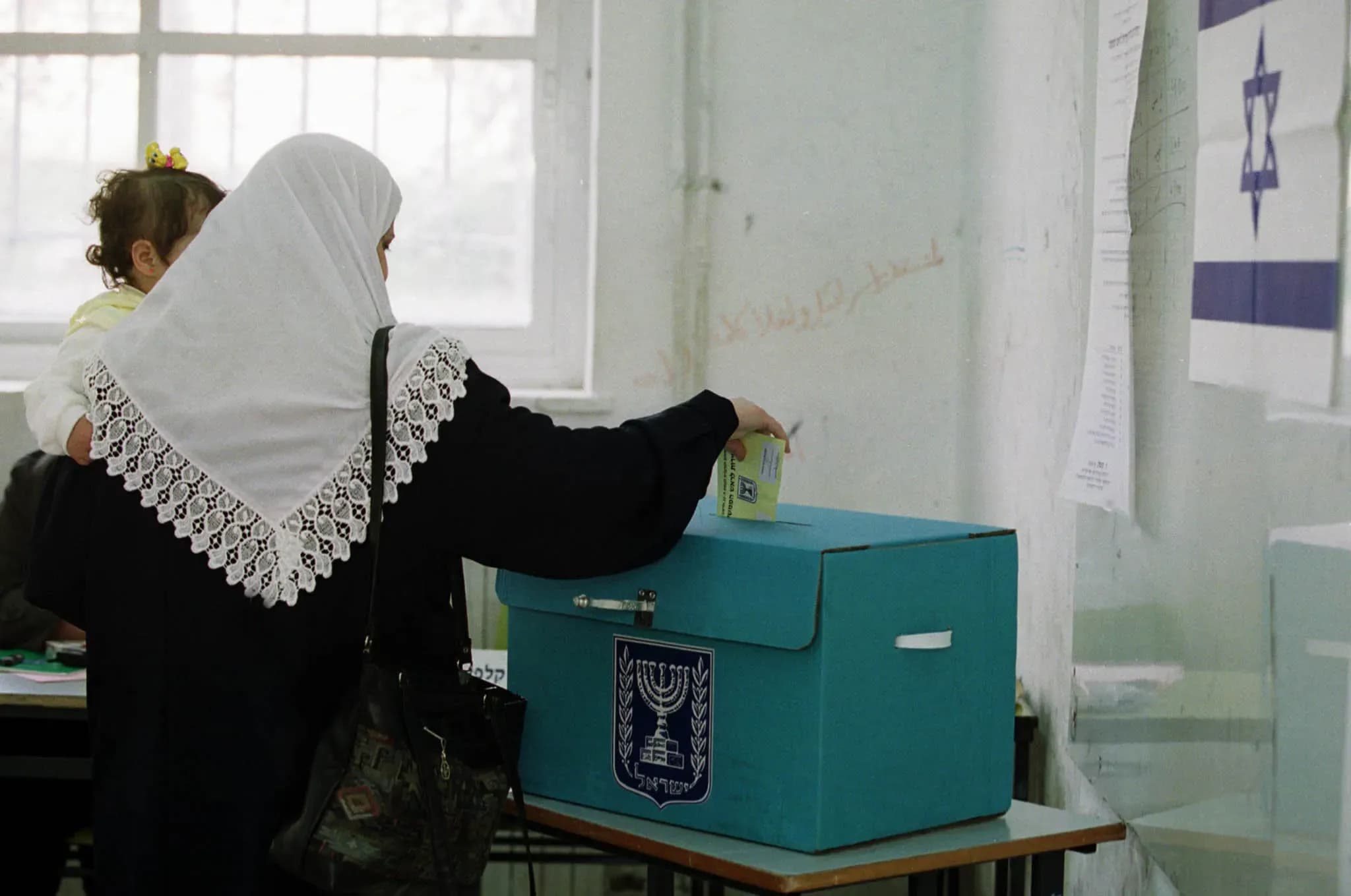
For him, the ballot box is very important. As the election in Israel has shown, with the success of Arab parties, driven by the massive turnout at the ballot boxes, voting is crucial while many Palestinians have never voted.
Participation and change
while the political and institutional future in Israel is uncertain, with internal tensions over the formation of the new government and difficulties in translating into power the success at the ballot boxes of the Arab vote, on the Palestinian side, things are deadlocked with the electoral process frozen.
By contrast, “Almost 60 per cent of Palestinians in East Jerusalem who hold Israeli citizenship voted in these elections, a very high percentage," Sinijlawi told AsiaNews by phone. In the case of the “other Palestinians, who do not have Israeli citizenship and keep themselves connected with the Palestinian system,” the latter “keeps blocking their vote, keeps rejecting their participation.”
As a Palestinian, even more than as a political official, the Masar Jadid leader is “happy that Arabs inside Israel have voted in a very high percentage, about 80 per cent.” In his view, election say was “the only day Palestinian Israelis felt really equal, 100 per cent equal,” able to seize “the opportunity to use this option.”
“Now they need to be kingmakers” in the formation of the government. While “they might be the kingmakers for one day, [. . .] “they need to be the king partners. They need to stay in the government, they need to be in coalition” in order to turn voters’ support into real change.
For Sinijlawi the ball is now in the Israeli court.
“The question is will the Israelis be able to do a dramatic change, a historic change,” and recognise the 19 Arab members of the Knesset, acknowledge that “they are as good as the Jewish members. They need to accept them as a legitimate partner in the coalition.”
“All Arab parties have Jewish members in the lists who were elected, and both Arab parties received votes from Arabs and Jews. [. . .] If there are real democratic parties in Israel, it is three parties: the Democratic party of Yair Golan, which had votes from both Arabs and Jews, and the other two”, Arab parties. “These parties are the real democracy, they are the future of Israel.”
Message to leaders
Despite the differences between Israeli and Palestinian politics, for Masar Jadid's leader, “the message is clear”.
While “under a different political system that is not national (not Palestinian Arab), that sees us as a minority, they (Palestinian Israelis) are able to vote;” by contrast, the other “Palestinians are under a national regime, that is identified as Palestinian, [and] are denied the vote. This is shameful.”
Going to the polls is crucial because only it is the only way possible to express a preference and reject certain policies such as those promoted by Itamar Ben-Gvir and Bezalel Smotrich.
The Arab vote in Israel was a “reaction to radicalism, extremists; it is the reaction to the discriminatory attitude of Ben-Gvir.” It showed “the way Palestinian Israelis replied to his threats, to his policies”.
Regarding the Palestinian election, “we as Masar Jadid are trying to do everything possible. We have appealed to the High Court. [. . .] We are now ready to mobilise, and we are going to use any legal, political, and diplomatic means to push” for an early vote. “September (2027) is too much. We think we can do it in January, February, maximum March after Ramadan.”
Adel Misk, a neurologist and a leading Palestinian, spoke to AsiaNews about the Israeli election and the massive turnout among Israeli Arab voters, stressing that the result must now translate into power and influence in Israeli politics.
The Arab vote sends a clear signal and can tip the balance and provide support, to a government led by Gadi Eisenkot if not in all its components, “those six or seven seats” can be fundamental.
Of course, the Arab vote “has had as its primary effect that of preventing Benjamin Netanyahu from having the same far-right government” that has been in power until now. “Now it is time to wait for Israeli President Isaac Herzog who will have to give someone the task of forming the government.”
Vote denied, case frozen
Misk, a leading member of The Parents Circle, an association that brings together the families of Israeli and Palestinian conflict victims, echoes criticism in Palestinian society over the cancellation of the vote by Palestinian President Mahmoud Abbas, a move he deems illegal.
“The Palestinians were supposed to choose a new leader, since Parliament is frozen, has not been working for several years, and Abu Mazen himself is not up to speed, his term has now expired and he can no longer function.”
Palestinians continue to endure the occupation in Gaza, Ramallah, Nablus and Hebron. The Palestinian authority “is never taken into account,” while the Israeli military “enter, leave, destroy, close”, imposing “as many as 1,250 roadblocks, complete with massive gates, that effectively divide the population and paralyse their movement.” in fact, the lack of “reaction” from a “strong” leadership allows the Israeli counterpart “to do what it wants”.
“The Palestinian issue, the whole Palestinian history is frozen and nobody talks about it,” laments Misk. “Both Netanyahu and Eisenkot, agree on at least three key things: Both are opposed to the creation of a Palestinian state, press for the elimination of all forms of resistance in Gaza and the West Bank, and want the State of Israel as exclusive.”
This means “not taking into account that about 20 per cent of the Israeli population is Arab, plus the two million in Gaza and the three million in the West Bank, and up to 600,000 or 700,000 in Jerusalem.”
"These people are marginalised, silenced, voiceless. Without elections and a new Palestinian leadership that is able to bring the Palestinian issue back on the international agenda, little will change.”